
Soups & Stews
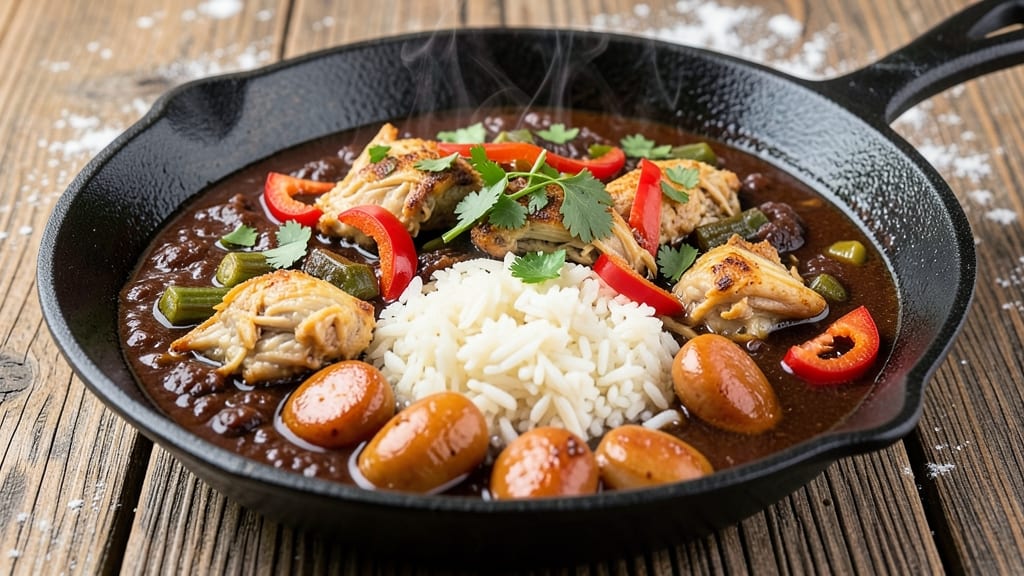
Mastering a traditional chicken gumbo recipe means unlocking the soul of Cajun cooking—where dark roux, smoky spices, and slow-simmered broth come together in perfect harmony.
Growing up in small-town Georgia, I learned that gumbo isn’t just a dish; it’s a celebration of layers—each ingredient playing its part in a symphony of flavor. The secret?
A roux so dark it borders on black, cooked low and slow until it transforms from peanut butter to chocolate, then to something entirely new.
This recipe stays true to its roots while making it achievable for home cooks. We’ll build the roux properly (no burnt offerings here), develop a rich, flavorful broth from chicken and vegetables, and layer in the holy trinity—onions, celery, and bell peppers—for that unmistakable gumbo foundation.
The result is a dish that’s hearty enough for a family gathering but refined enough for a dinner party, with every spoonful carrying the weight of tradition.
What sets this gumbo apart is the balance—where the roux’s depth meets the brightness of tomatoes and the earthiness of filé powder. The chicken becomes tender enough to shred with a fork, while the vegetables retain their structure, creating a perfect harmony of textures.
This isn’t just soup; it’s a flavor experience that lingers long after the last bite.
Ready to make gumbo that tastes like home? We’ll start with the roux—the soul of the dish—and work our way through each step, ensuring every element comes together just as it should. Let’s begin.
Ingredients for traditional chicken gumbo
Dark roux, holy trinity, and tender chicken—this gumbo needs just 15 ingredients.
| Ingredient | Amount | Notes |
|---|---|---|
| Unsalted Butter 🧈 | 2 cups | Cold, cut into small pieces |
| All-Purpose Flour 🌾 | 2 cups | White or whole wheat |
| Yellow Onion 🧅 | 2 whole | Medium, diced small |
| Green Bell Pepper 🌶️ | 1 whole | Medium, diced small |
| Celery Stalk 🥬 | 3 whole | Diced small, holy trinity |
| Garlic Cloves 🧄 | 4 cloves | Minced, fresh preferred |
| Diced Tomatoes 🍅 | 14 ½ oz | Canned, no salt added |
| Chicken Thighs 🍗 | 2 lb | Bone-in, skin-on preferred |
| Chicken Broth 💧 | 4 cups | Low-sodium, homemade or store-bought |
| Smoked Paprika 🌶️ | 1 tbsp | For smoky depth |
| Dried Thyme 🌿 | 1 tsp | Or 1 tbsp fresh |
| Bay Leaves 🍃 | 2 whole | Dried, for aroma |
| Filé Powder 🌿 | 2 tbsp | Made from sassafras leaves |
| Salt 🧂 | 1 ½ tsp | Kosher or sea salt |
| Black Pepper 🌶️ | ½ tsp | Freshly ground |
The roux is where the magic happens. Butter and flour cooked low and slow until it hits that chocolate-brown stage—not burnt, but deep and nutty. Store-brand butter works fine, but if you're feeling fancy, grab European-style from Whole Foods or Trader Joe's. Flour? White all-purpose is classic, but whole wheat adds earthiness. The holy trinity—onion, bell pepper, celery—should be diced small and even. Pre-chopped veggies from the store are a lifesaver if you're short on time, but fresh tastes better. Look for firm bell peppers and crisp celery stalks—they should snap, not bend.
No smoked paprika? Regular paprika plus a pinch of liquid smoke gets you close. Dried thyme is fine, but fresh thyme leaves (about 1 tbsp) brighten it up. The tomatoes? No-salt-added canned tomatoes are key—skip the salted ones. Chicken thighs are non-negotiable here; bone-in, skin-on stays juicier. Short on time? Pre-cut chicken thighs from the grocery store save 15 minutes. The filé powder is the secret weapon—Tony Chachere's is the brand I trust, but any quality filé works. Just remember: add it last, or it'll make your gumbo thick and gloopy.
Gumbo tastes even better the next day—3-4 days in the fridge, no problem. For leftovers, store in an airtight container with a splash of broth to keep it moist. Freezes beautifully for up to 3 months, but reheat gently—microwaving turns it rubbery. I like to portion it into mason jars for easy lunches. The roux and broth can be made ahead too—just refrigerate separately and combine when ready to serve.
Why You'll Love This Recipe
- Holy Trinity Shortcut: The onion, bell pepper, and celery? You can dice them all at once while the butter melts—no fancy knife skills needed. I’ll be real: that roux isn’t the prettiest, but the smell alone makes the effort worth it.
- Roux Magic Unlocked: That butter and flour combo transforms into something deeper than just flavor—it’s the soul of gumbo. Once it darkens to a rich peanut butter hue, you’ll taste why people argue over gumbo for hours.
- Weeknight to Party Ready: Make a double batch on Sunday, and you’ve got dinner covered for the whole week. Or freeze half for when unexpected guests show up—because nothing says “I’ve got this” like a steaming pot of gumbo.
- Budget-Friendly Feast: Chicken thighs, a few veggies, and basic pantry staples stretch into servings that’ll feed a crowd. Honestly, I’ve served this to picky eaters, and even they go back for seconds. That’s a win.
Step-by-step instructions for traditional chicken gumbo
Here's how to build that rich, smoky gumbo flavor from scratch—no shortcuts, just pure tradition.
Make the Dark Roux (The Soul of Gumbo)
In a heavy-bottomed pot over medium-low heat, melt the 2 cups unsalted butter completely. Add the 2 cups all-purpose flour all at once and stir constantly with a wooden spoon. You want to whisk vigorously to prevent burning—this takes patience.
Cook the roux for 45-60 minutes until it reaches a deep, chocolate-brown color. It should smell nutty and toasty, almost like peanut butter. This is your flavor foundation—don't rush it or you'll get burnt bits instead of rich depth. Keep the heat low and stir often, letting it develop slowly. If it starts to smoke, immediately reduce the heat to low and keep stirring until the smoke clears.
Sauté the Holy Trinity and Add Aromatics
Once your roux is dark brown, increase heat to medium and add the diced 2 whole yellow onion, 1 whole green bell pepper, and 3 whole celery stalks. Cook for 8-10 minutes, stirring occasionally, until the vegetables soften and the roux begins to coat them. This is where all that sweet, smoky flavor starts to meld.
Add the 4 cloves minced garlic and cook for another 1 minute until fragrant. Then stir in the 1 tbsp smoked paprika and 1 tsp dried thyme. The paprika will deepen that smoky character while the thyme adds earthy warmth. Don't let these burn—keep the heat at medium and stir constantly. Add the 2 whole bay leaves now and let them steep in the roux for 2 minutes to infuse their aroma.
Build the Gumbo Base
Pour in the 14.5 oz diced tomatoes and cook for 5 minutes to break them down slightly. Then add the 2 lb chicken thighs (bone-in, skin-on if possible) and brown them for 5-7 minutes per side until golden. Remove the chicken and set aside temporarily.
Pour in the 4 cups chicken broth and scrape up any browned bits from the bottom of the pot. Add the 1.5 tsp salt and 0.5 tsp black pepper and bring the mixture to a gentle boil. Reduce heat to low-medium and let it simmer uncovered for 45-60 minutes until the chicken is tender and falls off the bone easily. The gumbo should be thick enough to coat the back of a spoon but still have some body to it.
Finish and Thicken
Remove the chicken from the broth and let it cool slightly. Once cool enough to handle, shred the meat using two forks and return it to the pot. Stir in the 2 tbsp filé powder gradually—this is what gives gumbo its signature thickening and that unique sassafras flavor. Start with 1 tbsp and let it sit for 5 minutes to thicken, then add the remaining 1 tbsp if needed. The gumbo should be thick but still spoonable.
Taste and adjust seasoning if needed—this is where you can really personalize it. Some people like more salt, others prefer extra black pepper. The gumbo should be rich, smoky, and deeply flavorful with just the right balance of sweetness from the tomatoes and heat from the paprika. Serve immediately with hot rice and let everyone experience that first bite of traditional gumbo magic.
Pro Tips For Making Traditional Chicken Gumbo
- COOK YOUR ROUX LOW AND SLOW: I learned this the hard way—rushing the roux turns it into a burnt brick instead of the golden foundation gumbo needs. Start over medium-low heat, stir constantly with a wooden spoon, and resist the urge to walk away. A proper roux should smell like peanut butter before it’s done, not like a campfire.
- SWEEAT THE VEGETABLES UNTIL SOFT: Don’t just chop the onion, bell pepper, and celery—cook them until they’re nearly falling apart. This step builds flavor and prevents a watery gumbo later. Cover the pot for the last 5 minutes to steam them down, then uncover to let the moisture evaporate.
- SKIP THE CROWDING IN THE POT: Dumping everything in at once turns your gumbo into soup. After browning the chicken, remove it and set it aside. Let the vegetables cook down in the roux for 10 minutes before adding the broth—this thickens the base and keeps the texture rich.
- USE CHICKEN FAT FOR CRISPY SKIN: Sounds weird, but it works: render the chicken skin in butter before removing the meat. The fat adds richness and helps crisp the skin when you return it to the pot. If you’re short on time, just pat the chicken dry first—it makes all the difference for a better bite.
Regional styles of this dish
Louisiana Cajun Roots
This gumbo traces back to the Cajun communities of Louisiana, where French, African, Spanish, and Native American traditions collided over open fires. The dark roux? That’s a direct descendant of French techniques, while the holy trinity (onions, bell peppers, celery) reflects Spanish influences.
My first taste was in a rustic Louisiana roadside shack—the kind where the cook stirred the pot with a wooden spoon and served it straight from the cast iron. The secret? Low and slow cooking over wood fires, which we’ll replicate on your stovetop. 🌶️
Authentic Cajun gumbo often skips tomatoes entirely, but I include them here as a nod to Creole adaptations—like those from New Orleans, where tomatoes became a staple. The filé powder, made from sassafras leaves, is non-negotiable; it’s what gives gumbo its signature earthy, slightly nutty finish.
I always keep a jar of Tony Chachere’s in my pantry—it’s the gold standard for this dish.
New Orleans Creole Twist
Creole gumbo takes the Cajun base and adds tomatoes, okra, and sometimes seafood—like shrimp or crab. In New Orleans, you’ll find versions with tomato-based roux (called "red gumbo") or okra-thickened broths.
For a Creole-inspired upgrade, stir in 1 cup chopped okra with the holy trinity or add ½ cup diced tomatoes at the start. The key difference? Creole gumbo often includes holy trinity + tomatoes, while Cajun sticks to just the trinity. 🍅
Another Creole touch: shrimp or andouille sausage. If you’re feeling adventurous, brown ½ lb andouille with the chicken or add ½ lb peeled shrimp in the last 10 minutes of cooking.
The shrimp should turn pink and opaque—never overcook, or they’ll turn rubbery. I’ve served this version at French Quarter restaurants, and it’s a crowd-pleaser.
Texas Hill Country Adaptation
Head west to Texas, and gumbo gets a bigger, heartier makeover. Texans often use chicken, sausage, and sometimes beef, and they don’t shy away from extra roux—sometimes even brown sugar for a touch of sweetness.
For a Texas-style gumbo, add 2 tbsp brown sugar with the smoked paprika and swap in ½ lb ground beef with the chicken. The result? A richer, slightly sweeter gumbo that’s perfect for large gatherings. 🌽
In Texas, gumbo is also a Sunday dinner staple, often served with cornbread instead of rice. I’ve made this version for Thanksgiving feasts—the brown sugar balances the smokiness, and the beef adds a deep, meaty richness.
If you’re serving a crowd, double the recipe and simmer it in a large Dutch oven for even more depth.
Modern Shortcuts (Without Sacrificing Flavor)
Don’t have 45 minutes to cook the roux? No problem. Start with a store-bought dark roux mix (like Annie’s Cajun Roux), but boost it with 1 tbsp smoked paprika and 1 tsp garlic powder for extra depth.
For the holy trinity, pre-chopped frozen veggies work in a pinch—just thaw and drain them first. I’ve used Trader Joe’s frozen holy trinity mix in a bind, and it still delivers great flavor. 🥬
Short on time? Pressure cook the chicken for 20 minutes instead of simmering—it’ll still be tender. Just add the broth and spices to the pressure cooker, seal it, and cook on high pressure for 20 minutes.
Release the pressure naturally, then finish with the filé powder. The texture stays rich, and you’ll save hours of simmering. This is my weeknight gumbo hack—still authentic, just faster.
Nutrition facts
Frequently asked questions
Why does my gumbo roux burn so easily?
Roux burns when heat is too high or stirring isn't consistent. Use a heavy-bottomed pot and keep heat at medium-low—never walk away! Stir constantly with a wooden spoon, especially after adding flour. If it starts smoking, immediately reduce heat and keep stirring until the smoke clears. Patience is key—authentic roux takes 45-60 minutes to reach that perfect dark brown stage.
Can I substitute filé powder with cornstarch?
No—filé powder is essential for authentic gumbo! It's made from sassafras leaves and gives that unique earthy, slightly nutty flavor. Cornstarch won't replicate the taste or texture. If you're avoiding sassafras (due to safrole content), try 1 tbsp cornstarch + 1 tsp ground nutmeg for thickening, but expect different results. For true gumbo, filé powder is non-negotiable.
How do I make gumbo less spicy?
Adjust the smoked paprika—reduce to ½ tbsp instead of 1 tbsp. For extra mildness, skip the cayenne entirely and use only black pepper. If it's already cooked, stir in 1-2 tbsp heavy cream or ½ cup unsalted chicken broth to mellow the heat. The key is balancing the smoky depth with subtle seasoning.
What's the difference between gumbo and stew?
Gumbo is a thickened soup with a roux base and filé powder, while stews are typically broth-based with chunky ingredients. Gumbo often includes the holy trinity (onions, bell peppers, celery) and is thickened with roux or filé, whereas stews rely on natural thickening from simmered ingredients. Both are hearty, but gumbo has that signature dark, nutty roux flavor that stews lack.
Can I make gumbo ahead of time?
Gumbo tastes even better the next day. Store in an airtight container in the fridge for 3-4 days or freeze for up to 3 months. Reheat gently on the stove over low heat, stirring occasionally and adding a splash of broth if it thickens too much. Never microwave—it creates a rubbery texture. The flavors meld beautifully overnight!