
Main Courses
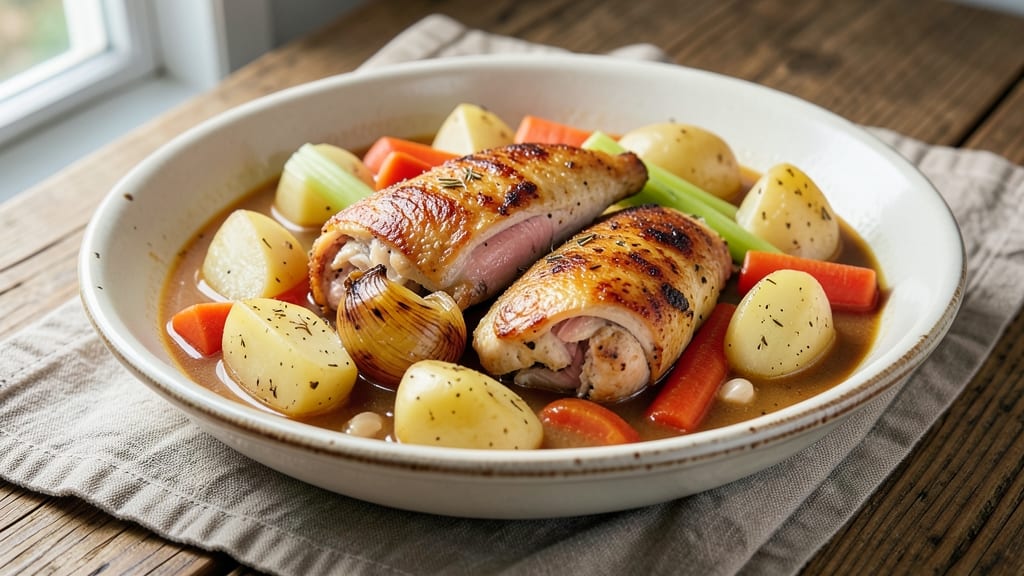
Rachael Ray's chicken stoup recipe delivers the kind of comforting, herb-packed one-pan meal that transforms a busy weeknight into a cozy gathering. Inspired by her signature approach to effortless cooking, this dish combines tender chicken, aromatic vegetables, and a velvety broth that simmers into pure satisfaction.
Growing up in small-town Georgia, I learned that the best meals often require the least fuss—just good ingredients and simple techniques done right.
The beauty of this recipe lies in its versatility and hands-off preparation. With just 30 minutes of active time and a single pot to clean, you'll achieve restaurant-quality results without the stress.
The chicken cooks low and slow in a flavorful broth infused with fresh herbs, garlic, and onions, while root vegetables break down into tender perfection. This is the kind of dish that tastes even better the next day, making it ideal for meal prep or feeding a crowd.
What sets this chicken stoup apart is the balance of textures and flavors—crisp-tender chicken, caramelized vegetables, and a broth thickened just enough to coat every spoonful. The herbs add bright, aromatic notes that cut through the richness, while a splash of lemon at the end brightens the entire dish.
It's the kind of meal that feels indulgent yet remains light enough for a weeknight dinner.
Serve it with crusty bread for soaking up every last drop of that herby broth, or pair it with a simple green salad to round out the plate.
The leftovers reheat beautifully, making this recipe a true workhorse for any home cook. Let's get started on creating this comforting classic that brings warmth to the table.
Ingredients for rachael ray chicken stoup
Herb-packed, one-pan comfort with tender chicken and aromatic vegetables simmered in velvety broth.
| Ingredient | Amount | Notes |
|---|---|---|
| Boneless, Skinless Chicken Thighs 🍗 | 1 ½ lb | Trimmed of excess fat |
| Yellow Onion 🧅 | 1 whole | Medium size, diced |
| Carrots 🥕 | 4 medium | Peeled, sliced into rounds |
| Celery Stalk 🥬 | 3 whole | Trimmed, chopped |
| Garlic Cloves 🧄 | 4 cloves | Peeled, minced |
| Russet Potatoes 🥔 | 2 medium | Peeled, cubed |
| Fresh Thyme 🌿 | ½ oz | Or 1 tbsp dried thyme |
| Fresh Rosemary 🌿 | ¼ oz | Sprigs, not measured |
| Fresh Parsley 🌿 | ¼ cup | Chopped, for garnish |
| Chicken Broth 💧 | 4 cups | Low-sodium preferred |
| Dry White Wine 🍷 | ½ cup | Substitute with broth if needed |
| Lemon Juice 🍋 | 1 tbsp | Freshly squeezed |
| Olive Oil 🫒 | 2 tbsp | Extra-virgin preferred |
| Salt 🧂 | 1 ½ tsp | Kosher or sea salt |
| Black Pepper 🌶️ | ½ tsp | Freshly ground |
The chicken thighs are key—bone-in, skin-on if available for richer flavor, but boneless works too. Look for plump, firm thighs at Whole Foods or your local butcher for the best texture. Fresh herbs elevate this dish, so grab thyme and rosemary from the grocery store's refrigerated section—they should smell vibrant, not wilted. For the broth, low-sodium is crucial—you'll be adding salt later to balance the flavors. The potatoes and carrots should be firm and free of soft spots—Russets are ideal for their starchy texture, while carrots should be crisp with bright orange color.
No white wine? Substitute with extra chicken broth—just reduce the amount by half to keep the same liquid balance. Fresh herbs can be swapped for dried at one-third the amount (so 1 tbsp dried thyme instead of 0.5 oz fresh). Short on parsley? Fresh cilantro or basil work beautifully for garnish. The celery can be omitted if you're in a hurry, but it adds that classic mirepoix base flavor. For a quicker prep, pre-chop all vegetables while watching TV—it saves time later. The lemon juice is essential for brightness, but if you're out, a splash of apple cider vinegar works in a pinch.
This stoup reheats beautifully—tastes even better the next day as flavors meld. Store leftovers in an airtight container in the fridge for up to 4 days, or freeze for 3 months in portion-sized containers. For meal prep, double the recipe and freeze half—perfect for busy weeknights. The broth thickens as it cools, so add a splash of water or broth when reheating if it seems too dense. Serve with crusty bread to soak up every last drop of that herby, velvety broth.
Why You'll Love This Recipe
- One-Pot Magic: I swear by this recipe—just dump everything into one pot, simmer, and walk away. No chopping boards clogged with scraps, no extra pans to wash. The chicken thighs stay juicy while the veggies soften perfectly, all thanks to that classic onion-carrot-celery combo (mirepoix, if you’re fancy).
- Garlic Bomb Flavor: Between us, the garlic in this stoup is the star. Those cloves get browned just enough to caramelize, then meld into the broth for a depth that’s hard to resist. Honestly, I’ve made it without herbs before—still solid, but the garlic alone makes it worth repeating.
- Weeknight Workhorse: This is my go-to when I need something hearty but don’t want to slave over it. Double the batch? Easy. Freeze half for later? Even easier. It’s the kind of dish that tastes just as good reheated the next day—no sad, dry chicken here.
- Budget-Friendly Feast: Chicken thighs are cheaper than breasts, and the veggies stretch this into a full meal for less than $10. My college budget would’ve cried happy tears. Plus, the leftovers turn into next-day lunches or a quick soup upgrade with a splash of cream or extra veggies.
Step-by-step instructions for herb-packed one-pan chicken stew
This method delivers hearty, comforting flavors with minimal effort—just one pot and simple techniques.
Sear the Chicken and Build Flavorful Base
Heat the 2 tablespoons olive oil in a large Dutch oven over medium-high heat. Add the 1.5 lb boneless, skinless chicken thighs, seasoned with 1.5 teaspoons salt and 0.5 teaspoon black pepper, and sear for 4-5 minutes per side until golden brown and cooked through to 165°F internally. Remove the chicken and set aside.
In the same pot, add the 1 whole yellow onion, 4 medium carrots, and 3 whole celery stalks, all chopped. Cook for 5 minutes until the vegetables begin to soften. Add the 4 cloves minced garlic and cook for 30 seconds until fragrant—this prevents bitter flavors. Stir in the 0.5 ounce fresh thyme and 0.25 ounce fresh rosemary sprigs, letting them toast for 1 minute to deepen their aroma.
Deglaze and Simmer the Vegetables
Pour in the 0.5 cup dry white wine and scrape up any browned bits from the bottom of the pot—this releases flavor locked in during searing. Let the wine simmer for 2-3 minutes until mostly evaporated. Add the 4 cups chicken broth and bring to a gentle boil.
Return the chicken to the pot, along with the 2 medium russet potatoes, peeled and cubed. Reduce heat to low and let the stew simmer uncovered for 20 minutes. This allows the vegetables to soften while keeping the broth flavorful. Here's the thing—don't stir too often. Letting the ingredients develop their own layers of flavor is what makes this comforting.
Finish with Herbs and Brighten the Flavor
After 20 minutes, add the 1 tablespoon lemon juice and adjust seasoning if needed. The acidity brightens the stew and balances the richness. Stir in the 0.25 cup chopped fresh parsley and let the stew simmer uncovered for another 10-15 minutes until the potatoes are tender and the chicken is fully cooked through.
Real talk: Your oven might run hot, so start checking at the 10-minute mark—the potatoes should be fork-tender with no resistance. If the broth reduces too much, add a splash of water or broth to maintain the perfect consistency for serving. The stew should be thick enough to coat the back of a spoon but still spoonable.
Rest and Serve for Maximum Comfort
Remove the stew from heat and let it rest for 5-10 minutes. This resting period allows the flavors to meld and the juices to redistribute, ensuring each bite is rich and satisfying. Here's where it gets fun—taste and adjust seasoning one last time. The flavors often deepen during this resting phase.
Serve the stew hot, garnished with additional chopped fresh parsley if desired. The combination of tender chicken, hearty vegetables, and aromatic herbs creates a dish that feels like a warm hug in a bowl. Pair it with crusty bread to soak up every last drop of that flavorful broth.
Pro Tips For Making Rachael Ray Chicken Stoup
- Sear the Chicken First: Hit the chicken thighs with a hot pan—no oil needed—until they brown deeply. I learned this the hard way: skipping the sear leaves you with bland, rubbery chicken. The Maillard reaction here makes all the difference, even if you’re short on time.
- Dice the Onion Small: Cut the yellow onion into ¼-inch pieces, not chunks. Too big? They’ll sit like rocks in the stew, refusing to soften. My grandmother swore by this, and she was right: even cooking matters more than you’d think.
- Deglaze with Wine: After browning the chicken, splash in the wine (or broth) immediately—scrape every last bit of fond from the pan. That’s where the flavor hides. I used to rush this, and the stew always tasted flat afterward.
- Simmer Low and Covered: Keep the heat at a gentle simmer, not a boil, and cover the pot. Boiling toughens the chicken and burns the veggies. I was skeptical until I tried it—now I never skip it. (Your future self will thank you.)
Serving suggestions for leftovers
Crusty Bread Pairing
Nothing complements this chicken stoup like a warm, crusty loaf of bread. I reach for a fresh baguette or sourdough from my local bakery—look for one with a crisp exterior and soft interior that soaks up the herby broth beautifully.
For extra flair, brush the bread with garlic-infused olive oil before serving. The contrast between the sturdy bread and tender stew makes every bite satisfying. 🥖
Simple Green Salad
A bright green salad balances the richness of the stew perfectly. Toss mixed greens with sliced cucumbers, cherry tomatoes, and a light lemon vinaigrette made with 2 tablespoons olive oil, 1 tablespoon lemon juice, and a pinch of salt.
The acidity cuts through the stew's richness while adding freshness. I often sprinkle toasted pine nuts on top for crunch. 🥗
Wine Pairings
For a classic pairing, reach for a dry white wine like Sauvignon Blanc or Pinot Grigio—their crisp acidity complements the herby notes in the stew. If you prefer red, a light Pinot Noir works beautifully without overpowering the dish.
I also love a chilled rosé for a refreshing contrast during warmer months. 🍷
Garnish Like a Pro
Before serving, garnish each bowl with an extra sprinkle of fresh parsley and a drizzle of high-quality olive oil. For a pop of color, add sliced radishes or thinly sliced red onion.
These finishing touches elevate the dish from homemade to restaurant-worthy. The key is to keep it simple—let the flavors shine. ✨
Leftovers Strategy
This stew tastes even better the next day, so plan accordingly. Store leftovers in an airtight container in the fridge for up to 4 days or freeze for 3 months.
When reheating, add a splash of chicken broth to restore moisture. I often serve leftovers with buttered noodles or crusty toast for a quick, comforting meal. ❄️
Kid-Friendly Twist
For picky eaters, serve the stew with shredded cheddar cheese on the side. Kids can sprinkle it on their own bowls, making the dish more appealing. You can also set out soft dinner rolls for dipping. This approach keeps the meal fun while maintaining the dish's hearty appeal. 🧀
Nutrition facts
Frequently asked questions
Can I use chicken breasts instead of thighs in this recipe?
Chicken thighs work best because they stay juicy during long simmering. If you must use breasts, opt for bone-in, skin-on pieces—they hold up better. For a direct swap, use 1 lb breasts and add 1 extra tablespoon olive oil to prevent drying. Cook them for 3-4 minutes per side before removing, and return them to the pot only after the vegetables have softened.
How do I adjust this recipe for a larger crowd?
Double all ingredients and use a 6-8 quart Dutch oven. For 8 servings, increase chicken to 3 lbs, broth to 8 cups, and wine to 1 cup. Simmer time remains the same (30-45 minutes total), but check potatoes at 20 minutes—they may cook faster in a larger pot. The key is maintaining the same ratio of vegetables to broth.
What can I do if my stoup tastes too salty?
Add 1-2 cups unsalted chicken broth or water to dilute the flavor. If that's not enough, stir in 1-2 tablespoons lemon juice or 1 tablespoon cream cheese to balance the saltiness. For a quick fix, top each serving with extra fresh parsley—it adds volume and freshness to cut through the salt.
Can I make this recipe without wine?
Replace the 0.5 cup white wine with 0.5 cup additional chicken broth. The dish will still develop rich flavors—just reduce the broth by 0.5 cup elsewhere to maintain balance. For extra depth, add 1 teaspoon apple cider vinegar with the lemon juice at the end. The acidity mimics wine's brightening effect.
Why does my chicken stoup look watery?
Simmering too long reduces the broth, but if it's still thin, the potatoes may need more time to break down. Mash 1-2 potatoes lightly with a fork to thicken the broth naturally. For an instant fix, mix 1 tablespoon cornstarch with 2 tablespoons cold water, stir into the pot, and simmer 2-3 minutes until thickened.