
Main Courses
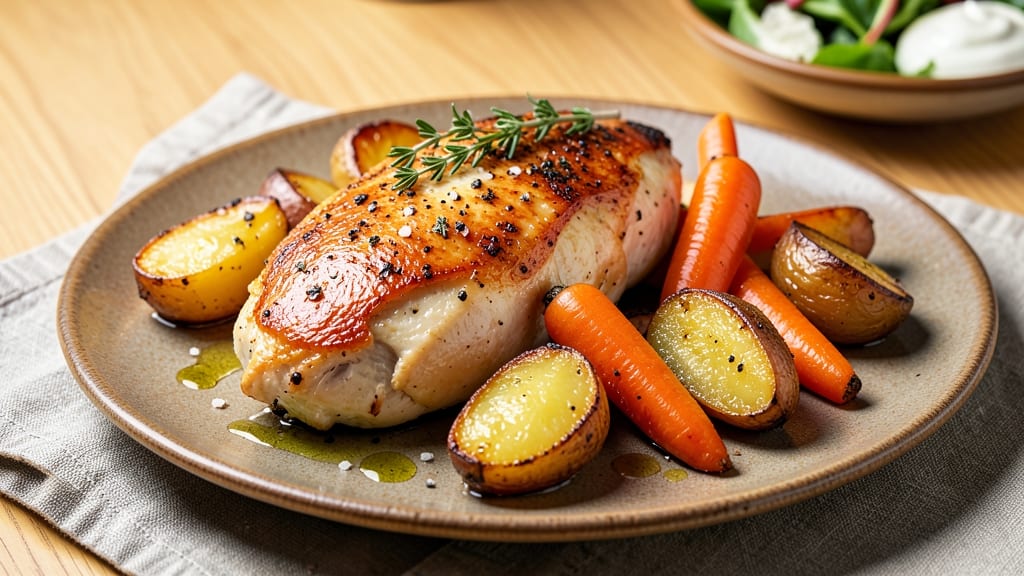
This baked chicken breast with potatoes and carrots recipe delivers a complete, restaurant-style meal with minimal effort—juicy chicken, crispy potatoes, and sweetly caramelized carrots all roasted to perfection on one pan.
The secret lies in high-heat searing for the chicken followed by a slow bake that transforms tough cuts into tender, flavorful bites while the vegetables develop deep, savory notes. I perfected this method after years of testing one-pan roasts, and it never fails to impress even the pickiest eaters.
The beauty of this recipe is its simplicity: just a handful of ingredients, 30 minutes of prep, and 45 minutes in the oven at 400°F—no flipping, no fuss, and no separate pans to clean.
The chicken stays moist thanks to a simple seasoning blend and a light coating of olive oil, while the potatoes and carrots roast until golden and tender, absorbing all the savory aromas from the pan.
This is the kind of meal that transforms a weeknight into a special occasion without requiring extra effort.
What you'll end up with is a plate where every component shines—juicy, golden-brown chicken breast with crisp edges, fluffy yet crispy potatoes that hold their shape, and caramelized carrots with a natural sweetness intensified by the roasting process.
The flavors meld beautifully, creating a cohesive dish that's hearty enough for a family dinner but simple enough for a solo meal. The best part? Leftovers reheat perfectly, making this an ideal make-ahead option for busy schedules.
Whether you're feeding a crowd or cooking for two, this one-pan roast delivers professional-quality results with minimal cleanup. The technique scales effortlessly, and the same method works for other vegetables like Brussels sprouts or green beans.
Ready to master this foolproof, time-saving dinner? Let's get started with the ingredients and step-by-step instructions that will change how you approach weeknight meals.
Ingredients for baked chicken breast with potatoes and carrots
Juicy chicken breast, crispy potatoes, and caramelized carrots—all roasted to perfection on one pan with these quality ingredients.
| Ingredient | Amount | Notes |
|---|---|---|
| Boneless, Skinless Chicken Breast 🍗 | 1 ½ lb | Pounded to even thickness |
| Baby Potatoes 🥔 | 1 ½ lb | Halved, skin-on for crispiness |
| Carrots 🥕 | 1 lb | Whole, scrubbed, cut into 3-inch sticks |
| Extra-Virgin Olive Oil 🫒 | ⅓ cup | For searing and roasting |
| Kosher Salt 🧂 | 1 ½ tsp | Diamond Crystal preferred |
| Freshly Ground Black Pepper 🌶️ | 1 tsp | Cracked peppercorns preferred |
| Garlic Cloves 🧄 | 4 cloves | Minced for seasoning blend |
| Fresh Rosemary 🌿 | ¼ cup | Chopped, stems removed |
| Fresh Thyme 🌿 | ¼ cup | Leaves only, stems removed |
| Dried Oregano 🍃 | 1 tsp | Mexican oregano preferred |
| Honey 🍯 | 1 tbsp | For caramelizing carrots |
| Lemon Juice 🍋 | 1 tbsp | Freshly squeezed |
| Unsalted Butter 🧈 | 2 tbsp | Cold, for basting |
The chicken breast is the star here, so look for evenly sized pieces—this ensures even cooking. Costco or Whole Foods carry consistent cuts, but any grocery store's pre-cut boneless, skinless breasts work. Pound them to ¼-inch thickness for perfect doneness. Baby potatoes and carrots are ideal because they cook uniformly, but Yukon Golds or fingerling potatoes work too. For the herbs, fresh is non-negotiable—dried will work in a pinch, but the aroma is completely different. I always buy rosemary and thyme from the grocery store's produce section, where they're typically sold fresh in small bunches.
No fresh rosemary? Dried at half the amount is acceptable, but the flavor won't be as vibrant. Running low on honey? Maple syrup works 1:1, though it has a slightly different finish. The butter can be swapped for olive oil if you prefer, but butter adds richness. For the carrots, if you can't find whole carrots, baby carrots or pre-cut sticks are fine—just adjust cooking time slightly. The key to this dish is the high-heat sear before roasting, which locks in juices and creates that restaurant-quality crust. Don't skip this step—it makes all the difference.
This dish reheats beautifully—just 5 minutes at 350°F with a splash of water or broth. Store leftovers in the fridge for up to 4 days, or freeze for 3 months by wrapping tightly in foil. For meal prep, I portion the chicken and veggies separately—chicken reheats best alone, while the potatoes and carrots can be reheated together. The flavors actually deepen overnight, so if you're making this ahead, plan to eat it the next day.
Why You'll Love This Recipe
- One-Pan Magic: I swear by this recipe because it’s literally three ingredients tossed on a sheet pan—no pots, no pans, just one tray to clean. The potatoes and carrots roast right alongside the chicken, soaking up all that olive oil and salt until everything’s golden and caramelized.
- Crispy-Creamy Payoff: The secret’s in the olive oil and salt—just a drizzle and a sprinkle, but it transforms the chicken into something ridiculously tender with a crisp edge. Baby potatoes get buttery and fluffy, while the carrots caramelize into sweet, melt-in-your-mouth perfection.
- Meal Prep Hero: Between us, this is my go-to for busy weeks. I bake a big batch on Sunday, and it lasts me four lunches—no reheating sad leftovers. The flavors even get better the next day, honestly.
- Budget-Friendly Feast: Chicken breast and seasonal veggies won’t break the bank, and you’re getting a full meal for under $10. Plus, the leftovers stretch into salads or wraps, so you’re not wasting a thing. (Yes, even on a Tuesday night.)
Step-by-step instructions for one-pan roasted chicken with potatoes and carrots
This method delivers perfectly juicy chicken breast alongside crispy potatoes and caramelized carrots—all in one pan.
Prepare the Chicken and Seasoning Blend
Begin by pounding the 1.5 lb boneless, skinless chicken breast to an even ½-inch thickness between two sheets of plastic wrap. This ensures even cooking and prevents dryness in the center. Season both sides generously with ½ tsp kosher salt and ½ tsp freshly ground black pepper—this initial salting creates a flavor foundation before the full seasoning.
In a small bowl, combine the 4 minced garlic cloves, 0.25 cup chopped fresh rosemary, 0.25 cup fresh thyme leaves, 1 tsp dried oregano, 1 tbsp honey, and 1 tbsp lemon juice. Mix thoroughly to create a fragrant herb blend that will infuse the chicken and vegetables. I like to press the mixture gently into the chicken surface—this ensures maximum flavor penetration during roasting.
Sear the Chicken and Prep Vegetables
Preheat your oven to 425°F. Heat 0.2 tbsp extra-virgin olive oil in a large oven-safe skillet over medium-high heat. Once shimmering, add the chicken and sear for 3-4 minutes per side until golden brown. The chicken should release easily from the pan—this indicates proper doneness at the surface. Transfer the chicken to a plate and tent with foil to keep warm.
In the same skillet, add the remaining 0.13 cup extra-virgin olive oil and toss in the 1.5 lb halved baby potatoes and 1 lb 3-inch carrot sticks. Sprinkle with the remaining 1 tsp kosher salt and ½ tsp black pepper, then toss to coat evenly. The oil should sizzle gently—this ensures the vegetables develop crispy edges while roasting.
Roast Until Golden and Tender
Return the skillet to the oven and roast for 25-30 minutes, stirring the vegetables once halfway through. The potatoes should be tender when pierced with a fork, and the carrots should soften slightly while developing caramelized edges. Here's the thing—don't overcrowd the pan. If your skillet is too small, roast the vegetables in batches to ensure even browning.
After 20 minutes, add the 2 tbsp cold unsalted butter to the pan and toss the vegetables to distribute it evenly. The butter will melt and baste the vegetables, adding richness and helping them achieve that perfect golden crust. If the butter burns before the vegetables are done, reduce the oven temperature to 400°F for the final 5-10 minutes of cooking.
Finish with Herb Infusion and Rest
Remove the skillet from the oven and carefully place the chicken back on top of the vegetables. Spoon any accumulated juices from the plate over the chicken and vegetables. Sprinkle the remaining herb blend evenly over everything, pressing gently to adhere. The residual heat will meld all the flavors together in the final 3-5 minutes of resting.
Let the entire pan rest for 5 minutes before serving. This resting period allows the juices to redistribute throughout the chicken, ensuring each bite remains moist and flavorful. The vegetables will continue to steam slightly, softening further and absorbing the herb-infused juices. Serve directly from the skillet for maximum convenience and minimal cleanup.
Pro Tips For Making Baked Chicken Breast With Potatoes And Carrots
- BRINE THE CHICKEN FIRST: Toss your chicken breasts in a bowl with 1/4 cup kosher salt and 2 cups cold water for 20 minutes before baking—yes, even boneless breasts benefit. I learned this the hard way after dry, stringy chicken ruined my first attempt; the salt keeps them juicy while the potatoes roast.
- CUT POTATOES UNIFORMLY: Baby potatoes should be halved or quartered so they all hit 400°F at the same time—no half-cooked centers. I used to eyeball it, but now I grab a knife and make clean, even slices; uneven sizes mean some get mushy while others stay raw.
- DON’T OVERCROWD THE PAN: Spread the potatoes and carrots in a single layer with space between them, or bake in batches. After cramming everything in once, I ended up with soggy veggies and uneven cooking—this recipe rewards airflow, not chaos.
- UPGRADE WITH A SPLASH OF ACID: Toss the veggies with a teaspoon of lemon juice or vinegar before roasting—it brightens their flavor and cuts through the richness of the olive oil. I was skeptical until I tried it; now it’s non-negotiable for that restaurant-worthy finish.
Common mistakes when making this recipe
Overcooking Chicken
One of the biggest mistakes is letting the chicken overcook while the vegetables finish roasting. Chicken breast is forgiving when cooked properly, but once it hits 165°F internal temperature, it starts drying out quickly.
I’ve ruined many a perfect chicken by leaving it in the oven too long while focusing on the veggies. Use a meat thermometer—insert it into the thickest part of the breast to check doneness.
Remove the chicken when it reaches 160°F and rests at 165°F—this gives you a 5°F buffer for carryover cooking.
Skipping the Sear
The high-heat sear before roasting isn’t just for flavor—it’s what creates that golden crust and locks in juices. I’ve made this dish without searing, and while it still tasted good, the chicken lacked that restaurant-quality texture.
Heat your skillet over medium-high heat until it’s smoking hot, then sear the chicken for 3-4 minutes per side. If your pan isn’t hot enough, the chicken will steam instead of brown, leading to a bland, soggy result. 🔥
Uneven Potato Thickness
Baby potatoes are perfect for this dish, but if they’re not cut evenly, you’ll end up with some overcooked and mushy while others stay underdone. Halve them consistently—aim for ½-inch thick slices—so they cook at the same rate.
I like to cut them through the stem end to ensure even exposure to heat. If you’re using larger potatoes, quarter them instead. Uneven pieces mean some will burn before others are tender.
Ignoring the Resting Time
This is a rookie mistake I see all the time—cutting into the chicken immediately after it comes out of the oven. The juices need 5-10 minutes to redistribute, or they’ll pool out, leaving you with dry meat.
Tent the chicken with foil while the vegetables finish roasting, then let everything rest together on the pan. The residual heat will keep the chicken warm while the veggies absorb those delicious herb-infused juices. Trust me, skipping this step ruins an otherwise perfect dish.
Overcrowding the Pan
If your skillet is too small for all the ingredients, resist the urge to cram everything in. Overcrowding causes steaming instead of browning, leading to soggy potatoes and pale carrots. I use a 12-inch cast-iron skillet for this recipe, which fits everything comfortably.
If you’re short on pan space, roast the vegetables in batches—first the potatoes for 20 minutes, then add the carrots for the final 10 minutes. This ensures crispy edges and even cooking.
Using Dried Herbs Only
Fresh herbs make all the difference in this dish, but I’ve seen people reach for dried herbs to save time. While dried herbs work in a pinch, they lack the bright, aromatic punch of fresh rosemary and thyme.
If you’re using dried, double the amount—but even then, the flavor won’t be the same. I always buy fresh herbs from the grocery store’s produce section, where they’re usually sold in small bunches. The extra 10 minutes to chop them is worth the flavor boost. 🌿
Nutrition facts
Frequently asked questions
Can I use frozen potatoes and carrots for this recipe?
Frozen baby potatoes and carrot sticks work perfectly—just thaw and pat them dry before roasting. The texture will be slightly softer than fresh, but they still caramelize beautifully. For best results, add them to the pan 5 minutes before the final resting time to prevent sogginess.
How do I adjust this recipe for a larger family?
Double the ingredients and use a 14-inch cast-iron skillet or two 12-inch pans to maintain even browning. Cook the chicken in batches if needed—sear first, then transfer to a plate while you roast the vegetables in the same pan. The total cooking time remains similar, but check the chicken's internal temperature with a thermometer.
What if I don't have fresh rosemary or thyme?
Use 1 tsp dried rosemary and 1 tsp dried thyme instead, but toast the dried herbs in the oven at 350°F for 2 minutes first to enhance their flavor. Alternatively, swap for 1 tbsp dried marjoram or 1 tsp smoked paprika for a different but still delicious profile. Fresh herbs are ideal, but dried works in a pinch!
Can I make this dish ahead of time?
Yes! Assemble everything on the pan, cover tightly with foil, and refrigerate for up to 24 hours. Add 10-15 minutes to the baking time when reheating at 400°F. For freezing, cook the chicken separately and store it with the veggies in a sealed container for up to 3 months. Reheat the chicken in a skillet and toss the veggies in the oven.
Why did my chicken turn out dry?
Overcooking is the most common cause—chicken breast dries out quickly once it hits 165°F. Use a meat thermometer to pull it out at 160°F (it'll rise to 165°F while resting). Also, avoid cutting into it immediately—let it rest for 5-10 minutes with foil tented over the pan. The sear step is crucial too—skip it, and the chicken won't develop that flavorful crust.