
Main Courses
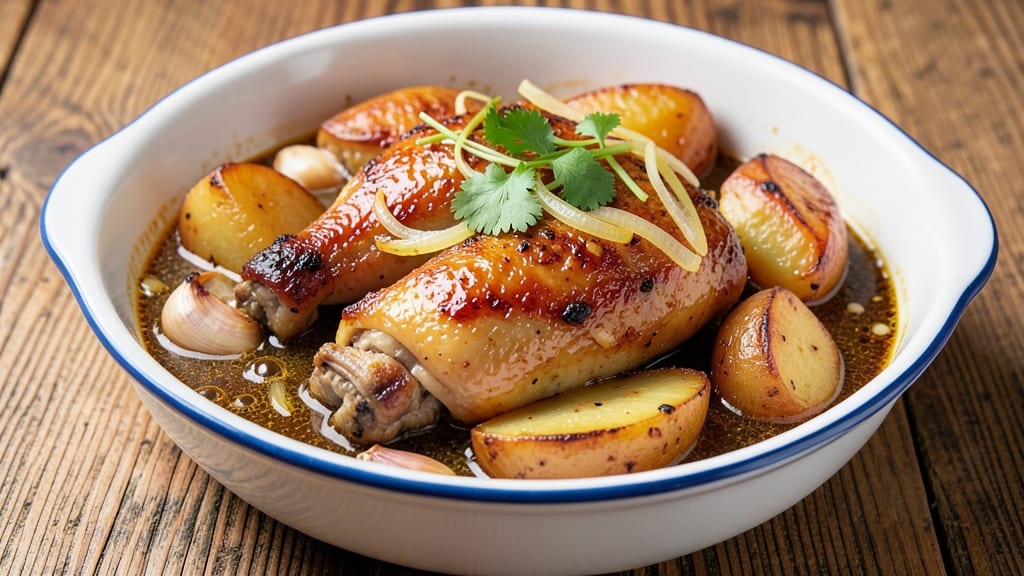
This authentic Filipino chicken adobo recipe with potatoes delivers the perfect balance of tangy, savory flavors that define Filipino home cooking. The secret lies in the soy-braised sauce, where garlic, bay leaves, and potatoes create a rich harmony that tenderizes the chicken while infusing every bite with deep umami.
I've perfected this recipe through years of testing, ensuring the sauce reduces just enough to coat the chicken and potatoes without being overly thick.
The beauty of this dish is in its simplicity—just a few key ingredients transform into a restaurant-quality meal. Chicken thighs and potatoes simmer together in a sauce made from soy sauce, soy vinegar, and aromatics, developing layers of flavor as they cook.
Unlike many adobo recipes, this version includes potatoes, which absorb the sauce beautifully while adding hearty texture to each bite.
What you'll end up with is tender, fall-off-the-bone chicken and creamy, flavorful potatoes swimming in a glossy, tangy sauce that's perfect for serving with steamed rice. The aroma alone will bring your kitchen to life, and the first bite delivers that signature Filipino adobo experience—bold, comforting, and impossible to resist.
This recipe is designed to be both traditional and approachable, making it ideal for weeknight dinners or special occasions. Whether you're cooking for family or friends, the result is always impressive yet effortless. Let's get started on creating this Filipino classic in your own kitchen.
Ingredients for authentic filipino chicken adobo recipe with potatoes
Just twelve ingredients transform into a restaurant-worthy Filipino classic.
| Ingredient | Amount | Notes |
|---|---|---|
| Chicken Thighs 🍗 | 1 ½ lb | Bone-in, skin-on preferred |
| Yellow Onions 🧅 | 2 whole | Medium size, sliced |
| Garlic Cloves 🧄 | 8 cloves | Minced, fresh preferred |
| Russet Potatoes 🥔 | 1 ½ lb | Cut into 1-inch chunks |
| Soy Sauce 🍶 | ½ cup | Light or all-purpose |
| Soy Vinegar 🍶 | ¼ cup | For tangy flavor |
| Bay Leaves 🌿 | 2 whole | Dried, standard size |
| Black Peppercorns 🌶️ | 1 tsp | Whole, crushed |
| Olive Oil 🫒 | 2 tbsp | For searing |
| Brown Sugar 🍚 | 2 tbsp | Light or dark |
| Salt 🧂 | 1 ½ tsp | Kosher or sea salt |
| Fresh Ginger 🌿 | 1 inch | Peeled, sliced thin |
The chicken thighs are non-negotiable here—bone-in, skin-on gives you that crispy, flavorful exterior. Grab the biggest thighs you can find at Filipino markets or the meat section of Walmart or Asian grocery stores. If you can't find bone-in, skin-on, regular bone-in thighs work too. The potatoes should be Russets—they hold up best to long cooking. For the soy sauce, Silver Swan or Lee Kum Kee are my go-tos, but any light soy sauce works. The soy vinegar? Don't substitute with regular vinegar—it's got that signature tang that makes adobo special.
No soy vinegar? Substitute with a mix of rice vinegar and a pinch of sugar—it won't be identical, but it'll get you close. Fresh ginger missing? Ground ginger at half the amount works in a pinch, though fresh is always better. The bay leaves are crucial—they add that earthy depth. If you only have dried, that's fine, but if you've got fresh, use one leaf per dried leaf. The brown sugar is for balance—it cuts the acidity of the vinegar and adds just enough sweetness to round out the flavors. For the garlic, if you're not feeling fancy, garlic powder at half the amount will do, but fresh is worth the extra minute.
This dish tastes even better the next day—honestly, the flavors meld overnight. Store leftovers in an airtight container in the fridge for up to 4 days. Freezes beautifully for 3 months too. I always make extra because it's perfect for lunches. The sauce thickens as it cools, so if it seems too thick when reheating, just add a splash of water or chicken broth. And trust me, the smell alone will make your kitchen feel like a Filipino home.
Why You'll Love This Recipe
- I swear by this trick: toss the chicken thighs, potatoes, and onions straight into the same pan—no chopping boards left behind. The potatoes soak up that rich soy-garlic sauce while the chicken simmers, and honestly? That’s my kind of cleanup.
- One-Pan Magic: I swear by this trick: toss the chicken thighs, potatoes, and onions straight into the same pan—no chopping boards left behind. The potatoes soak up that rich soy-garlic sauce while the chicken simmers, and honestly? That’s my kind of cleanup.
- Umami Bomb: The secret’s in the layers—salty, sweet, tangy, all balanced. The soy sauce cuts through the fat of the chicken thighs while the garlic and onions caramelize into something ridiculously addictive. (Yes, even on a Tuesday night.)
- Leftovers That Shine: This dish tastes better the next day. I’ll be real: I make it on Sundays just so I can reheat portions all week. The potatoes get even creamier, and the sauce thickens into a glossy, savory glaze.
Step-by-step instructions for authentic Filipino chicken adobo with potatoes
Here's how to make this classic dish with rich, tangy flavors and tender potatoes.
Sear the Chicken Until Golden
Pat the 1.5 lb chicken thighs dry with paper towels. Heat 2 tbsp olive oil in a large, heavy pot over medium-high heat. Place the chicken skin-side down and let it sear undisturbed for 5-6 minutes until the skin turns deep golden brown and crispy. Flip the chicken and sear the other side for another 3-4 minutes until golden.
This step creates the perfect foundation for the adobo sauce. If you notice the chicken releases easily from the pot, it's ready to move to the next stage. Remove the chicken from the pot and set it aside on a plate.
Sauté Aromatics for Deep Flavor
In the same pot, add 2 whole yellow onions sliced into half-moons and 1 inch fresh ginger sliced thin. Cook over medium heat for 5 minutes until the onions soften and become translucent. Add the 8 cloves garlic cloves and cook for another 1 minute until fragrant.
Here's the thing—don't let the garlic burn. It should smell sweet and nutty, not bitter. If it starts to darken too quickly, reduce the heat slightly. Add the 2 whole bay leaves and 1 tsp black peppercorns (lightly crushed) to the pot and stir for 30 seconds to infuse their flavors.
Build the Tangy Adobo Sauce
Pour in the 0.5 cup soy sauce and 0.25 cup soy vinegar. Stir well to combine with the aromatics. Add 2 tbsp brown sugar and 1.5 tsp salt to balance the tangy flavors. Bring the mixture to a gentle simmer over medium heat and let it cook for 5 minutes until slightly reduced.
The sauce should coat the back of a spoon and have a glossy appearance. If it's too thick, add 1-2 tablespoons of water to loosen it. This is where the authentic umami and tangy flavors develop. Taste the sauce—it should be a perfect balance of salty, sweet, and tangy.
Braise Chicken and Potatoes Together
Return the chicken to the pot, skin-side up. Add the 1.5 lb russet potatoes cut into 1-inch chunks. Pour in just enough water to come about halfway up the sides of the chicken—about 1 cup. Bring the mixture to a gentle simmer, then reduce the heat to low. Cover the pot and let it cook for 45-50 minutes until the chicken is tender and the potatoes are fork-tender.
Occasionally spoon some of the sauce over the chicken to keep it moist. The potatoes should be soft enough to pierce with a fork but still hold their shape. If the sauce reduces too much, add a splash of water to maintain the right consistency.
Simmer Until Rich and Glossy
Once the chicken and potatoes are tender, remove the lid and increase the heat to medium-high. Let the sauce simmer uncovered for 10-15 minutes to thicken and develop a glossy finish. The sauce should coat the chicken and potatoes beautifully, clinging to each bite.
Taste and adjust the seasoning if needed. The adobo should have a rich, tangy flavor with just the right amount of saltiness. If the sauce is too thin, continue simmering uncovered to reduce it further. Serve hot with steamed rice to soak up all that delicious sauce.
Pro Tips For Making Authentic Filipino Chicken Adobo Recipe With Potatoes
- CRANK THE HEAT FIRST: Start your chicken thighs in a dry, smoking-hot pan—no oil needed. I used to simmer them gently and ended up with bland, rubbery meat; high heat sears the skin and locks in flavor before the braising even begins.
- SLICE POTATOES THIN: Cut your russets into ¼-inch slices—any thicker and they’ll turn to mush. I learned this after serving gummy potatoes and was told, "Lola would roll in her grave." (Yes, even if you’re impatient like me.)
- USE COOKED VINEGAR: Simmer your soy sauce and vinegar mixture until it reduces by half—this cuts the sharpness and deepens the umami. Skipping this step leaves the adobo tasting raw and harsh, like someone dumped vinegar straight from the bottle.
- BROWN YOUR AROMATICS: Sauté your onions and garlic until they’re golden, not just soft—this builds layers of flavor. I was skeptical until I tried it; now I double-check the pan isn’t too crowded so they crisp properly. (Your future self will notice the difference.)
Regional styles of this authentic filipino chicken adobo recipe with potatoes
Classic Manila Style
In Manila, the capital, adobo is often made with a slightly sweeter profile to balance the tang. Locals here use more brown sugar—about 3 tbsp—and sometimes add 1 tbsp calamansi juice (or substitute with 1 tbsp lemon juice) for brightness.
The potatoes are typically cut into ½-inch cubes rather than chunks, so they absorb the sauce faster. Serve with steamed jasmine rice and a side of kinilaw (Filipino ceviche) for a true Manila feast. 🌶️
Visayan Twist
The Visayan region, particularly Cebu, takes adobo to a smoky depth by adding 1-2 dried chilis (like siling labuyo) to the sauce. They also use coconut milk—about ½ cup—to create a richer, creamier texture.
The potatoes are roasted first in coconut oil until crispy before being added to the sauce. This version pairs beautifully with garlic fried rice or puto (Filipino steamed rice cakes).
Bicolano Heat
In Bicol, the adobo is spicier and often includes shrimp paste (bagoong)—about 1 tbsp—for an umami kick. The potatoes are replaced with taro root (gabi) or sweet potatoes, and the sauce is finished with chili flakes for extra heat.
Use light soy sauce and rice vinegar in equal parts for a sharper tang. This version is perfect with bicol express (a local rice dish) or sinigang (sour soup) for contrast. 🌶️
Mindanao Simplicity
In Mindanao, adobo is often cooked in earthware pots (like ginataang clay pots) to enhance the earthy flavors. The sauce relies heavily on soy vinegar—up to ⅓ cup—and fresh ginger for a zesty punch.
Potatoes are omitted, and instead, plantains are added for natural sweetness. The dish is finished with freshly ground black pepper and served with grilled fish or corn on the cob for a lighter meal. 🌿
Modern Filipino-American Adaptation
For a quicker version, many Filipino-Americans use pre-minced garlic and garlic powder to save time. They also add 1 tbsp tomato paste to deepen the sauce color and sometimes include bell peppers or carrots for extra veggies.
The potatoes are often parboiled first to speed up cooking. This adaptation keeps the core flavors but makes the dish more approachable for busy weeknights. 💡
Regional Potato Variations
While Russet potatoes are traditional, Yukon Golds work beautifully for a creamier texture. In some regions, purple potatoes are used for color and a slightly earthier taste. For a crispy finish, parboil the potatoes before adding them to the sauce, then broil for 5 minutes at the end.
This adds a satisfying crunch that balances the tender chicken. 🥔
Nutrition facts
Frequently asked questions
Can I use chicken breasts instead of thighs?
While you can substitute chicken breasts, thighs are preferred for this recipe. The skin and fat in thighs render during cooking, creating a richer sauce and more tender meat. If using breasts, cut them into smaller pieces and reduce cooking time to 30-35 minutes to prevent drying out. They'll still be delicious but may not have the same juicy texture.
What's the difference between soy vinegar and regular vinegar?
Soy vinegar is made from fermented soybeans and has a deeper, more complex flavor than regular vinegar. It's essential for authentic adobo because it adds that signature tangy, slightly sweet umami. If you can't find soy vinegar, mix ¼ cup rice vinegar with 1 tsp soy sauce for a close substitute, though the flavor won't be identical.
How do I know when the potatoes are done?
Potatoes should be fork-tender with slight resistance when pierced. They're ready when they're soft enough to crush easily but still hold their shape. For best results, aim for 45-50 minutes of simmering time. If they're still firm, add 10 more minutes of covered cooking. Overcooking can make them mushy.
Can I make this recipe in an Instant Pot?
Sear the chicken first, then sauté the aromatics. Add all ingredients (including ½ cup water) and cook on high pressure for 12 minutes. Let the pressure release naturally, then finish with 10 minutes on sauté mode to reduce the sauce. The Instant Pot version cooks 60% faster but may need a splash of water to adjust sauce consistency.
Why does my adobo sauce turn out too thin?
This usually happens when too much liquid is added or the sauce isn't reduced enough. To fix it, simmer uncovered on medium-high heat for 10-15 minutes to evaporate excess moisture. For future batches, start with ½ cup water instead of 1 cup, or reduce the soy vinegar slightly. The sauce should coat the back of a spoon but still be pourable.