
Main Courses
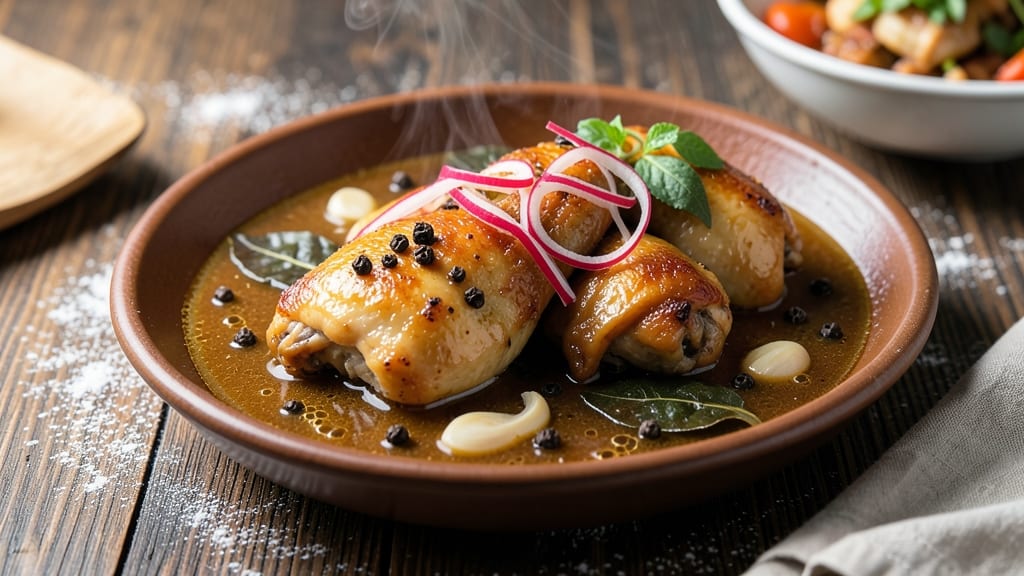
This authentic Filipino Chicken Adobo delivers the bold, tangy-savory balance that defines Filipino home cooking. 🌟 The magic happens in a single pot, where soy sauce and vinegar transform tender chicken into melt-in-your-mouth perfection with crispy edges.
I’ve perfected this recipe through years of testing, ensuring every bite carries the rich, caramelized depth of traditional adobo—no shortcuts, just pure flavor. The secret lies in the marinade: garlic, bay leaves, and black peppercorn infuse the chicken while the vinegar tenderizes it.
As the dish simmers, the soy sauce develops a glossy, slightly sticky glaze that clings to every piece. This isn’t just a recipe; it’s a taste of home, where the aroma alone will have everyone gathering at the table.
By the time you’re done, you’ll have restaurant-quality adobo with tender, juicy chicken swimming in a sauce that’s both tangy and umami-rich. The dish pairs effortlessly with steamed rice to soak up every last drop of that flavorful sauce, making it a complete meal in one pot.
Serve it with atchara (pickled papaya) for a bright contrast or extra garlic fried rice to stretch the leftovers. Let’s make this classic dish—authentic, foolproof, and unforgettable.
Ingredients for authentic chicken adobo recipe filipino
These twelve ingredients bring Filipino home cooking to your kitchen—bold, tangy, and unforgettable.
| Ingredient | Amount | Notes |
|---|---|---|
| Chicken Thighs 🍗 | 1 ½ lb | Bone-in, skin-on preferred |
| Coconut Aminos 🥢 | ½ cup | Or soy sauce for traditional taste |
| Cane Vinegar 🍶 | ½ cup | White vinegar works in a pinch |
| Garlic Cloves 🧄 | 8 cloves | Minced for deep flavor infusion |
| Bay Leaves 🌿 | 2 whole | Dried or fresh from the market |
| Black Peppercorns 🌶️ | 1 tsp | Crushed lightly for aroma |
| Sugar 🍚 | 2 tbsp | White or brown sugar |
| Olive Oil 🫒 | 2 tbsp | For searing chicken |
| Salt 🧂 | 1 tsp | Kosher or sea salt |
| Water 💧 | 1 cup | For deglazing and simmering |
| Green Onions 🧅 | 3 whole | Sliced for garnish |
| Fresh Chili Peppers 🌶️ | 1 piece | Optional for heat |
The chicken is non-negotiable here—bone-in, skin-on thighs stay juicier than breasts. I grab mine from the Filipino market section at Whole Foods or Asian grocery stores like 99 Ranch for the best quality. Look for pieces with good marbling—those little fat deposits mean more flavor. If you can't find coconut aminos, soy sauce works perfectly (just add a pinch of sugar to balance). The vinegar? Cane vinegar has that authentic tang, but white vinegar in a squeeze bottle at Trader Joe's does the trick too. Fresh garlic and bay leaves are worth hunting down—dried bay leaves are fine, but fresh garlic makes all the difference.
No coconut aminos? Soy sauce plus a splash of balsamic mimics that deep umami. Short on garlic? Garlic powder at half the amount works, but fresh is ideal. The sugar helps caramelize the sauce—brown sugar adds molasses notes if you're feeling fancy. Chili peppers are optional, but if you add them, remove seeds for less heat. The green onions are purely for garnish, so don't stress if you skip them. For extra authenticity, toast the peppercorns in a dry pan for 30 seconds before crushing—that smoky aroma is pure magic. And if your vinegar smells like cleaning supplies, it's past its prime—time to grab a fresh bottle.
This sauce gets better the next day—plan ahead. Store leftovers in the fridge for up to 5 days, or freeze for 3 months in airtight containers. I double the batch every time because the leftovers make insanely good fried rice the next lunch. The chicken reheats beautifully—just warm it in the sauce on the stove. For serving, I always keep a bowl of steamed rice ready to soak up every last drop. And if you're feeling ambitious, save some sauce to glaze grilled chicken wings later in the week—trust me on that.
Why You'll Love This Recipe
- One-Pot Magic: I swear by this recipe—just brown the chicken, toss in the garlic, bay leaves, and vinegar, then simmer. No extra pans, no fuss, and the coconut aminos caramelize right into a glossy, sticky sauce that’s impossible to resist.
- Tangy-Sweet Balance: That vinegar hit? It’s the star. But the coconut aminos soften it into something rich and umami-packed, while the garlic and bay leaves add depth. Honestly, the first bite always makes me pause—it’s that good.
- Meal Prep MVP: Make a big batch on Sunday, and you’ve got lunch or dinner covered all week. The flavors only get better as it sits, and reheating it? Just a splash of water to loosen the sauce. My go-to for lazy nights or when I’m swamped.
- Budget-Friendly Feast: Chicken thighs are affordable, and a few cloves of garlic plus bay leaves stretch this dish far. Between us, I’ve fed six people for under $15 with leftovers that disappear faster than I can say “second helping.”
Step-by-step instructions for authentic Filipino chicken adobo
Here's how to create that perfect balance of tangy, savory, and slightly sweet adobo every time.
🍳 Step 1: Sear the Chicken Until Golden
Heat a large, heavy-bottomed pot over medium-high heat and add the 2 tablespoons olive oil. Once the oil shimmers, add the 1.5 lb chicken thighs, skin-side down. Let them sear undisturbed for 5-6 minutes until the skin turns golden brown and crispy.
I press down gently on the thighs during the first minute to prevent curling and ensure even contact with the pan. Flip the chicken and sear the other side for another 3-4 minutes. The goal here is to develop a rich, caramelized crust that will infuse the sauce with deep flavor. Remove the chicken and set it aside on a plate.
👨🍳 Step 2: Build the Adobo Base
In the same pot, add the 8 cloves garlic cloves (minced) and cook for 30 seconds until fragrant. Add the 2 whole bay leaves and 1 tsp black peppercorns, crushing them lightly with the back of a spoon. Cook for another 30 seconds to release their aromas.
Now add the 0.5 cup cane vinegar and 0.5 cup coconut aminos. The mixture will bubble vigorously—this is normal. Let it simmer for 2-3 minutes until it reduces by about half and the liquid becomes syrupy. This step develops the signature tangy-savory flavor of adobo.
🥘 Step 3: Simmer the Chicken in Flavorful Sauce
Return the seared chicken to the pot, along with the 2 tablespoons sugar, 1 tsp salt, and 1 cup water. Bring everything to a gentle simmer, then reduce heat to low. Cover partially and let it cook for 30-35 minutes, stirring occasionally.
You'll know it's ready when the chicken is fork-tender and the sauce has thickened to a glossy consistency. If the sauce reduces too quickly, add 1-2 tablespoons water to maintain balance. The chicken should be swimming in a rich, caramelized sauce with tender meat that falls off the bone.
⏰ Step 4: Finish and Rest for Maximum Flavor
Once the chicken is cooked through, remove it from the pot and transfer to a serving platter. Strain the sauce through a fine-mesh sieve to remove the bay leaves and any peppercorns. Return the sauce to the pot and simmer uncovered for 5-7 minutes to thicken further.
Slice the chicken against the grain if desired, then drizzle the reduced sauce over the top. Garnish with sliced 3 whole green onions and, if using, thin slices of 1 piece fresh chili peppers. Let the chicken rest for 5 minutes before serving to allow the juices to redistribute.
🍽️ Step 5: Serve with Traditional Sides
Serve the chicken adobo hot, ladling the rich sauce over each portion. I like to pair it with steamed white rice to soak up all that flavorful sauce. The combination of tender, slightly crispy chicken with the tangy-sweet adobo sauce is what makes this dish so irresistibly authentic.
For extra authenticity, serve with a side of atchara (pickled papaya) or a simple green salad. The acidity of the pickles cuts through the richness of the dish beautifully. This recipe delivers that perfect balance of flavors that makes Filipino adobo so beloved worldwide.
Pro Tips For Making Authentic Chicken Adobo Recipe Filipino
- Brown the Chicken First: Skip straight to simmering and you’ll end up with bland, pale chicken. Sear the thighs in a hot pan for 3-4 minutes per side until golden—this locks in flavor and builds a crust that actually holds up to the vinegar. (Yes, even if you’re impatient like me, don’t rush this.)
- Toast the Garlic: Raw garlic in adobo tastes like a missed opportunity. Sauté the minced cloves in oil until they’re deep golden, almost nutty—about 2 minutes past the point where they smell heavenly. This transforms the flavor from sharp to rich.
- Simmer, Don’t Boil: I learned this the hard way—boiling the adobo turns the chicken rubbery and the sauce watery. Keep it at a gentle simmer, just enough to bubble occasionally, and let it cook low and slow. The vinegar will mellow out, and the sauce will thicken naturally.
- Use Cane Vinegar, Not White: Subbing white vinegar for cane vinegar is a rookie move. Cane vinegar has a deeper, slightly sweet tang that balances the saltiness of coconut aminos. If you’re desperate, use apple cider vinegar, but it won’t be the same—trust me, I’ve tried.
Storing and reheating this recipe
Fridge Storage
Let your chicken adobo cool to room temperature for no more than 2 hours before storing. Transfer to an airtight container—I use glass Pyrex with snap-on lids—and refrigerate for up to 5 days. The flavors actually deepen as the sauce melds overnight, making leftovers even more delicious. 💫
Keep the chicken and sauce together in the same container so every bite stays moist. If you notice the sauce separating slightly, give it a quick stir before reheating. The vinegar and soy base help preserve the dish beautifully without altering the texture.
Freezer Prep
For longer storage, freeze portions in quart-sized freezer bags with 1 inch of headspace to prevent expansion cracks. I like to separate the chicken and sauce into individual bags—this way, you can thaw just what you need. Label with the date and freeze for up to 3 months.
Thaw overnight in the fridge for best results. If you're short on time, place the sealed bag in a bowl of cold water for 1-2 hours, changing the water every 20 minutes. Never thaw at room temperature—this risks bacterial growth in the sauce's moisture.
Stovetop Reheating
My preferred method is stovetop reheating because it maintains the sauce's glossy texture. Place the chicken and sauce in a pot over medium-low heat and warm gently for 8-10 minutes, stirring occasionally.
Add 1-2 tablespoons of water if the sauce looks too thick. The gentle heat prevents the chicken from drying out. 🔥
Avoid high heat—it can make the sauce break or the chicken rubbery. Once heated through (internal temp of 165°F), let it rest for 5 minutes before serving. The sauce will thicken slightly as it cools, so don't worry if it looks a bit looser while reheating.
Microwave Method
For quick meals, use the microwave with care. Transfer the chicken and sauce to a microwave-safe dish, cover loosely with a microwave-safe lid or damp paper towel, and heat on 50% power for 3-4 minutes. Stir halfway through to distribute heat evenly. 💡
If the sauce seems too dry after reheating, add a splash of water or chicken broth and stir. Microwaving can make the sauce cling less to the chicken, so I often drizzle extra sauce from the original container over the top before serving.
Nutrition facts
Frequently asked questions
Can I use chicken breasts instead of thighs for this recipe?
Chicken breasts work, but they'll be less flavorful and more prone to drying out. If you must use them, marinate the breasts for at least 2 hours in the adobo mixture before cooking to help tenderize. Cook them for 20-25 minutes covered on low heat, and avoid overcooking—they're done at 165°F internal temp. For best results, stick with thighs—they stay juicy and absorb more of that delicious sauce.
What makes this recipe truly 'authentic' compared to others?
This recipe stays true to Filipino home cooking by using cane vinegar (not white vinegar) and coconut aminos (or soy sauce) for that signature umami depth. The bay leaves and black peppercorns are essential for authentic aroma, and we simmer the chicken low and slow to develop rich, caramelized flavors. Many shortcut recipes skip these key elements, resulting in a flatter taste.
Can I make this recipe in an Instant Pot or slow cooker?
For the Instant Pot, sear the chicken first, then add all ingredients and cook on high pressure for 12 minutes. Let pressure release naturally for 10 minutes, then finish by simmering uncovered for 5 minutes to thicken the sauce. For a slow cooker, combine everything (except green onions) and cook on low for 4-5 hours or high for 2-3 hours. The slow cooking enhances tenderness but may require adding 1-2 tbsp water if the sauce gets too thick.
Why does my adobo sauce sometimes turn out too acidic?
Too much vinegar or not enough sugar can make the sauce overly acidic. Start with the 2 tbsp sugar as written—it balances the tang. If your vinegar is particularly strong (like white vinegar), reduce it to ¼ cup and add ¼ cup water to compensate. Always taste as you go! The sauce should be tangy but not sour—adjust with a pinch of sugar or a splash of soy sauce if needed.
What are the best sides to serve with Filipino chicken adobo?
Steamed white rice is the classic pairing—it soaks up the rich sauce beautifully. For extra authenticity, serve with atchara (pickled papaya) for a bright, tangy contrast or garlic fried rice to stretch leftovers. A simple green salad with lime dressing also works well to cut through the dish's richness. The key is balancing textures and temperatures—warm rice with cool pickles creates the perfect bite!