
Sauces & Condiments
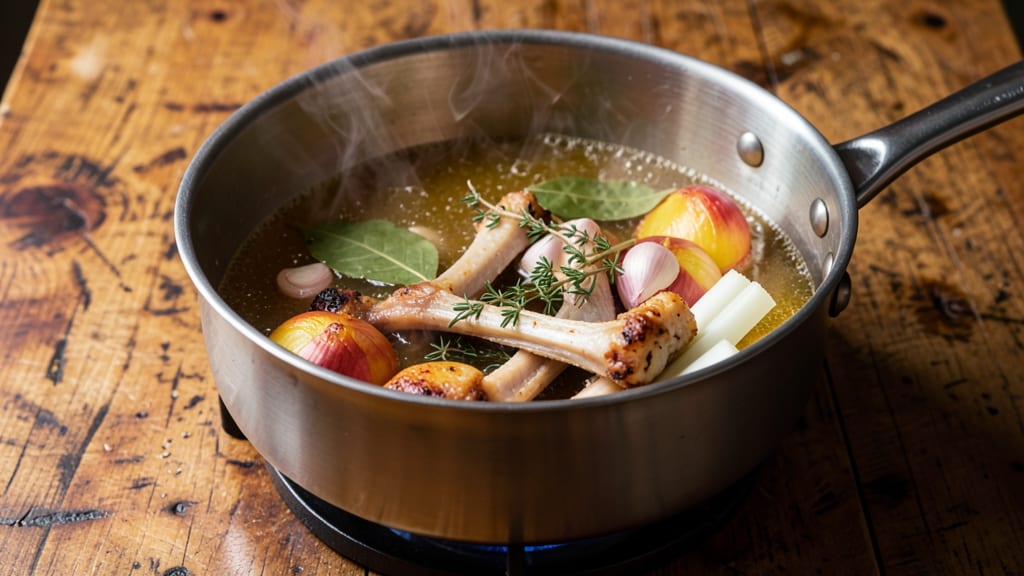
This rotisserie chicken stock recipe turns simple bones into a deeply flavorful elixir—one of the most satisfying techniques I’ve perfected after years of working with whole-hog cuts.
This recipe turns what would otherwise be waste into a flavorful foundation for soups, sauces, and braises, all with just 30 minutes of active time and 2 hours of simmering.
The secret lies in the aromatics and slow extraction: onion, celery, and garlic form the base, while herbs like thyme and bay leaves deepen the flavor. Unlike store-bought stocks, this version captures the natural richness of the bones, creating a base that’s far more complex and aromatic.
I’ve used this method for years in my restaurant kitchen, and it’s just as effective at home.
What you’ll end up with is a deep, golden stock that’s rich enough to stand alone or elevate any dish. The collagen from the bones melts into a velvety texture, while the herbs and vegetables infuse layers of savory depth.
This isn’t just stock—it’s a flavor multiplier that transforms simple meals into something extraordinary.
Perfect for meal prep or storing in the freezer, this stock keeps its quality for up to 3 months. Whether you’re making a hearty stew or a delicate sauce, this recipe ensures you’ll never settle for anything less than restaurant-quality results.
Let’s get started with the ingredients you likely already have on hand.
Ingredients for rotisserie chicken stock
Pantry staples plus a few fresh aromatics—everything you need to unlock restaurant-quality flavor from leftover bones.
| Ingredient | Amount | Notes |
|---|---|---|
| Rotisserie Chicken Bones 🍗 | 2 lbs | Raw or cooked, skin removed |
| Yellow Onion 🧅 | 1 whole | Cut into chunks, skin on |
| Celery Stalks 🥬 | 4 whole | Cut into 2-inch pieces |
| Garlic Cloves 🧄 | 6 cloves | Smashed, not minced |
| Fresh Thyme Sprigs 🌿 | 4 whole | Stems intact for easy removal |
| Bay Leaves 🍃 | 2 whole | Dried, standard size |
| Black Peppercorns 🌶️ | 1 tbsp | Crushed lightly |
| Salt 🧂 | 1 tsp | Kosher or sea salt |
| Water 💧 | 8 cups | Filtered preferred |
| Lemon Juice 🍋 | 1 tbsp | Freshly squeezed |
| Fresh Parsley 🌿 | ¼ cup | Chopped, for finishing |
The bones are the star here. Any rotisserie chicken bones will work, but those with a little meat clinging to them add extra richness. If you've got a whole bird carcass, save it for this—it's liquid gold. For the aromatics, Trader Joe's or Whole Foods have the freshest celery and onions, but honestly the grocery store stuff works fine. Just make sure the celery isn't woody and the onions are firm. The thyme and bay leaves? Penzeys if you're feeling fancy, but the tiny packets from the spice aisle are perfectly fine. Smash those garlic cloves with the side of your knife—it releases more flavor than mincing.
No fresh thyme? Dried works at half the amount, but you'll lose some of that bright herbal note. Running low on bay leaves? One dried leaf equals two fresh. The lemon juice is optional but adds a bright finish—store-bought is fine if you don't have fresh. For the parsley, fresh is best, but dried parsley at one-third the amount will work in a pinch. The water should be cold to start—hot water can make the stock cloudy. If you're using cooked bones, give them a quick rinse to remove any residual grease, but don't worry about being too thorough.
This stock keeps beautifully. Fridge for 5-6 days or 3 months in the freezer—it actually gets better with time as flavors meld. I like to freeze it in 2-cup portions for easy use in soups and sauces. Strain it through a fine-mesh sieve or cheesecloth for the smoothest texture, then store in airtight containers. The first batch will always be the richest—save any scraps for a second round. And trust me, you'll want seconds.
Why You'll Love This Recipe
- No Chopping Nightmare: I swear by this recipe because the only prep is picking meat off bones—no dice, no sweat. Just toss in onion chunks, celery stalks, and garlic, then let the rotisserie magic do the rest.
- Deep Umami Magic: That crispy rotisserie skin? Total flavor bomb. The thyme and garlic steep into the broth until it’s rich, savory, and somehow better than store-bought—like a hug in a mug.
- Meal Prep MVP: Freeze what you don’t use—this stock lasts weeks. Perfect for soups, grains, or even a quick pasta boost when you’re too tired to think.
- Zero-Waste Hero: Use every last scrap of that rotisserie chicken instead of tossing bones. Honestly, it’s the easiest way to stretch a budget and cut food waste—win-win.
Step-by-step instructions for rotisserie chicken stock
Here's how to extract maximum flavor from every bone using simple techniques.
Prepare the Bones for Maximum Flavor Extraction
First, spread the 2 lbs rotisserie chicken bones on a baking sheet and let them cool completely if they're still warm. This prevents the stock from turning cloudy when you add them to the pot later. Once cool, pick through the bones to remove any remaining meat clinging to them—this gives you extra protein and richer flavor in your stock.
Next, place the bones in a large stockpot. I find a heavy-bottomed pot works best for even heating. Add the 1 whole yellow onion (cut into chunks with skin on) and 4 whole celery stalks (cut into 2-inch pieces). The skins add subtle sweetness and depth to the stock. Don't worry about peeling these—they'll dissolve during cooking and contribute to the complex flavor profile you're building.
Build the Aromatic Base and Add Liquids
Add the 6 cloves garlic (smashed but not minced) to the pot along with the 4 whole fresh thyme sprigs (leave stems intact for easy removal later) and 2 whole bay leaves. These aromatic ingredients form the flavor foundation of your stock. Pour in the 8 cups water—filtered water is ideal as it has fewer impurities that can affect taste.
Bring the mixture to a boil over medium-high heat. Once boiling vigorously, reduce heat to maintain a gentle simmer. You'll know you've reached the right temperature when you see small bubbles breaking the surface but not a full rolling boil. This simmering process is crucial—it extracts flavors without breaking down the collagen in the bones too quickly.
Season and Simmer for Deep Flavor Development
Add the 1 tablespoon crushed black peppercorns and 1 teaspoon salt to the simmering pot. Stir gently to distribute these seasonings throughout the liquid. The peppercorns add a subtle warmth that complements the chicken flavor, while the salt helps enhance all the other flavors present. Let the stock simmer uncovered for 2 hours—this long cooking time is what transforms simple ingredients into rich, flavorful stock.
Here's where patience pays off: the collagen in the bones will gradually break down during this time, releasing gelatin that gives your stock its signature body. I know it seems like a long wait, but trust the process. If you notice the water level drops significantly, add enough hot water to maintain the original 8 cups volume—this keeps the flavors concentrated.
Finish with Acid and Strain for Clarity
After 2 hours of simmering, stir in the 1 tablespoon lemon juice. The acidity brightens the stock and helps cut through any heaviness from the long cooking time. Let the stock simmer for an additional 15 minutes with the lemon juice incorporated. This final step ensures all flavors meld together perfectly.
Remove the pot from heat and let the stock sit for 10 minutes to allow any settled particles to sink to the bottom. Then, strain the stock through a fine-mesh sieve or cheesecloth-lined colander into a clean container. Discard the solids in the strainer—they've given everything they've got to your stock. For extra clarity, you can chill the stock overnight and skim off any congealed fat that rises to the top before using.
Finish and Store for Maximum Freshness
Once strained, your stock should be rich, golden, and deeply flavorful. Taste it and adjust seasoning if needed—you might want to add a pinch more salt or a splash of lemon juice to perfect the balance. The stock should have a clean, chicken-forward flavor with hints of thyme and bay leaf.
Transfer the stock to airtight containers, leaving about 1 inch of headspace at the top to allow for expansion. It will keep in the refrigerator for up to 5 days or in the freezer for up to 3 months. This versatile stock is perfect for soups, sauces, grains, or even as a base for risottos—every sip should remind you of the care you put into making it.
Pro Tips For Making Rotisserie Chicken Stock
- Char the Bones First: Toss those rotisserie bones in a dry skillet over medium-high heat for 3-4 minutes until they’re deeply browned—this caramelizes the meat and bones, giving your stock a richer, deeper flavor. I learned this the hard way after making stock that tasted bland until I tried this step.
- Chop Celery Roughly: Skip the fine dice—break celery stalks into 1-inch chunks instead. They’ll release more flavor into the broth and won’t turn to mush as quickly. (Yes, it looks less precise, but your stock will taste like it came from a restaurant.)
- Don’t Rush the Simmer: Keep the heat low enough that you see tiny bubbles at the edges, not a rolling boil. A fast boil clouds the stock and wastes flavor—this is the thing that matters most for clarity and depth. I used to ignore this and wondered why my stock always tasted weak.
- Add Thyme Late: Tuck the thyme sprigs into the broth only during the last 15 minutes of cooking. This prevents the oil from turning bitter and ensures the herbs infuse just enough without overpowering. (Your future self will thank you for this small tweak.)
Flavor customization for this recipe
Herb Variations
Swap out thyme for rosemary or tarragon to create Mediterranean-inspired stock. I love adding 1 sprig fresh rosemary for piney depth—it pairs beautifully with lemon juice at the end. For a French bistro touch, use 1 sprig tarragon and 1 sprig parsley instead of thyme.
Both herbs work best fresh, but if you must use dried, halve the quantity. 🌿
Spicy Kick
Add 2-3 slices of fresh ginger and 1 chili pepper (seeds removed for mild heat) to the pot during simmering. The ginger adds warmth while the chili brings subtle spice—perfect for Asian-inspired soups or curries.
For extra depth, toast 1 tsp coriander seeds in a dry pan until fragrant, then add to the stock. This variation works especially well with rotisserie chicken from spice-rubbed birds you might find at local butcher shops.
Vegetable Boost
Incorporate 1 leek (white and light green parts only) and 1 small fennel bulb (quartered) for a sweeter, more complex stock. The fennel adds an anise-like note that pairs wonderfully with chicken.
For a heartier version, include 1 small parsnip and 1 carrot chopped into chunks. These vegetables dissolve beautifully during simmering, adding natural sweetness without overpowering the chicken flavor.
Umami Bomb
Boost umami by adding 1 sheet kombu seaweed (found in Asian markets) or 1 tbsp soy sauce during the final 15 minutes of simmering. The kombu dissolves completely and adds a subtle oceanic depth, while the soy sauce enhances the savory profile.
For a vegetarian-friendly version, add 2 dried shiitake mushrooms to the pot during simmering—they release rich, earthy flavors into the stock. 💫
Citrus Variations
Experiment with different citrus finishes. Swap lemon juice for orange juice or lime juice—orange adds a bright sweetness while lime brings a tangy twist. For a sophisticated touch, add 1 tsp orange zest along with the lemon juice.
I also like using 1 tbsp white wine (like Sauvignon Blanc) instead of lemon juice for a more complex finish. These variations work especially well with stocks used in sauces or risottos.
Smoky Depth
For a smoky variation, char 1 onion half and 1 celery stalk over an open flame or under a broiler before adding them to the pot. The charred vegetables add a subtle smokiness that pairs beautifully with chicken.
Alternatively, add ½ tsp smoked paprika during the final 15 minutes of simmering. This technique works exceptionally well with rotisserie chicken that's been cooked over wood smoke, like those from Southeast BBQ pits or Atlanta-style smokers.
Nutrition facts
Frequently asked questions
Can I use rotisserie chicken meat along with the bones?
While the recipe focuses on bones for maximum collagen extraction, you can add the meat back into the simmering pot during the final 15 minutes of cooking. This infuses the stock with extra flavor and protein. Just remove the meat before straining to keep your stock clear.
Why does my stock turn cloudy?
Cloudiness usually means the stock boiled too vigorously or the bones weren't cooled first. To prevent this, always start with cold water and bones, and maintain a gentle simmer—not a rolling boil. If it happens, strain through a coffee filter for extra clarity.
How do I make this stock vegetarian?
Replace the chicken bones with 2 lbs of vegetable scraps (onion skins, carrot tops, celery ends) and add 2 dried shiitake mushrooms or 1 sheet kombu seaweed for umami depth. Simmer for 1.5 hours instead of 2 to avoid bitterness.
Can I make this in a slow cooker?
Yes! Combine all ingredients in your slow cooker and cook on low for 6-8 hours or high for 4 hours. The longer cook time enhances flavor extraction. Just remember to strain through cheesecloth for the smoothest texture.
What's the best way to use up leftover stock?
Freeze in 2-cup portions for easy use in soups, sauces, or risottos. Or reduce it by half for a rich pan sauce—just simmer uncovered until thickened. It also makes an excellent base for gravies or braising liquids.