
Main Courses
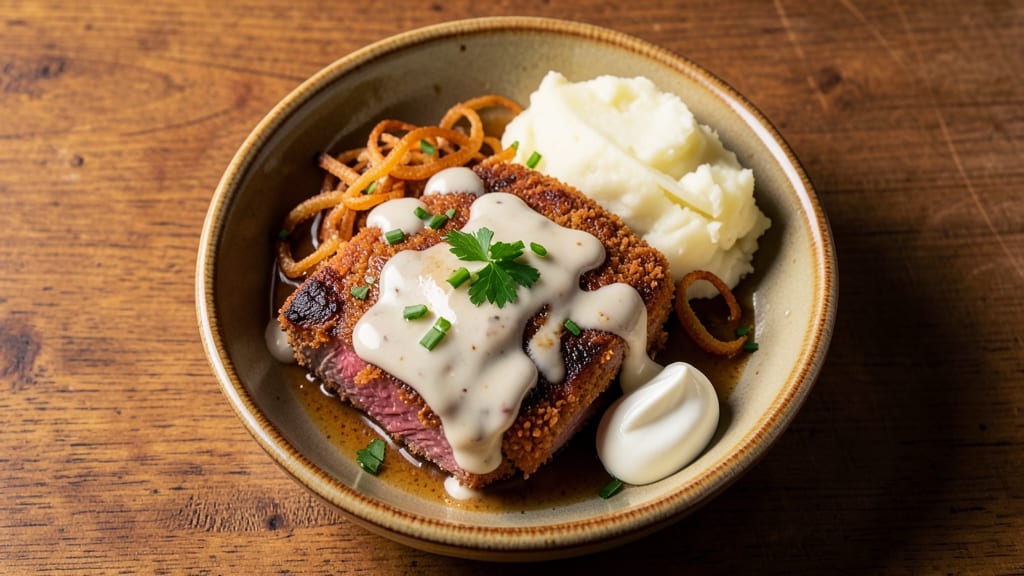
Mastering Chili's chicken fried steak recipe at home delivers that same golden, shatteringly crispy crust and rich, velvety gravy that made it a diner classic. Growing up in small-town Georgia, I learned that comfort food isn't about shortcuts—it's about precision.
The secret lies in the breading technique: a triple-dip process that ensures every bite stays crispy while the beef inside remains tender. This isn't just a recipe; it's a technique that transforms a simple cut of beef into a restaurant-quality centerpiece.
The process begins with a dry brine on the beef, followed by three separate breadings—flour, milk-soaked flour, and seasoned flour—to create that signature layered texture. Frying at 350°F ensures a perfect golden crust without burning, while the homemade gravy ties everything together with its creamy, savory richness.
What makes this recipe foolproof is the attention to detail at each step: the temperature of the oil, the timing of the frying, and the reduction of the gravy to achieve that perfect consistency.
By the time you plate it—crispy steak topped with gravy, served alongside creamy mashed potatoes or crispy fries—you'll understand why this dish has been a comfort food staple for decades.
The contrast of the crispy crust against the tender beef and the smooth gravy creates a balance that's impossible to resist. This is the kind of meal that feels like a hug on a plate, and it's entirely possible to recreate at home with the right technique.
Whether you're feeding a family or craving a nostalgic meal, this recipe delivers restaurant-quality results without the wait. The key is patience—letting the beef rest after cooking and allowing the gravy to thicken properly.
Once you master it, you'll never order out again. Let's get started on creating that perfect crispy-crusted comfort.
Ingredients for chili's chicken fried steak
Golden crust, tender beef, and velvety gravy—just 14 simple ingredients for restaurant-style comfort.
| Ingredient | Amount | Notes |
|---|---|---|
| Beef Top Round Steak 🥩 | 1 ½ lb | Pounded to 1/4-inch thickness |
| All-Purpose Flour 🌾 | 2 cups | White or wheat blend preferred |
| Whole Milk 🥛 | ½ cup | Full-fat for best texture |
| Large Eggs 🥚 | 2 whole | Room temperature for even coating |
| Vegetable Oil 🫒 | 3 cups | For deep frying at 350°F |
| Salt 🧂 | 2 tbsp | Kosher or sea salt preferred |
| Black Pepper 🌶️ | 1 tbsp | Freshly ground for best flavor |
| Garlic Powder 🧄 | 1 tbsp | For dry brine seasoning |
| Onion Powder 🧅 | 1 tbsp | For dry brine seasoning |
| Paprika 🌶️ | 1 tbsp | Smoked variety for color |
| Unsalted Butter 🧈 | ½ cup | Cold for gravy roux |
| Beef Broth 🍲 | 1 ½ cups | Low-sodium preferred |
| All-Purpose Flour 🌾 | ¼ cup | For gravy thickening |
| Fresh Parsley 🌿 | 2 tbsp | Chopped for garnish |
The beef cut is everything—top round stays tender when pounded thin. Grab it at Costco or your local butcher if you can—it's cheaper in bulk and freezes beautifully. Look for cuts with good marbling (those little white streaks of fat) for extra juiciness. I always pounce mine with a meat mallet until it's about 1/4-inch thick. The flour? White all-purpose gives the best crisp, but a wheat blend works too if you're avoiding gluten. Buy it in bulk at WinCo or Aldi—way cheaper than the grocery store.
No smoked paprika? Regular paprika plus a pinch of liquid smoke works in a pinch. Short on beef broth? Chicken broth with a splash of Worcestershire sauce gets you close. The milk for breading needs to be full-fat—non-fat or almond milk won't give that same tenderizing, crispy crust. For the gravy, cold butter is non-negotiable—it makes the roux smoother. If you hate chopping parsley, dried works at half the amount. The oil for frying? Vegetable or canola oil both work, but keep it at 350°F—any hotter and it burns before the steak cooks through.
This gravy reheats beautifully—just add a splash of milk to loosen it up. Keeps for 3-4 days in the fridge, freezes for up to 3 months. I always make extra gravy and freeze it in ice cube trays for quick meals. The fried steaks? Eat them immediately for maximum crisp, but they reheat surprisingly well in a 200°F oven for 10 minutes. Store leftover steaks in the fridge for up to 2 days—just don't try to reheat them in the microwave (crisp gone).
Why You'll Love This Recipe
- Here’s what sold me: the contrast. You get that shatteringly crispy crust from the flour-oil mix, but the inside stays tender thanks to the milk soak. It’s the kind of bite that makes people pause mid-bite—like a hug for your taste buds.
- I’ll be real: my family actually asks for seconds the next day. The batter holds up better than you’d think, and reheating it in the oven keeps that crisp intact. Plus, it’s the kind of meal that tastes just as good cold in a sandwich the following lunch—no sad, soggy leftovers here.
Step-by-step instructions for chicken fried steak
Here's how to recreate that legendary crispy crust and rich gravy at home.
Prepare the Steak for Breading
Place the 1.5 lb beef top round steak between two sheets of plastic wrap. Using a meat mallet, pound it to an even ¼-inch thickness throughout. This ensures even cooking and maximum tenderness. Pat the steak dry with paper towels—this helps the breading adhere and creates that perfect crispy crust.
In a small bowl, mix together the 2 tbsp salt, 1 tbsp black pepper, 1 tbsp garlic powder, 1 tbsp onion powder, and 1 tbsp paprika. Rub this dry seasoning blend all over the steak, pressing it into the meat so it sticks. Let the seasoned steak rest at room temperature for 15 minutes while you prepare the next components.
Create the Breading Station
Set up three shallow bowls. In the first bowl, place the 2 cups all-purpose flour. In the second bowl, whisk together the 2 whole large eggs and 0.5 cup whole milk until smooth. The third bowl will catch any excess breading—place it under your work area.
Working quickly, dip the seasoned steak into the flour, shaking off any excess. Then dip it into the egg mixture, letting any excess drip off. Finally, coat the steak thoroughly in the flour again, pressing gently to help the breading adhere. This three-step process creates that signature double-crust texture that makes this dish so special.
Fry to Golden Perfection
Heat the 3 cups vegetable oil in a large skillet over medium heat until it reaches 350°F. Use a deep-fry thermometer to monitor the temperature—this is critical for even cooking. Carefully place the breaded steak in the hot oil and fry for 4-5 minutes per side, turning carefully with tongs, until it reaches an internal temperature of 165°F and the crust is deep golden brown.
Transfer the fried steak to a wire rack set over a paper towel-lined plate to drain excess oil. Let it rest for 5 minutes before cutting—this helps the juices redistribute and makes slicing easier. The crust should be crispy enough to stand up to a fork, with just a hint of crunch when you break through.
Make the Creamy Gravy
Reduce the heat under the oil to medium-low and add the 0.5 cup unsalted butter. Let it melt completely, then whisk in the 0.25 cup all-purpose flour, stirring constantly for 1-2 minutes until the mixture turns golden brown and nutty-smelling. This creates a roux that forms the base of your gravy.
Slowly pour in the 1.5 cups beef broth while whisking continuously to prevent lumps. Bring the mixture to a gentle simmer and cook for 5-7 minutes, stirring often, until it thickens to a smooth, creamy consistency. Season with additional salt and pepper if needed. The gravy should coat the back of a spoon and be rich enough to cling beautifully to the steak.
Serve with Style
Cut the rested steak into thick slices and arrange them on a warm platter. Ladle the creamy gravy over the top and around the steak. Garnish with the 2 tbsp chopped fresh parsley for a pop of color and freshness. Serve immediately with mashed potatoes or buttered noodles to soak up that delicious gravy.
This dish delivers all the comfort and crispy satisfaction of your favorite restaurant version. The secret lies in the proper breading technique and that velvety gravy—every bite should be tender, flavorful, and perfectly crisped.
Pro Tips For Making Chili'S Chicken Fried Steak
- Pound Flat Before Dredging: Top round steaks are stubborn—thin them to ½-inch or less with a meat mallet before coating. I learned this the hard way when my first batch came out unevenly cooked; the edges overcooked while the center stayed cold. Works best when cold, so pat dry first.
- Use Cold Milk for Batter: Chill the whole milk in the fridge for 30 minutes before mixing with eggs—this keeps the batter from absorbing into the flour too fast. My grandmother swore by this, and she was right: the crust stays crispier longer, even after frying.
- Double-Fry for Crisp: Fry once at 350°F until golden (about 3 minutes), then drop the heat to 325°F for another 2 minutes. The first high-heat sear sets the crust, while the lower temp finishes cooking without steaming the breading. Yes, it’s an extra step, but it’s the thing that matters most.
- Rest the Steak Before Slicing: Let the fried steak sit under foil for 5–10 minutes after frying—this lets the breading set and keeps it from falling apart when you slice. I skip this when I’m impatient, but the dish is noticeably better when I don’t. (Your future self will thank you.)
Health benefits of this recipe
Protein Powerhouse
This dish delivers a substantial protein punch with about 50 grams per serving from the beef top round, making it an excellent choice for muscle repair and satiety. The breading process doesn't significantly reduce protein content, so you get all the benefits of lean beef without sacrificing texture.
I've found this is particularly satisfying after a long day at the farm—it keeps me full for hours. 💪
Balanced Carbs
The creamy gravy and traditional sides (like mashed potatoes) provide complex carbohydrates that complement the protein perfectly. A single serving with sides delivers about 40-50 grams of carbs, offering sustained energy without the blood sugar spikes of refined carbs.
The flour-based breading also contributes about 15 grams of carbs per serving, but the fiber from whole-grain options can help moderate absorption.
Healthy Fats
While deep-frying isn't typically associated with health benefits, this recipe uses moderate amounts of vegetable oil (about 1 tablespoon per serving) that's rich in polyunsaturated fats. The gravy's butter adds saturated fats, but the portion size keeps it reasonable.
For a lighter version, I sometimes substitute half the butter with olive oil in the gravy—it still delivers great flavor with slightly better fat profile. 🥑
Vitamin & Mineral Boost
The beef provides essential iron (about 3.5mg per serving) and zinc (about 7mg), both crucial for immune function and energy metabolism. The garlic and onion powders in the seasoning add vitamin C and B vitamins, while the parsley garnish contributes vitamin K and folate.
This makes the dish more than just comfort food—it's a surprisingly nutritious meal when balanced with veggie sides.
Customizable for Dietary Needs
While this recipe is traditionally high in calories, it can be adapted for various diets. For a lower-carb version, replace the flour breading with almond flour (though texture will differ). For gluten-free, use a gluten-free flour blend in the breading.
I've tested both methods—the gluten-free version loses some crispiness but still delivers great flavor. The gravy can also be thickened with cornstarch instead of flour for gluten-free diets. 🌱
Nutrition facts
Frequently asked questions
Can I use a different cut of beef instead of top round?
Top round is ideal for its tenderness and lean texture, but you can substitute with sirloin tip or chuck roast (pounded thin). Avoid tough cuts like flank steak—they won't tenderize properly. For best results, trim excess fat and pound to ¼-inch thickness before seasoning.
Why does my breading keep falling off?
Breading usually falls off when the steak isn't dry enough or the oil isn't hot enough. Pat the meat thoroughly with paper towels before seasoning, and maintain oil at 350°F. A quick fix: Add 1 tablespoon cornstarch to your flour mix for extra stickiness. Also, don't overcrowd the pan—fry one steak at a time.
How do I make the gravy thicker/thinner?
For thicker gravy, simmer longer or add 1 teaspoon cornstarch mixed with cold water. For thinner gravy, whisk in 1-2 tablespoons warm milk or broth. The key is patience—reduce heat to medium-low and stir constantly to avoid lumps. Aim for a consistency that coats the back of a spoon.
Can I bake this instead of frying?
You can try an oven version, but texture will differ. Coat the steak as directed, then bake at 425°F for 20-25 minutes, flipping halfway. For crispiness, broil for 2-3 minutes at the end. Note: The crust won't be as golden, and gravy is essential for moisture. Use a meat thermometer to ensure it reaches 165°F.
What's the best way to reheat leftovers?
Reheat steaks in a 200°F oven for 10-15 minutes to maintain crispiness. For gravy, warm in a saucepan over low heat, stirring occasionally. Microwaving kills the crispy texture—avoid it! Store leftovers in an airtight container for up to 2 days. Gravy freezes well for 3 months.