
Main Courses
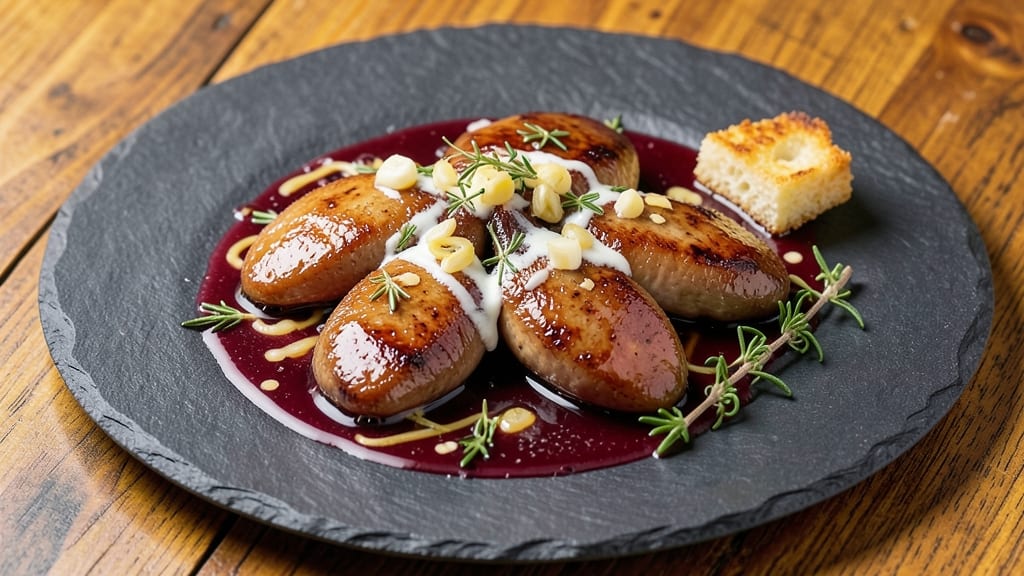
This chicken liver and red wine recipe transforms a classic French technique into a restaurant-worthy dish you can master at home. The secret lies in quick searing followed by a bold red wine reduction that cuts through the richness while enhancing the liver's natural umami depth.
I developed this method after years of experimenting with offal dishes—it's the perfect balance of traditional technique and approachable execution.
The process begins with perfectly seared chicken livers—just 2 minutes per side in a screaming-hot pan—to maintain their tender texture. Deglazing with red wine creates a velvety sauce that coats every bite, while shallots and thyme add aromatic complexity.
What sets this apart is the 30-minute timeframe, making it ideal for weeknight dinners without sacrificing depth of flavor. The sauce reduces to a glossy finish that clings beautifully to the livers.
By the end, you'll have golden-brown livers with a caramelized crust, swimming in a rich red wine sauce that's both elegant and deeply satisfying. This dish pairs perfectly with creamy mashed potatoes or buttery egg noodles to soak up every last drop.
The technique is straightforward, but the results feel luxurious—proof that offal dishes can be both impressive and accessible.
For those new to chicken liver, I recommend starting with the full recipe as written before experimenting with variations like adding mushrooms or a splash of cream. The key is confidence in the searing step—once you master that, the rest becomes intuitive. Let's get cooking!
Ingredients for chicken liver red wine
Twelve ingredients transform delicate chicken livers into a sophisticated red wine masterpiece.
| Ingredient | Amount | Notes |
|---|---|---|
| Chicken Livers 🍗 | 1 ¼ lb | Fresh, trimmed of connective tissue |
| Dry Red Wine 🍷 | ½ cup | Bold Cabernet Sauvignon preferred |
| Shallots 🧅 | 3 whole | Minced, about 0.25 cup |
| Fresh Thyme 🌿 | ¼ cup | Leaves only, stems removed |
| Unsalted Butter 🧈 | 3 tbsp | Cold, cut into small cubes |
| Diamond Crystal Kosher Salt 🧂 | ¾ tsp | For seasoning and sauce |
| Freshly Ground Black Pepper 🌶️ | ½ tsp | Coarsely ground |
| Heavy Cream 🥛 | ¼ cup | Optional, for richness |
| Extra-Virgin Olive Oil 🫒 | 1 tbsp | For searing |
| Cold Water 💧 | ½ cup | For rinsing livers |
| Fresh Lemon Juice 🍋 | 1 tbsp | Brightens the sauce |
| All-Purpose Flour 🌾 | 1 tbsp | For dredging livers |
The quality of chicken livers is non-negotiable—look for bright red, vibrant pieces with minimal connective tissue. Whole Foods or trusted butchers offer the freshest cuts, often sold pre-trimmed for convenience. If working with whole livers, trim away any silverskin and fibrous bits before rinsing in cold water. For the red wine, Cabernet Sauvignon or Merlot provides the bold structure needed to complement the umami depth, while avoiding overly fruity varieties like Pinot Noir. Fresh thyme should be bright green with a strong aroma—avoid dried unless labeled 'culinary thyme' (regular dried thyme lacks the same intensity).
No red wine? Substitute with beef stock reduced by half, though the sauce will lack complexity. Dried thyme works at one-third the amount, but fresh is ideal for that aromatic punch. The heavy cream is optional but adds luxurious body—full-fat yields the best results. For those avoiding gluten, omit the flour entirely, though it helps create the perfect sear. If shallots aren't available, yellow onion minced fine works, though it lacks the delicate sweetness. The lemon juice can be swapped for white wine vinegar, though fresh lemon brightens the dish more effectively.
Chicken livers oxidize quickly—use within 2 days of purchase. Store them in an airtight container with a paper towel to absorb moisture. The red wine sauce can be made ahead and reheated gently, though the livers are best served immediately after searing. For optimal texture, pat livers dry before cooking to ensure a proper sear. Leftovers keep for 1 day in the fridge, though the sauce freezes beautifully for up to 3 months. Portion sauce separately if freezing to maintain texture.
Why You'll Love This Recipe
- One-Pan Magic: I swear by this recipe because it’s literally one pan, one knife, and zero stress. The livers sizzle right alongside the shallots in the same skillet—no chopping boards left to scrub, no extra dishes. (Yes, even on a Tuesday night when I’m too tired to care.)
- Rich Without Effort: That red wine reduction? It’s the secret weapon here—deep, savory, and somehow makes the simplest ingredients taste like a bistro dish. The thyme adds this earthy brightness that cuts through the richness, and the butter at the end? Pure velvet.
- Weeknight or Weekend: Honestly, this works for everything. Slap it on crusty bread for a quick lunch, serve it over polenta for a fancy-ish dinner, or even toss it into pasta if you’re feeling lazy. My roommates eat it straight from the pan with toast—no judgment here.
- Budget-Friendly Luxury: Chicken livers are cheap, but they taste like you spent hours on them. A bottle of red wine goes a long way when you’re simmering it down, and the leftovers? Even better the next day. I’ve reheated this for breakfast with eggs and never once regretted it.
Step-by-step instructions for chicken liver and red wine sauce
Transform simple ingredients into a luxurious umami-rich sauce with precise technique and timing.
Prepare and Clean the Chicken Livers
Begin by trimming any visible connective tissue or membranes from the 1.25 lb chicken livers using a sharp knife. Rinse them thoroughly under cold water to remove any blood, then pat them completely dry with paper towels. This cleaning step is crucial—any residual blood will make the sauce bitter.
Place the cleaned livers in a bowl and cover them with the 0.5 cup cold water. Let them soak for 10 minutes, then drain and rinse again under cold water. This second rinse ensures all blood is removed. After draining, pat the livers dry once more. The livers should now be pale and ready for cooking.
Sear the Livers and Sauté the Shallots
Heat 1 tbsp extra-virgin olive oil in a large skillet over medium-high heat until shimmering. Working in batches to avoid crowding, add the livers and sear for 1-2 minutes per side until they develop a deep golden-brown crust. Remove them from the pan and set aside on a plate.
In the same skillet, reduce heat to medium and add 3 tbsp unsalted butter. Once melted, add the 3 whole shallots (minced) and cook for 3-4 minutes until softened and translucent. Stir in the 0.25 cup fresh thyme leaves and cook for an additional 1 minute until fragrant. This aromatic base will form the foundation of your sauce.
Deglaze with Red Wine and Simmer
Pour in the 0.5 cup dry red wine, scraping up any browned bits from the bottom of the pan. Increase heat to medium-high and let the wine reduce by half, which should take about 3-4 minutes. This deglazing step captures all the flavorful fond left behind by the livers and shallots.
Return the seared livers to the skillet and spoon the wine sauce over them. Reduce heat to low and simmer for 5 minutes, allowing the livers to gently cook through while absorbing the wine-infused flavors. The livers should reach an internal temperature of 145°F when checked with a meat thermometer.
Finish with Cream and Seasoning
Remove the livers from the skillet and set them aside on a warmed plate. Stir the 0.25 cup heavy cream into the sauce and simmer for 2-3 minutes until slightly thickened. Season with 0.75 tsp diamond crystal kosher salt and 0.5 tsp freshly ground black pepper, then finish with 1 tbsp fresh lemon juice to brighten the flavors.
Return the livers to the sauce and let them warm through for 1 minute, allowing the sauce to coat them evenly. The final sauce should be glossy, rich, and perfectly balanced between the deep umami of the livers and the bright acidity of the wine and lemon.
Serve Immediately with Crispy Dredge (Optional)
For an extra layer of texture, toss the livers in the 1 tbsp all-purpose flour before searing in Step 2. This creates a delicate golden crust that contrasts beautifully with the velvety sauce. Serve the livers immediately, spooning the sauce generously over each portion.
Pair with crusty bread or buttery mashed potatoes to soak up every last drop of the luxurious red wine sauce. The livers should be tender yet firm, with a deep golden crust, and the sauce should coat the back of a spoon with a perfect balance of richness and acidity.
Pro Tips For Making Chicken Liver Red Wine
- Soak the Livers First: Skip this and you’ll end up with dry, rubbery livers—trust me, I did. Toss them in cold water for 10 minutes, then drain and pat thoroughly dry. The bitterness fades, and the texture stays tender. (Yes, even if you’re impatient like me.)
- Sweat Shallots Low and Slow: High heat turns shallots bitter, and that’s the last thing you want in a rich red wine sauce. Cook them over medium-low for 5-6 minutes until translucent, stirring occasionally. This builds flavor without burning—no one wants charred onions in their sauce.
- Deglaze with Wine Immediately: Let those browned bits (fond) sit for 30 seconds after removing the livers, then pour in the wine hot. The alcohol will lift the flavor straight into your sauce. Scrape the pan like you mean it—those bits are pure umami gold.
- Finish with Butter Slowly: Dump cold butter into a hot sauce and it’ll separate like a bad salad dressing. Instead, let the sauce cool slightly (just until it’s warm to the touch), then whisk in butter a pat at a time. The sauce will coat like silk—no lumps, just luxury.
Dietary considerations for this chicken liver red wine
Gluten-Free Adaptations
This recipe naturally accommodates gluten-free diets by omitting the flour dredge entirely. The livers still achieve a perfect sear when cooked in 1 tbsp olive oil without flour—just ensure your pan is screaming hot (medium-high heat) for that golden crust.
For extra texture, toss the livers in 1 tbsp cornstarch or arrowroot powder before searing, which creates a delicate crust while keeping the dish gluten-free. 🌾
Dairy-Free Options
Replace the 3 tbsp butter with 3 tbsp dairy-free butter (like Miyoko’s or Earth Balance) or olive oil for the shallot sauté. Skip the heavy cream and use ¼ cup coconut cream instead—it adds richness while keeping the dish dairy-free.
The sauce will still coat beautifully, though the texture will be slightly lighter. For extra depth, add 1 tsp nutritional yeast at the end for a cheesy note.
Low-Fat Modifications
To reduce fat while maintaining flavor, sear the livers in a nonstick skillet with just 1 tsp olive oil instead of butter. Deglaze with red wine as usual, then finish the sauce with 1 tbsp chicken stock instead of cream.
The wine reduction will still be rich, though slightly lighter in body. For extra umami, add ½ tsp fish sauce to the sauce at the end—it enhances depth without fat.
Vegetarian Substitutes
While chicken livers are rich in iron and B12, vegetarians can mimic the umami profile using mushroom stems (like shiitake or oyster) or hearts of palm. Sear the mushrooms in the same way, then proceed with the red wine reduction.
For texture, use firm tofu cut into liver-sized pieces and pan-seared until crispy. The sauce will cling beautifully, though the flavor won’t be identical—expect a more earthy, less iron-rich result.
High-Protein Focus
This dish is already protein-packed with 40g protein per serving, but you can boost it further by adding ¼ cup cooked quinoa to the sauce or serving alongside grilled chicken breast.
For a heartier plate, pair with roasted chickpeas or a side of lentil salad—both add fiber and plant-based protein without overpowering the livers. The red wine sauce’s acidity cuts through the richness, making it a balanced, protein-rich meal.
Nutrition facts
Frequently asked questions
Can I use any red wine for this recipe?
For best results, choose a bold, dry red wine like Cabernet Sauvignon or Merlot. These varieties have enough tannins and acidity to complement the rich umami of chicken livers. Avoid overly fruity wines like Pinot Noir—they can overpower the dish. If you don't have red wine, substitute with beef stock reduced by half, though the sauce will lack complexity.
Why do the chicken livers need to soak in water?
The soaking step removes residual blood, which can make the sauce bitter if left in. Chicken livers are high in iron, and any remaining blood will oxidize during cooking, creating an off-flavor. The double rinse after soaking ensures a clean, bright-tasting final dish with a perfect balance of richness and acidity from the wine.
How do I prevent the livers from becoming rubbery?
Overcooking is the #1 cause of rubbery livers. Use a meat thermometer to check for 145°F internal temperature—they should be cooked just until they reach this point. Sear them quickly over medium-high heat (no more than 2 minutes per side) and finish gently in the sauce. Crowding the pan also causes steaming, so cook in batches.
Can I make this sauce ahead of time?
The red wine sauce can be prepared 1 day in advance and reheated gently. Store it in an airtight container in the fridge, then warm it on the stovetop over low heat until hot. For best texture, sear the livers fresh and add them to the reheated sauce just before serving. The sauce freezes beautifully for up to 3 months—just thaw and reheat before using.
What's the best way to serve this dish?
This rich, umami-packed dish pairs perfectly with creamy sides that soak up the sauce. Try buttery mashed potatoes, crusty sourdough bread, or sautéed greens like spinach or asparagus. For a complete meal, add a simple arugula salad with lemon vinaigrette to cut through the richness.