
Main Courses
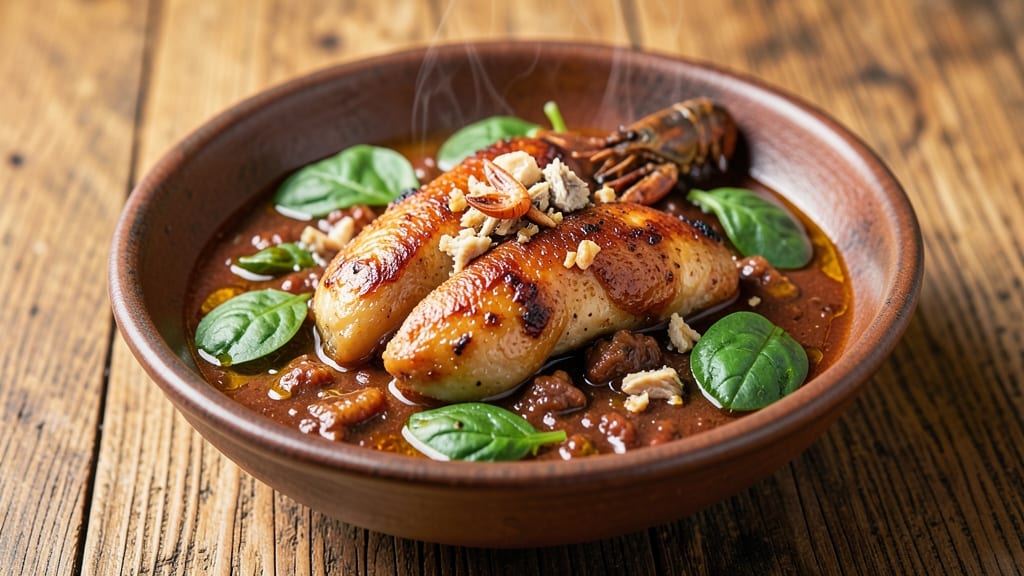
This chicken egusi recipe delivers the rich, nutty depth of West African cuisine with tender chicken and earthy egusi seeds. The secret lies in slow-cooking the broth until it develops a velvety texture that clings to every bite of chicken.
I first encountered this dish at a family gathering in Lagos, where the aroma alone brought everyone to the table. The combination of smoked fish, crayfish, and fresh leafy greens creates layers of umami that elevate the dish beyond ordinary stews.
The recipe balances tradition with approachable techniques—no special equipment required beyond a heavy pot for simmering. The egusi seeds, toasted until fragrant, form the stew's signature nutty base, while palm oil adds a distinctive red hue and rich flavor.
Chicken pieces cook until fork-tender, absorbing the aromatic broth while maintaining their structure. What makes this recipe special is how it transforms simple ingredients into a deeply satisfying meal that feels both comforting and celebratory.
By the time you serve this dish, you'll have a steaming pot of golden broth with tender chicken pieces floating in a sauce that's equally rich and balanced.
The nutty aroma of egusi fills the kitchen, while the texture of the stew is thick yet silky—perfect for serving with pounded yam, rice, or swallow. Each bite delivers a harmony of flavors that makes this more than just a meal; it's a taste of home. Let's get cooking!
This recipe serves 6 and takes about 2 hours from start to finish, but the prep is straightforward. The slow cooking time is where the magic happens—patience pays off with a stew that tastes even better the next day.
Whether you're cooking for a family gathering or a quiet weeknight dinner, this chicken egusi will become a staple in your rotation. The key is letting the flavors meld naturally, so don't rush the process.
Ingredients for chicken egusi
Sixteen ingredients. Two hours. One unforgettable West African stew.
| Ingredient | Amount | Notes |
|---|---|---|
| Chicken Thighs 🍗 | 2 lb | Bone-in, skin-on preferred |
| Egusi Seeds 🌾 | 1 cup | Toasted until fragrant |
| Palm Oil 🫒 | ½ cup | Red palm oil preferred |
| Smoked Fish 🐟 | ½ lb | Dried or smoked stockfish |
| Crayfish 🦐 | ¼ cup | Dried, ground into powder |
| Fresh Spinach 🌿 | 2 cups | Chopped, stems removed |
| Onions 🧅 | 1 whole | Chopped, medium size |
| Garlic Cloves 🧄 | 6 cloves | Minced, fresh preferred |
| Scotch Bonnet Peppers 🌶️ | 2 whole | Seeds removed for mild heat |
| Locust Beans 🌱 | ½ cup | Soaked, peeled, chopped |
| Salt 🧂 | 1 ½ tsp | Kosher or sea salt |
| Ground Black Pepper 🌶️ | 1 tsp | Freshly ground |
| Stockfish 🐟 | ¼ cup | Shredded, optional |
| Water 💧 | 4 cups | For simmering |
The egusi seeds are the heart of this dish, so choose high-quality, clean seeds—they should smell nutty and fresh, not rancid. African markets or specialty stores like Kalakuta or African Foods Direct carry the best varieties. Toast them in a dry pan until fragrant (about 5 minutes)—this brings out their nutty flavor. For palm oil, red palm oil adds the signature color and richness, but regular palm oil works in a pinch. The smoked fish and crayfish are non-negotiable for that deep umami—stockfish or dried shrimp can substitute if crayfish is unavailable, but the texture will differ slightly.
No smoked fish? Dried shrimp or anchovies work, but reduce the amount by half since they're more potent. Running short on crayfish? Ground shrimp or even extra crayfish powder can stretch it, but the flavor won't be identical. Fresh spinach wilts fast, so add it last to preserve color and nutrients. The scotch bonnet peppers can be swapped for habaneros or even a mild jalapeño if you prefer less heat. Locust beans (iru) are key for that earthy depth—if you can't find them, substitute with extra crayfish powder or a dash of soy sauce for umami.
This stew tastes even better the next day as flavors meld. Store in an airtight container in the fridge for up to 5 days. For longer storage, freeze portions for up to 3 months. The broth thickens as it cools, so add a splash of water when reheating. Serve with pounded yam, rice, or swallow—the silky texture pairs perfectly with these staples. Leftovers reheat beautifully; just stir in a little water to loosen the sauce.
Why You'll Love This Recipe
- One-Pot Magic: I swear by this—just brown the chicken, toss in everything else, and let it simmer. No chopping, no fuss, no extra pots. The egusi melts right into that rich palm oil while the smoked fish infuses flavor without extra work.
- Umami Bomb: That combo of smoked fish, crayfish, and palm oil? It’s like a flavor explosion in your mouth. The chicken stays juicy, the egusi adds a nutty depth, and the whole thing has this warm, savory richness that sticks with you.
- Weeknight Hero: Between us, this feeds my whole family and still leaves leftovers. I make a big batch on Sundays—some for dinner, some for lunches—and it reheats like a dream. No sad, dry chicken here.
- Budget Powerhouse: Chicken thighs and egusi are cheap staples, but they pack a punch. A single batch stretches across multiple meals, and you’re not sacrificing taste for savings. Honestly, it’s my go-to when I need to stretch groceries without skimping on flavor.
Step-by-step instructions for chicken egusi stew
Here's the method for creating a rich, nutty stew with perfectly tender chicken.
Prepare the Chicken and Base Ingredients
Begin by rinsing the 2 lb chicken thighs thoroughly under cold water and patting them dry with paper towels. This ensures they'll brown properly rather than steam. In a large pot, heat the 0.5 cup palm oil over medium heat until it shimmers but doesn't smoke. Add the chicken thighs skin-side down and cook for 5 minutes until the skin begins to crisp and release from the pot easily.
Flip the chicken and cook for another 5 minutes on the second side. Remove the chicken and set it aside. In the same pot, add the 0.5 lb smoked fish and let it fry for 2 minutes until it begins to darken. Add the 1 whole chopped onions and cook for 3 minutes until softened. Stir in the 6 cloves minced garlic cloves and 2 whole scotch bonnet peppers (with seeds removed), cooking for 1 minute until fragrant. This aromatic base forms the flavor foundation of the stew.
Toast and Blend the Egusi and Locust Beans
In a dry skillet, toast the 1 cup egusi seeds over medium heat for 3-4 minutes, stirring constantly, until they release their nutty aroma and turn slightly darker. Transfer them to a food processor or blender. Add the 0.5 cup soaked and chopped locust beans and pulse until you achieve a coarse, nutty paste—this should take about 30-45 seconds. The texture should resemble coarse sand rather than a fine powder.
Return the nut mixture to the pot with the onions and peppers. Stir in the 0.25 cup crayfish and cook for 2 minutes until the crayfish darkens. Pour in the 4 cups water and bring the mixture to a gentle simmer. This step develops the stew's characteristic nutty depth while preventing the egusi from becoming bitter.
Simmer the Stew with Chicken and Seasonings
Return the chicken to the pot, skin-side up, and add the 1.5 tsp salt and 1 tsp ground black pepper. Stir in the 0.25 cup shredded stockfish if using. Bring the mixture to a gentle boil, then reduce the heat to low and let it simmer uncovered for 45 minutes. The stew should bubble gently but not vigorously—this ensures the chicken remains tender rather than tough.
After 45 minutes, check the chicken for tenderness by piercing it with a fork. It should slide in easily with minimal resistance. If the chicken isn't tender yet, continue simmering for another 10-15 minutes. The stew should thicken slightly as it simmers, developing a rich, nutty consistency.
Finish with Spinach and Adjust Seasoning
Stir in the 2 cups chopped fresh spinach and cook for 3-4 minutes until wilted. The spinach should be just tender enough to eat—overcooking will make it bitter. Taste the stew and adjust the seasoning if needed, adding more salt or pepper as necessary. The stew should have a balanced flavor with the nutty egusi, smoky fish, and subtle heat from the scotch bonnet peppers.
Remove the pot from heat and let the stew rest for 5 minutes before serving. This resting period allows the flavors to meld and the stew to thicken slightly. Serve the chicken with the stew ladled over it, ensuring each bite delivers tender meat and flavorful sauce.
Pro Tips For Making Chicken Egusi
- PARBOIL EGUSI FIRST: I learned this the hard way—raw egusi seeds taste bitter and never fully soften. Drop them in boiling water for 5-7 minutes before grinding, then drain and rinse. This removes the bitterness and makes the soup creamier without that chalky aftertaste.
- SIMMER SMOKED FISH LOW: Smoked fish burns faster than you’d think. After adding it to the pot, reduce heat to low and let it infuse for 10 minutes before bringing the stew to a boil. Skipping this step turns your rich umami flavor into a burnt, acrid note—trust me, you’ll taste the difference.
- DON’T OVERCROWD THE POT: I used to dump everything in at once, and the chicken would steam instead of brown. Work in batches: brown the chicken in the palm oil first, then remove it before adding the egusi paste. This gives the meat a proper sear and keeps the soup from turning into a pale, watery mess.
- USE CRUSHED CRAYFISH SHELLS: Whole crayfish shells take forever to release flavor. Roughly crush them with the back of a spoon before adding to the pot—they’ll dissolve faster and give the stew that signature deep, briny richness. (Yes, even if it looks messy—your future self will thank you.)
Common mistakes when making this dish
Overcooking the Chicken
One of the biggest mistakes is letting the chicken simmer too long, which turns it dry and chewy. The goal is tender, juicy meat that absorbs the rich broth without losing its structure. I’ve seen beginners walk away from the stove, only to return to rubbery chicken.
Instead, check for doneness at 45 minutes—it should pierce easily with a fork. If it needs more time, add 10-15 minutes in 5-minute increments to avoid overcooking. 🍗
Skipping the Toast
Toasted egusi seeds are the soul of this stew—untosted seeds taste bitter and raw. I’ve made this mistake early on, and the result was a stew that lacked depth. Toast them in a dry skillet over medium heat for 3-4 minutes, stirring constantly, until they’re fragrant and slightly darker.
This step unlocks their nutty flavor, which is essential for the stew’s signature taste. 🌾
Ignoring the Simmer
A gentle simmer is critical—boiling too vigorously causes the stew to split and lose its velvety texture. I’ve seen pots left on high heat, resulting in a thin, watery mess.
After adding water, reduce heat to low and maintain a slow, steady bubble. The stew should thicken naturally as it simmers, creating that perfect consistency. ⚡
Adding Spinach Too Early
Spinach wilts in seconds, so adding it too soon turns it into a mushy, bitter mess. I’ve ruined a batch by tossing it in at the wrong time. Wait until the final 3-4 minutes of cooking to preserve its vibrant color and crisp texture.
Stir gently and remove from heat immediately after it wilts—overcooking kills its freshness. 🌿
Using Low-Quality Ingredients
Substituting cheap or stale ingredients ruins the dish. I’ve tried using expired crayfish or rancid egusi seeds, and the results were disastrous. Invest in fresh egusi seeds from trusted sources like Kalakuta or African Foods Direct, and use red palm oil for the richest flavor.
The difference is night and day. 💡
Rushing the Resting Time
Skipping the 5-minute rest after cooking means serving stew that’s still bubbling and unevenly thickened. I’ve served it immediately, only to have guests complain about the texture.
Let the stew sit off the heat—this allows flavors to meld and the sauce to thicken slightly, ensuring every bite is perfectly balanced. 💫
Nutrition facts
Frequently asked questions
Can I use ground egusi seeds instead of whole?
Whole egusi seeds create the signature nutty texture, but you can use pre-ground seeds in a pinch. Toast them first to remove bitterness, then adjust the water ratio—ground seeds absorb moisture faster. For best results, blend whole toasted seeds yourself for a coarser, more authentic texture.
What's the best way to store leftovers?
Transfer to an airtight container and refrigerate for up to 5 days. The flavors actually improve overnight! For longer storage, freeze portions for 3 months. Reheat gently on low heat, adding a splash of water if the sauce thickens too much. Leftovers reheat beautifully—just stir well to distribute the sauce.
Can I make this stew without smoked fish?
Yes, but the umami depth will be reduced. Use dried shrimp or anchovies instead—reduce to half the amount since they're more potent. For a vegetarian version, boost flavor with extra crayfish powder and a dash of soy sauce. The dish will still be delicious, just with a slightly different profile.
Why does my stew taste bitter?
Bitter flavor usually means the egusi wasn't toasted enough or was overcooked. Always toast seeds until fragrant (3-4 minutes), and simmer gently—never boil vigorously. If it's too late, balance the bitterness with a pinch of sugar or extra crayfish powder to round out the flavors.
What sides pair best with this dish?
Traditional pairings include pounded yam, fufu, or eba for the perfect starchy contrast. Rice or swallow also work well. For a modern twist, serve with crusty bread to soak up the nutty sauce. The key is a soft, absorbent side that complements the stew's rich texture.