
Main Courses
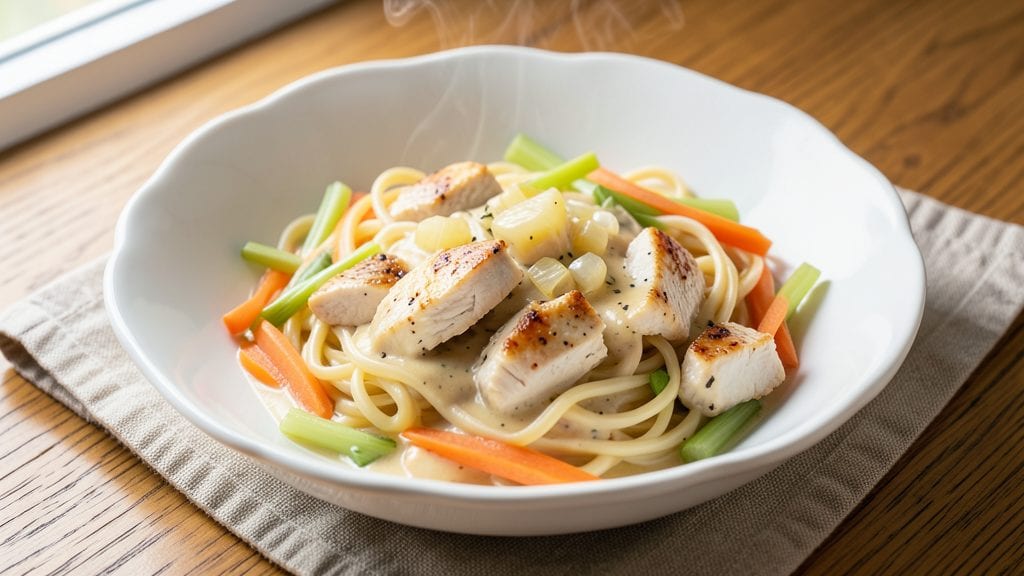
This Campbell’s Cream of Chicken and Noodles recipe turns a pantry staple into a creamy, comforting one-pot meal in just 20 minutes—no shortcuts, just reliable results.
This homemade version of Campbell’s classic soup delivers that same velvety texture and familiar flavor without the can, using simple ingredients and a foolproof method that even busy weeknights won’t resist.
The secret lies in building the broth from scratch: simmering chicken with aromatic vegetables until tender, then blending it into a smooth base before adding cream for that signature richness.
No dry spice blends or complicated techniques—just a few pantry staples and a one-pot approach that keeps cleanup to a minimum. The egg noodles cook right in the broth, soaking up every bit of that creamy goodness until they’re perfectly tender.
What you’ll end up with is a steaming bowl of creamy comfort—golden noodles floating in a velvety sauce with just the right balance of salt, pepper, and a hint of thyme.
It’s the kind of meal that warms you up from the inside out, perfect for chilly evenings or when you need a quick, satisfying dinner without sacrificing quality. Garnish with fresh parsley or a sprinkle of black pepper, and serve with crusty bread to soak up every last drop.
This recipe scales effortlessly for leftovers, making it ideal for meal prep, and the base can be customized with spinach, bacon, or extra herbs to suit your taste. Let’s get cooking—your taste buds (and your busy schedule) will thank you.
Ingredients for campbell's cream of chicken and noodles
Pantry staples plus a few fresh touches—this one-pot meal delivers classic Campbell’s comfort.
| Ingredient | Amount | Notes |
|---|---|---|
| Boneless, Skinless Chicken Breast 🍗 | 1 ½ lb | Cut into bite-sized pieces |
| Egg Noodles 🍜 | 2 cups | Uncooked, medium width |
| Carrots | 2 medium | Peeled and chopped into chunks |
| Yellow Onion | 1 medium | Diced into small pieces |
| Celery Stalks 🥬 | 2 medium | Chopped into small pieces |
| Garlic Cloves 🧄 | 3 cloves | Minced for flavor |
| Heavy Cream 🥛 | 1 cup | Full-fat for richness |
| Chicken Broth 💧 | 4 cups | Low-sodium preferred |
| Unsalted Butter 🧈 | 2 tbsp | For flavor base |
| All-Purpose Flour 🌾 | 2 tbsp | For thickening |
| Fresh Thyme Leaves 🌿 | 1 tbsp | Or 1 tsp dried thyme |
| Salt 🧂 | 1 tsp | Adjust to taste |
| Black Pepper 🌶️ | ½ tsp | Freshly ground preferred |
| Fresh Parsley 🌿 | ¼ cup | Chopped for garnish |
The chicken breast is your base—boneless, skinless cuts into even pieces for consistent cooking. Trader Joe's or Kroger usually have pre-cut chicken breasts at a good price, but any store’s fresh section works. For the carrots, celery, and onion, baby carrots and pre-chopped veggie mixes save time (and tears). The thyme? Fresh is ideal but dried works in a pinch—just use one-third the amount. I always grab extra parsley at the store—it’s cheap and makes everything look prettier.
No heavy cream? Half-and-half or whole milk works in a bind, though the texture won’t be quite as rich. Short on chicken broth? Water plus 1 tsp bouillon powder gets you close. The flour is key for thickening—all-purpose is fine, but if you’ve got cornstarch, use half the amount for extra smoothness. For the veggies, frozen chopped veggies are a lifesaver when fresh ones are wilted. And if you’re feeling fancy, swap the parsley for chives or dill—just adjust the amount to taste.
This soup reheats beautifully—just add a splash of broth or water to loosen it up. Keeps in the fridge for 4-5 days, freezes for 3 months (the cream might separate, so stir well after reheating). I double the recipe and freeze half for lazy days. Garnish with extra black pepper or a sprinkle of grated Parmesan before serving—trust me, it makes it feel restaurant-worthy.
Why You'll Love This Recipe
- No-Chop Nightmare: I swear, the only knife work here is dicing those carrots—and even then, you can buy pre-cut if you’re in a rush. The onion and celery get tossed straight into the pot with the chicken, and boom: minimal effort, maximum flavor.
- Creamy Without the Guilt: That Campbell’s soup base does all the heavy lifting—rich, velvety, and packed with that nostalgic comfort. The egg noodles soak up every last bit, and honestly? It’s the kind of dish that tastes like you slaved over it, even when you didn’t.
- Lunchbox Hero: Between us, this is my go-to for meal prep. Toss leftovers into containers, and they reheat like a dream—no soggy noodles, no weird textures. My kids actually ask for it, and I’ll take that win any day.
- Budget Dinner Win: Chicken breast, veggies, and a can of soup? Check. Fills the table for under $10, and the leftovers stretch into another meal. It’s the kind of recipe that makes grocery day feel like a victory.
Step-by-step instructions for creamy one-pot chicken and noodles
This cozy dish comes together in a single pot with minimal effort.
Sear the Chicken in a Large Pot
Place a large pot with a lid over medium-high heat. Add the 2 tablespoons unsalted butter and let it melt completely, about 1 minute. Add the 1.5 lb boneless, skinless chicken breast cut into bite-sized pieces, spreading them out in a single layer. Cook undisturbed for 3-4 minutes until the chicken develops golden-brown edges.
Here's the thing—don't overcrowd the pot. If the chicken overlaps too much, it'll steam instead of sear. You'll know it's ready when the pieces release easily from the bottom. Season immediately with 1 teaspoon salt and ½ teaspoon black pepper, pressing the seasoning into the chicken so it sticks.
Sauté the Vegetable Base
Remove the chicken from the pot and set it aside. In the same pot, add the 1 medium yellow onion and 2 medium celery stalks, chopped into small pieces. Cook for 3-4 minutes until the onions become translucent and the celery softens slightly. Add the 2 medium carrots, also chopped into chunks, and cook for another 3 minutes until they begin to soften.
Now stir in the 3 cloves minced garlic and 1 tablespoon fresh thyme leaves. Cook for 30 seconds until fragrant—this releases the full flavor of the aromatics. Be careful not to burn the garlic; it should smell wonderful but not bitter. The vegetables should form a flavorful base for your creamy sauce.
Build the Creamy Sauce
Reduce the heat to medium and sprinkle the 2 tablespoons all-purpose flour over the vegetables. Stir vigorously for 1-2 minutes until the flour is fully incorporated and the mixture turns slightly thickened. This creates a roux that will thicken your sauce beautifully.
Slowly pour in the 4 cups chicken broth while stirring constantly to prevent lumps. Bring the mixture to a gentle simmer and let it cook for 5-6 minutes until it thickens slightly. The sauce should coat the back of a spoon but still be pourable. If it thickens too much, add 2-3 tablespoons of water to reach your desired consistency.
Combine and Simmer
Return the seared chicken to the pot and stir to combine with the sauce. Add the 2 cups uncooked egg noodles and the 1 cup heavy cream. Stir everything together, making sure the noodles are well coated in the creamy mixture. Bring the entire pot to a gentle boil.
Once boiling, reduce the heat to low, cover the pot with a lid, and let it simmer for 10-12 minutes. You want the noodles to absorb the liquid and become tender while the chicken finishes cooking. Stir occasionally to prevent sticking. The dish should have a rich, creamy texture with the chicken fully cooked through and the vegetables tender.
Finish and Serve
Remove the pot from heat and let it sit covered for 2-3 minutes. This resting period allows the flavors to meld together perfectly. Give it a final stir, then taste and adjust the seasoning if needed—you might want to add a pinch more salt or pepper.
Ladle the creamy chicken and noodles into bowls and garnish each serving with ¼ cup chopped fresh parsley. The parsley adds a bright, fresh contrast to the rich, creamy dish. Serve immediately while hot, and enjoy this comforting one-pot meal that's perfect for any night of the week.
Pro Tips For Making Campbell'S Cream Of Chicken And Noodles
- Cook Chicken to 165°F: DESCRIPTION: That chicken breast won’t shred easily if you pull it at 145°F—wait for the internal temp to hit 165°F. I learned this the hard way when my first batch turned out chewy instead of tender. Use a meat thermometer, or if you’re eyeballing it, look for white juice running clear when you cut into the thickest part.
- Dice Veggies Evenly: DESCRIPTION: Skip the "rough chop" and aim for ¼-inch cubes for carrots, onions, and celery. Uneven pieces mean some will cook to mush while others stay crunchy—no one likes that texture fight. A sharp knife and a steady hand make this faster than you’d think.
- Don’t Boil the Noodles Dry: DESCRIPTION: The recipe says "al dente," but I’ve seen people overcook them into a paste. Test a noodle at 1 minute less than package instructions, then finish cooking in the soup. That way, they absorb flavor instead of turning to glue.
- Stir in the Soup Last: DESCRIPTION: Add the Campbell’s cream of chicken soup after the veggies and chicken have simmered for 5 minutes. This lets the flavors meld without the noodles turning to mush from sudden heat. Trust me, the order matters more than you’d guess.
Troubleshooting perfect results
Lumpy Sauce Fix
If your sauce turns out lumpy, it’s usually from the flour not dissolving properly. Whisk the flour into the vegetables first—don’t just sprinkle it on top. For extra insurance, mix the flour with a splash of cold water or broth before adding it to the pot.
This creates a smooth paste that blends right in. 💡
Noodles Too Soft
Overcooked noodles happen when they simmer too long. Keep an eye on them after the first 8 minutes of cooking. If they’re done before the chicken is fully cooked, remove the pot from heat, cover it, and let the chicken finish off the heat.
Alternatively, use al dente pasta (like penne) instead of egg noodles—they hold up better.
Chicken Too Dry
Skinless chicken breast can dry out if cooked too long. Cut it into even-sized pieces (about 1-inch cubes) so they cook uniformly. If the chicken feels dry after simmering, add ¼ cup hot broth at the end to keep it moist.
I also like to sear the chicken longer (up to 5 minutes) to lock in juices before adding it back to the pot.
Sauce Too Thin
A thin sauce often means the flour didn’t thicken enough. Next time, cook the roux longer (up to 3 minutes) until it turns golden before adding the broth.
For a quick fix, mix 1 tablespoon cornstarch with 1 tablespoon cold water, stir it into the simmering soup, and let it cook for 2 minutes until thickened. 🥄
Broth Too Salty
If your broth tastes too salty, dilute it with ½ cup water or unsalted broth. For future batches, use low-sodium broth and taste as you go—adjust with a pinch of salt at the end.
I keep a small bowl of plain water nearby while cooking to dilute any over-seasoned batches quickly.
Vegetables Too Crunchy
Crunchy veggies mean they didn’t cook long enough. Chop them smaller (about ¼-inch pieces) so they soften faster. If you’re short on time, parboil the carrots and celery for 3 minutes before adding them to the pot.
For extra flavor, add a splash of lemon juice at the end—it brightens the veggies without overpowering the creamy sauce.
Nutrition facts
Frequently asked questions
Can I make this with store-bought rotisserie chicken instead of fresh?
Shred 1.5 cups of cooked rotisserie chicken and add it directly to the pot after the sauce has thickened. Skip the searing step, but don't forget to season the chicken with ½ teaspoon salt and ¼ teaspoon black pepper before adding. This shortcut saves time while keeping that familiar, comforting flavor.
How can I make this dish dairy-free?
Replace the heavy cream with 1 cup full-fat coconut milk (or a dairy-free cream alternative) and use 2 tablespoons cornstarch instead of flour for thickening. The coconut milk adds richness while keeping the dish creamy. Garnish with fresh herbs like parsley or cilantro for brightness.
Can I use this recipe for meal prep?
Yes, but with a few adjustments. Cook the soup as directed, then let it cool completely before storing in airtight containers. It keeps in the fridge for 4-5 days or freezes for 3 months. Reheat on the stove over medium-low heat, stirring occasionally, and add a splash of broth or water if it thickens too much. The flavors actually improve after resting!
Why does my homemade version taste different from Campbell's canned soup?
Campbell's uses a blend of spices, preservatives, and sometimes MSG for that signature taste. Your homemade version will be fresher and more complex, with brighter flavors from real chicken and fresh herbs. To get closer, add ½ teaspoon onion powder and ¼ teaspoon garlic powder when building the sauce, or a pinch of Worcestershire sauce for depth.
What's the best way to serve leftover soup?
Leftover soup transforms beautifully into creamy chicken and noodle casseroles! Top with shredded cheddar cheese and breadcrumbs, then broil for 3-4 minutes until golden. For a lighter option, serve over toasted sourdough with a side of steamed greens. The flavors only get better the next day!