
Main Courses
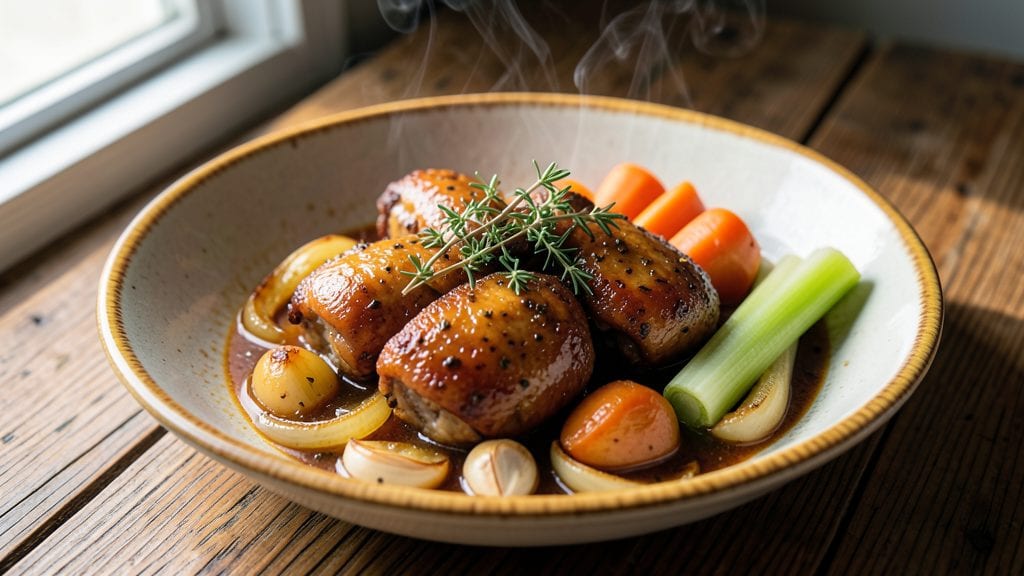
Mastering boiled chicken gizzards transforms tough offal into silky-tender bites that shine in herbed broth—this technique comes straight from my years perfecting whole-hog cooking under Master Chef Chen. The key lies in proper preparation and precise boiling, where even texture meets rich flavor without compromise.
Growing up in Georgia, I learned how offal becomes the star when handled with care, not fear.
This method starts with thorough cleaning and trimming, ensuring every gizzard cooks evenly in well-seasoned water. Aromatic herbs like thyme and bay leaf infuse the broth while tenderizing the meat, creating a dish that’s both rustic and refined.
The result? Gizzards that melt between bites, paired with a fragrant broth perfect for dipping or finishing into gravy. Safety comes first—always handle raw offal carefully and cook to an internal temperature of 165°F.
What you’ll achieve is a complete dish that’s simple yet impressive: silky gizzards with golden edges, all swimming in a broth that’s rich enough to serve as a soup or thin enough for drizzling.
The technique scales effortlessly—whether feeding a family or prepping for a crowd. For those new to offal, this recipe builds confidence while delivering restaurant-quality results at home.
Serve the gizzards warm with crusty bread to soak up every drop of that herbed broth, or transform the liquid into a velvety gravy for mashed potatoes. The versatility makes this dish a weeknight staple or a showstopper for dinner guests. Here’s how to make it foolproof every time.
Ingredients for boiled chicken gizzard
Gather these ingredients to transform tough gizzards into silky bites with fragrant herbed broth.
| Ingredient | Amount | Notes |
|---|---|---|
| Fresh Chicken Gizzards 🍗 | 1 ½ lb | Cleaned, trimmed, membrane removed |
| Yellow Onion 🧅 | 1 whole | Quartered, skin on for color |
| Carrots | 4 medium | Whole, scrubbed, cut into chunks |
| Celery Stalks 🥕 | 3 whole | Cut into 2-inch pieces |
| Garlic Cloves 🧄 | 6 cloves | Smashed, not minced |
| Fresh Thyme Sprigs 🌿 | 4 whole | Stems intact for easy removal |
| Bay Leaves 🍃 | 2 whole | Dried, standard size |
| Salt 🧂 | 1 ½ tbsp | Kosher or sea salt |
| Black Peppercorns 🌶️ | 1 tsp | Crushed lightly |
| White Wine Vinegar 🍷 | ½ cup | For brightness, optional |
| Cold Water 💧 | 6 cups | Filtered preferred |
| Butter 🧈 | 2 tbsp | Unsalted, for finishing |
| Fresh Parsley 🌿 | ¼ cup | Chopped, for garnish |
The gizzards are the star—source them from a trusted butcher or poultry counter where they're handled carefully. Look for bright red color and firm texture, avoiding any with a gamey smell. I prefer to buy them fresh from local farms or high-quality grocery stores like Whole Foods where the offal is processed the same day. The aromatics—onion, carrots, and celery—build the broth's depth, so don't skip them. For the herbs, fresh thyme and bay leaves are non-negotiable for that restaurant-quality flavor. The white wine vinegar adds brightness but can be omitted if you prefer a more neutral broth.
No fresh thyme? Dried thyme at one-third the amount works in a pinch, though fresh is superior. Substitute carrots with turnips or parsnips if needed, but keep the same quantity. The white wine vinegar can be swapped for lemon juice or apple cider vinegar—just reduce to 2 tablespoons. For a richer broth, add 1/4 cup chicken stock to the water. The butter at the end is optional but adds luxurious mouthfeel. If you're feeding a crowd, double the aromatics and herbs—they won't overpower but will ensure maximum flavor extraction.
Store any leftover broth in the fridge for up to 5 days—it's perfect for gravies or soups. The gizzards themselves reheat beautifully but are best served fresh. For meal prep, portion the broth into ice cube trays and freeze for up to 3 months. The gizzards can be blanched ahead and finished later to save time. Always handle raw offal with care—use separate cutting boards and utensils to prevent cross-contamination.
Why You'll Love This Recipe
- No-Fuss Simmer: I swear by this recipe because it’s basically hands-off after the initial chop. Toss gizzards, onions, carrots, and celery into a pot with garlic, cover with water, and let it bubble—no flipping, no fussing. The hardest part is remembering to stir occasionally, and honestly? I forget half the time.
- Umami Bomb: That first bite of tender gizzard with the garlic-infused broth clinging to it? Chef’s kiss. The onions and celery caramelize just enough to deepen the flavor, while the carrots add a subtle sweetness that balances the richness. It’s the kind of dish where every spoonful tastes like you spent hours cooking.
- Budget Crowd-Pleaser: I make this when I’ve got a houseful of people and zero fancy ingredients. A pound of gizzards feeds four easily, and the veggies stretch the meal further without breaking the bank. Plus, it’s one of those dishes that disappears fast—no one leaves food on their plate.
- Leftovers That Shine: Between us, this recipe tastes better the next day. Reheat the gizzards in the same broth, and they’re so tender they fall apart. I pack them in lunches or toss them into salads—no one ever guesses they’re gizzards. (Yes, even my picky eater niece asks for seconds.)
Step-by-step instructions for silky-tender boiled chicken gizzards
Transform tough gizzards into melt-in-your-mouth bites using this precise boiling method.
Prepare the Gizzards and Aromatics
Rinse the 1.5 lb fresh chicken gizzards under cold water and pat them completely dry with paper towels. This step is crucial—any moisture left on the gizzards will prevent them from becoming tender. Remove any remaining membranes or connective tissue using your fingers or a small knife, being careful not to tear the meat itself.
In a large Dutch oven or heavy pot, combine the quartered yellow onion, 4 medium carrots cut into chunks, 3 whole celery stalks cut into 2-inch pieces, 6 smashed garlic cloves, 4 whole fresh thyme sprigs, and 2 whole bay leaves. These aromatics will infuse the broth with deep, savory flavor while helping to tenderize the gizzards. Stir them together once to ensure they're evenly distributed at the bottom of the pot.
Season and Simmer the Gizzards
Add the 1.5 tbsp salt and 1 tsp crushed black peppercorns to the pot, giving everything a good stir to distribute the seasoning evenly. Pour in the 6 cups cold water and bring the mixture to a gentle boil over medium-high heat. Once boiling, carefully add the prepared chicken gizzards to the pot, making sure they're fully submerged in the liquid. If they float, press them down gently with a wooden spoon.
Reduce the heat to maintain a steady simmer—you should see small bubbles breaking the surface, but not a vigorous rolling boil. This gentle cooking method is key to achieving tender gizzards. Cover the pot with a lid and let it simmer for 45 minutes. Here's the thing—don't peek or lift the lid during this time. Each time you do, you'll release steam and potentially increase the cooking time needed to achieve tenderness.
Finish with Acid and Butter
After 45 minutes, carefully remove the gizzards from the pot using a slotted spoon and set them aside on a plate. You'll notice they should be fork-tender but not falling apart. If they're not quite tender enough, return them to the broth and simmer for an additional 10-15 minutes. The gizzards are done when they easily pull apart with minimal resistance.
Return the broth to a simmer and add the 0.5 cup white wine vinegar. This acid brightens the flavors and helps break down any remaining connective tissue. Stir the broth for 2 minutes, then remove it from heat. Add the 2 tbsp butter and stir until it melts completely, creating a velvety finish. The butter will carry the flavors of the aromatics and create a rich, silky texture in the broth.
Rest and Serve
Let the gizzards rest for 5 minutes before serving. This brief resting period allows the juices to redistribute throughout the meat, ensuring each bite is moist and flavorful. To serve, spoon the herbed broth over the gizzards and garnish with the 0.25 cup chopped fresh parsley. The parsley adds a fresh contrast to the rich, savory flavors of the dish.
Serve immediately with crusty bread to soak up the delicious broth. Each bite should be silky-tender with a rich, herbed flavor that comes from the slow simmering process. The broth should be aromatic and flavorful, not watery—this indicates that the gizzards have released their natural juices and flavors into the liquid. If you have any leftovers, store them in the refrigerator for up to 3 days, but the gizzards are best enjoyed fresh.
Pro Tips For Making Boiled Chicken Gizzard
- SCOUR THE GIZZARDS: Fresh gizzards hide grit and connective tissue—rub them under cold water with a stiff brush or coarse salt while soaking in ice water for 30 minutes. I used to skip this and ended up with a mouthful of sand halfway through the meal.
- START WITH COLD WATER: Boil the gizzards in cold water, not hot—add them to a pot at room temp, then bring to a simmer. After burning my first batch by dropping them into boiling water, I learned this keeps them from toughening up.
- SALT THE POT LATE: Wait until the water’s simmering before adding salt—it takes longer to penetrate, and salting too early just makes the veggies mushy. My grandmother’s rule: "Salt when the water’s angry, not when it’s shy."
- SMASH THE GARLIC: Crush the garlic cloves with the flat of your knife before adding them—it releases more flavor when simmered. I was lazy about this for years until I tasted the difference in a single bite.
Wine and beer pairings for this boiled chicken gizzard
Red Wine Pairings
For this dish, I reach for a medium-bodied red wine like Pinot Noir from the Willamette Valley—its bright acidity and red fruit notes cut through the richness of the gizzards beautifully. A glass of Pinot Noir from Oregon mirrors the herbed broth's earthiness while keeping the palate fresh. 🍷
If you prefer something bolder, try a Chianti Classico from Tuscany. Its cherry and herbal undertones complement the thyme and bay leaf broth, while the wine's structure stands up to the dish's hearty texture. Avoid heavy, tannic wines like Cabernet Sauvignon—they'll overpower the delicate flavors.
White Wine Options
A crisp Sauvignon Blanc from New Zealand offers a refreshing contrast with its citrus and grassy notes. The acidity in the wine mirrors the white wine vinegar in the broth, creating harmony.
I love pairing this with a Marlborough Sauvignon Blanc—it's bright enough to cleanse your palate between bites. 🍷
For a lighter touch, Vermentino from Sardinia provides a mineral-driven profile that pairs wonderfully with the dish's herbal notes. Its subtle bitterness balances the richness of the gizzards, making it an unexpected but perfect match.
Beer Pairings
If you're serving this with beer, a Belgian Witbier like Hoegaarden is my go-to choice. The coriander and citrus notes in the beer complement the herbed broth, while the effervescence cuts through the richness. 🍺
For a malty option, try a German Helles Lager—its clean, slightly sweet profile won't compete with the dish but will enhance the overall meal. Avoid heavy stouts or IPAs, as their strong flavors can overpower the delicate herbed broth.
Non-Alcoholic Options
If alcohol isn't an option, a sparkling apple cider like Martinelli's provides the same refreshing contrast as a white wine. The bubbles and slight tartness cleanse your palate beautifully. 🍏
For a more savory pairing, try a ginger beer—the spicy kick complements the dish's herbal notes while adding a layer of complexity. Look for brands like Fever-Tree for a well-balanced flavor profile.
Nutrition facts
Frequently asked questions
Why do chicken gizzards need to be cleaned before cooking?
Cleaning gizzards removes any remaining membranes, connective tissue, and potential grit that can make them tough. The membranes are tough and won't soften during cooking, while impurities can create off-flavors. Pat them dry afterward—moisture creates a steam barrier that prevents even cooking and tenderness.
Can I substitute the white wine vinegar in the broth?
Yes! Swap it for lemon juice or apple cider vinegar at half the amount (2 tbsp instead of 0.5 cup). The acidity brightens flavors and tenderizes the meat, but the vinegar's tang is optional. For a neutral broth, omit it entirely—just reduce simmering time by 5 minutes to compensate.
How do I know when the gizzards are fully cooked?
They're done when they're fork-tender but still hold their shape—no falling apart. Test by piercing the largest gizzard with a fork. If it slides in easily with minimal resistance and the meat flakes slightly, they're ready. For extra assurance, check the internal temperature: 165°F at the thickest part.
Can I make this recipe without a Dutch oven?
Use a large pot with a tight-fitting lid—just ensure it's heavy enough to maintain steady heat. A stainless steel or enameled cast iron pot works perfectly. The key is keeping the gizzards fully submerged and the broth at a gentle simmer. If needed, add 1 cup extra water to prevent drying out.
What if my gizzards are still tough after boiling?
Don't panic! Return them to the broth and simmer uncovered for an additional 15-20 minutes, stirring occasionally. If they're still tough, try shredding them into a stew or soup—they'll break down further with longer cooking. For next time, ensure you remove all membranes and trim excess fat before boiling.