
Main Courses
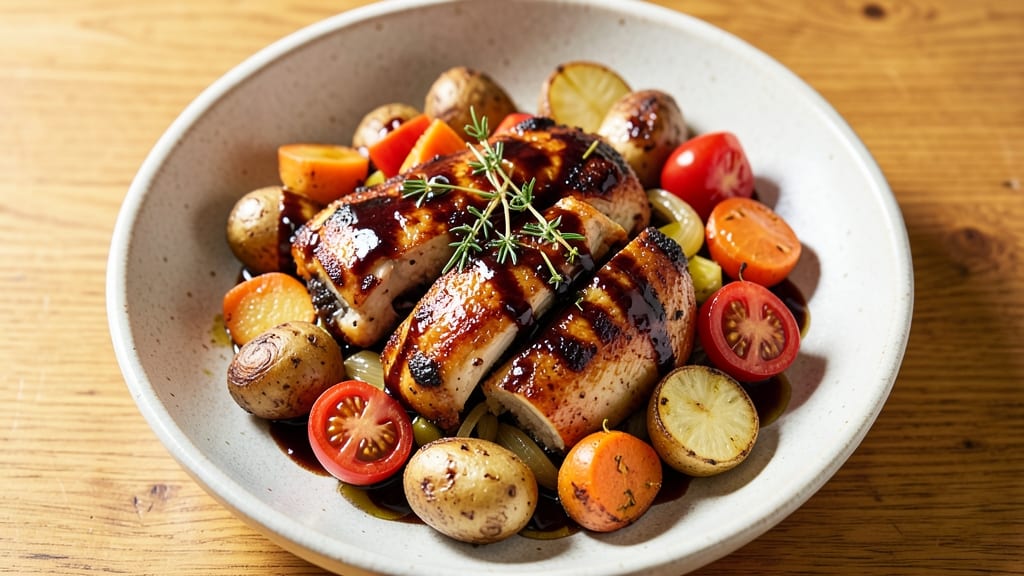
This balsamic chicken with roasted vegetables recipe delivers restaurant-quality results with minimal effort—juicy chicken bathed in a rich, sweet-tangy glaze alongside perfectly caramelized vegetables.
The secret lies in a simple marinade that tenderizes the chicken while building deep flavor, paired with high-heat roasting that transforms tough vegetables into crisp, aromatic bites.
The dish balances bold flavors effortlessly: the balsamic glaze adds complexity with its caramelized depth, while the roasted vegetables bring natural sweetness and texture contrast.
This method works for weeknight dinners or special occasions, requiring just 45 minutes of active time and delivering a meal that feels indulgent without the fuss.
What you’ll achieve is golden, glistening chicken with tender centers, paired with vegetables that are crisp at the edges and tender inside. The balsamic reduction clings to every bite, creating a harmonious blend of sweet, tangy, and savory notes that elevate simple ingredients into something extraordinary.
Serve this dish over creamy polenta or crusty bread to soak up every last drop of that luscious glaze. The combination of textures—tender chicken, crisp vegetables, and rich sauce—makes it a complete, satisfying meal that’s perfect for feeding a family or impressing guests.
Ingredients for balsamic chicken with roasted vegetables
High-quality ingredients transform simple roasted vegetables and tender chicken into restaurant-worthy perfection.
| Ingredient | Amount | Notes |
|---|---|---|
| Boneless, Skinless Chicken Thighs 🍗 | 1 ½ lb | Cut into even-sized pieces |
| Extra-Virgin Olive Oil 🫒 | ¼ cup | For high-heat roasting |
| Yellow Onion 🧅 | 1 whole | Diced into small pieces |
| Carrots 🥕 | 4 medium | Cut into 1-inch chunks |
| Baby Potatoes 🥔 | 1 ½ lb | Halved lengthwise, unpeeled |
| Cherry Tomatoes 🍅 | 1 pint | Halved, stems removed |
| Garlic Cloves 🧄 | 4 cloves | Minced for marinade |
| Balsamic Vinegar 🍷 | ½ cup | High-quality aged variety |
| Honey 🍯 | 2 tbsp | For glaze sweetness |
| Dijon Mustard 🍯 | 1 tbsp | For depth of flavor |
| Fresh Rosemary 🌿 | ¼ cup | Chopped, fresh preferred |
| Fresh Thyme 🌿 | ¼ cup | Leaves only, fresh preferred |
| Salt 🧂 | 1 ½ tsp | Diamond Crystal preferred |
| Ground Black Pepper 🌶️ | 1 tsp | Freshly ground preferred |
The chicken thighs are non-negotiable here—bone-in, skin-on cuts stay juicier than breasts during roasting. Whole Foods or Trader Joe's carry excellent pre-cut options, but if buying whole, trim the skin and cut into even 1-inch pieces for consistent cooking. For the vegetables, freshness matters most—look for vibrant colors and firm texture. Baby potatoes should feel heavy for their size, and carrots should snap when bent. The cherry tomatoes can be any color, but avoid those with soft spots. If you're short on time, frozen roasted vegetables work in a pinch, but fresh delivers that caramelized depth the recipe promises.
No balsamic vinegar? Red wine vinegar plus 1 tsp sugar mimics the balance, though the depth won't be identical. Short on honey? Maple syrup or agave nectar at the same amount keeps the sweetness intact. The Dijon mustard can be swapped for whole-grain mustard, but French's Classic is ideal for its smooth texture. Fresh herbs are best, but if using dried, reduce to one-third the amount—dried thyme and rosemary lose potency quickly. For the olive oil, California Extra Virgin brands like Corto or Primal Kitchen have the right balance of peppery notes without overpowering. The carrots and potatoes can be swapped for parsnips or sweet potatoes if you prefer, though cooking time may vary slightly.
Prep the vegetables first—they need more time in the oven than the chicken. Store any unused balsamic vinegar in a cool, dark place for up to 1 year, though the honey and mustard should be used within 6 months of opening. The fresh herbs keep best in the fridge, wrapped in damp paper towels for 5-7 days. This dish reheats beautifully—simply cover with foil and warm in a 350°F oven for 10-15 minutes, or until the chicken reaches **165°F internally. The flavors actually improve overnight as the balsamic reduction deepens, making it perfect for meal prep.
Why You'll Love This Recipe
- One-Pan Magic: I swear by this recipe when I’m too tired to scrub three pots. Toss the chicken thighs, potatoes, carrots, and onions on a sheet pan with olive oil and balsamic, then roast—no flipping, no fuss. The veggies caramelize right alongside the chicken, and honestly? That’s half the battle won before you even taste it.
- Deep, Tangy Bite: The balsamic glaze doesn’t just coat the chicken—it clings like a sweet, tangy hug. The chicken thighs stay juicy while the edges crisp, and those roasted potatoes? They soak up the glaze like sponges. Between us, this is the kind of flavor that makes you pause mid-bite and go, “Wait, is this actually dinner?”
- Leftovers That Don’t Suck: I make this every Sunday because the leftovers are just as good as day one—if not better. Reheat the chicken and veggies in the morning for a grab-and-go lunch, or toss them into a salad for a lunch that feels fancy. (Yes, even on a Tuesday night when you’re sick of salads.)
- Budget-Friendly Crowd-Pleaser: Chicken thighs and seasonal veggies won’t break the bank, and this recipe stretches easily to feed four—or six, if you’re like me and sneak extra bites. The potatoes and carrots bulk it up, so you’re not just serving protein and greens. Plus, the balsamic adds a restaurant-worthy touch without the price tag. My wallet and my dinner guests thank me.
Step-by-step instructions for balsamic chicken with roasted vegetables
This method delivers perfectly caramelized vegetables and tender chicken bathed in a rich, balanced balsamic glaze.
Prep and Season the Chicken and Vegetables
Pat the 1.5 lb boneless, skinless chicken thighs dry with paper towels—this ensures maximum crispiness. Cut them into even-sized pieces and place them in a large bowl. Add the diced yellow onion, 1-inch carrot chunks, halved baby potatoes, and halved cherry tomatoes. In a small bowl, whisk together the 0.5 cup balsamic vinegar, 2 tbsp honey, 1 tbsp Dijon mustard, 0.25 cup chopped fresh rosemary, 0.25 cup fresh thyme, 1.5 tsp salt, and 1 tsp freshly ground black pepper. Pour this marinade over the chicken and vegetables, tossing everything to coat evenly.
Let the mixture marinate at room temperature for 30 minutes while you prepare your baking sheets. This step allows the chicken to absorb the flavors and the vegetables to soften slightly, ensuring they cook uniformly. The acidity in the balsamic vinegar will also help tenderize the chicken, while the honey and mustard create a balanced sweet-tangy glaze.
Roast the Chicken and Vegetables
Preheat your oven to 425°F and line two large baking sheets with parchment paper. Arrange the marinated chicken and vegetables in a single layer on the sheets, leaving ½-inch space between each piece. This spacing allows the hot air to circulate and caramelize the edges properly. Drizzle the 0.25 cup extra-virgin olive oil evenly over the top, ensuring every piece gets a light coating.
Roast for 25 minutes, then flip or stir the vegetables (and rotate the chicken pieces) to ensure even browning. Return to the oven and continue roasting for another 20-25 minutes, or until the chicken reaches an internal temperature of 165°F and the vegetables are tender with caramelized edges. The potatoes should be fork-tender, and the carrots should soften slightly while retaining their shape. The cherry tomatoes should burst open, releasing their juices and intensifying their sweetness.
Deglaze and Finish the Balsamic Glaze
Once the chicken and vegetables are fully cooked, transfer everything to a serving platter. Place the baking sheets under the broiler for 2-3 minutes to concentrate the caramelized juices at the bottom of the pans. Immediately pour the 0.5 cup balsamic vinegar into the hot pans, scraping up all the browned bits with a wooden spoon. Let the mixture simmer for 1-2 minutes until it reduces slightly and thickens into a glossy, syrupy glaze.
Pour this rich balsamic reduction over the roasted chicken and vegetables, tossing gently to coat everything evenly. The glaze should cling to the chicken and vegetables, adding a deep, tangy sweetness that complements the caramelized flavors. The combination of roasted vegetables and tender chicken creates a harmonious balance of textures and flavors, with the glaze tying everything together.
Rest and Serve
Let the dish rest for 5 minutes before serving. This allows the juices to redistribute throughout the chicken, ensuring each bite is moist and flavorful. The vegetables will also continue to absorb the glaze, enhancing their natural sweetness and depth. Serve the balsamic chicken with roasted vegetables immediately, garnished with an additional sprinkle of fresh rosemary and fresh thyme for a pop of color and aroma.
The result is a restaurant-quality dish where the sweetness of the honey and balsamic vinegar balances the earthy flavors of the roasted vegetables and the savory richness of the chicken. The caramelized edges on the vegetables add texture, while the tender chicken ensures every bite is satisfying. This method guarantees a dish that’s as visually appealing as it is delicious, with layers of flavor that come together perfectly.
Pro Tips For Making Balsamic Chicken With Roasted Vegetables
- CRISP THE POTATOES FIRST: Toss the baby potatoes in olive oil and roast them alone at 425°F (220°C) for 20 minutes before adding anything else. I learned this the hard way—when I mixed them in later, they ended up steamed instead of golden and crispy. That extra time upfront makes all the difference in texture.
- SALT THE CHICKEN WELL: Season the chicken thighs with at least ½ teaspoon of salt per pound before you even think about cooking them. I used to skip this, assuming the balsamic would add enough flavor, but the meat stays bland if you don’t. Let them sit for 10 minutes too—it’s not just about seasoning, it’s about getting that crust.
- DON’T OVERCROWD THE PAN: If you’re searing the chicken and veggies together, spread them out in a single layer. I’ve seen people pile everything in and end up with soggy carrots or undercooked chicken. A little patience here means you won’t have to babysit the pan or deal with uneven cooking.
- USE THICK BALSAMIC GLACE: Swap the cheap balsamic vinegar for a good-quality balsamic glaze—it’s sweeter, richer, and coats the chicken and veggies better. I was skeptical until I tried it; now I won’t go back. Add it in the last 5 minutes of cooking so it caramelizes instead of burning.
Perfect pairings for this recipe
Side Dish Harmony
Creamy polenta is my go-to base for this dish—its mild sweetness soaks up the balsamic glaze beautifully. Cook 1 cup polenta in 4 cups chicken broth> for 15 minutes until thick, then stir in 2 tbsp butter> and ¼ cup grated Parmesan>.
For extra richness, top with crispy prosciutto> or toasted pine nuts.
Crusty bread like a baguette or sourdough works perfectly for mopping up sauce. Warm slices in the oven for 5 minutes at 375°F>, then rub with garlic and olive oil>. A simple arugula salad with lemon vinaigrette also cuts through the richness—toss 4 cups arugula> with 2 tbsp olive oil>, 1 tbsp lemon juice>, and ½ tsp salt>.
Wine Pairings
A medium-bodied Italian red like Chianti or Sangiovese complements the dish’s tangy-sweet profile. The acidity in these wines mirrors the balsamic glaze, while their earthy notes balance the roasted vegetables. For a lighter option, try a Pinot Noir from Oregon—its bright fruitiness contrasts the dish’s depth.
If you prefer white, a dry Vermentino from Sardinia offers crisp acidity and citrus notes that refresh your palate. Avoid heavy, oaky whites—they’ll clash with the balsamic’s bold flavor. A chilled Prosecco also works beautifully as an aperitif before the meal.
Beer Pairings
A Belgian witbier like Stella Artois Wit brings citrusy notes that harmonize with the balsamic’s tang. The effervescence cleanses your palate between bites. For a malty option, try a German Märzen—its caramel sweetness echoes the honey in the glaze.
Avoid heavy IPAs or stouts—they’ll overpower the dish’s delicate balance. Instead, opt for a crisp lager like Peroni or Heineken, which provides a neutral backdrop that lets the flavors shine.
Garnish Finishes
Fresh parsley or basil adds a bright, herbaceous note to the dish. Tear 2 tbsp fresh parsley> over the top just before serving for a pop of color. A sprinkle of toasted breadcrumbs (toast ¼ cup panko> in 1 tbsp butter>) adds crunch.
For an extra touch, drizzle with balsamic reduction—simmer ¼ cup balsamic vinegar> until syrupy, then swirl artistically over the plate. A few crispy shallots (sauté 2 tbsp sliced shallots> in 1 tbsp butter> until golden) elevate the dish to restaurant quality.
Nutrition facts
Frequently asked questions
Can I use chicken breasts instead of thighs?
Chicken breasts will work, but they require extra care to stay juicy. Use bone-in, skin-on breasts for better moisture, and reduce oven temperature to 375°F to prevent drying. Baste with the balsamic glaze halfway through cooking to keep them tender.
What vegetables can I substitute for the carrots and potatoes?
Swap the carrots for butternut squash cubes or zucchini slices, and replace potatoes with beets or parsnips. For a lighter option, add asparagus spears or bell pepper strips—just adjust roasting time as needed since different veggies cook at varying speeds.
How do I make this dish ahead of time?
Prep the marinade and chop all ingredients up to 24 hours ahead, then store in airtight containers in the fridge. Assemble the dish on the baking sheets 1 hour before cooking and refrigerate. Roast as directed, adding 5-10 extra minutes to bring everything to temperature.
Why did my balsamic glaze turn too thick?
This happens when the reduction simmers too long. Keep the pan on medium heat and watch closely—it should take just 1-2 minutes to thicken. If it gets too concentrated, thin with 1 tsp water or chicken broth while warm. Always use high-quality balsamic vinegar for the best balance.
Can I make this dish in a slow cooker?
While possible, roasting creates the best caramelization. For a slow cooker version, marinate the chicken and veggies as directed, then cook on low for 4-5 hours with ¼ cup broth added. Finish with a quick pan sear to create a glaze, but expect less depth of flavor than the oven method.