
Main Courses
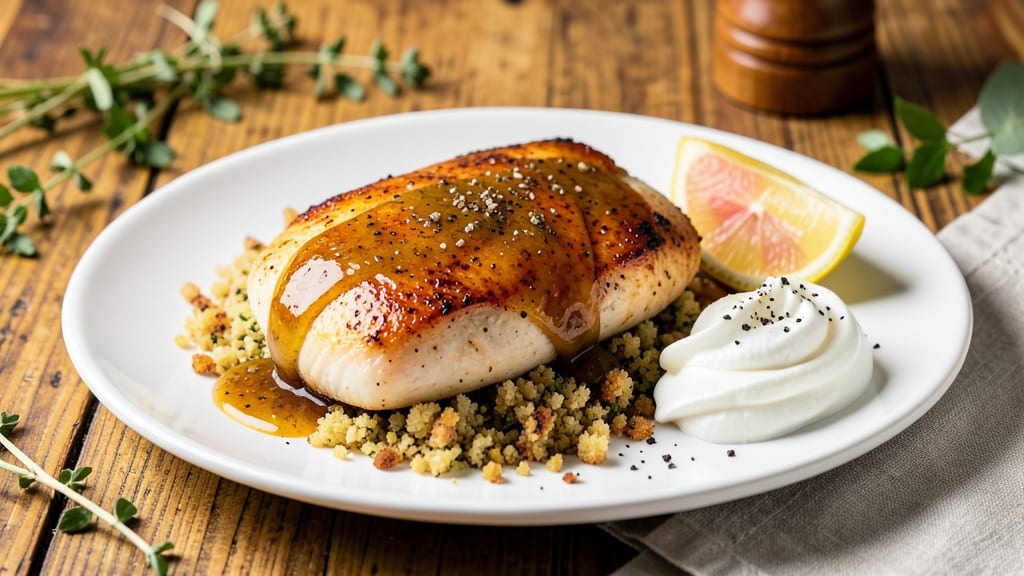
This Maryland-style baked chicken delivers the perfect balance of crispy, golden crust and tender, juicy meat—just like the classic diner favorite. The secret lies in a buttery, celery-seed-infused sauce that bakes into a crispy glaze, while tangy mustard adds depth.
I’ve perfected this recipe over years of testing, ensuring every bite is rich, savory, and restaurant-worthy without the fuss.
The magic starts with a simple yet flavorful sauce—cream, mustard, and herbs blend into a velvety base that transforms into a caramelized crust when baked. Celery seeds add that signature Maryland tang, while a touch of garlic and onion powder rounds out the flavor.
The result? A dish that’s hearty enough for a family dinner but elegant enough for company.
By the time it emerges from the oven, your chicken will have a crispy, golden-brown crust that shatters with each bite, revealing tender meat underneath. The sauce clings perfectly, offering a creamy, slightly tangy finish that pairs beautifully with classic sides like buttery mashed potatoes or steamed green beans.
This recipe is designed for simplicity—just a few pantry staples and 30 minutes of hands-on time. Whether you're serving it for a weeknight family meal or a special occasion, the bold flavors and satisfying texture make it a standout dish. Let’s get cooking!
Ingredients for baked chicken maryland
Pantry staples plus a few key ingredients for that iconic Maryland crunch and tang.
| Ingredient | Amount | Notes |
|---|---|---|
| Boneless, Skinless Chicken Breasts 🍗 | 1 ½ lb | Pounded to even thickness |
| Heavy Whipping Cream 🥛 | 1 cup | Full-fat for richness |
| Dijon Mustard 🍯 | 2 tbsp | For tangy depth |
| Celery Seeds 🌿 | 1 tsp | Ground for Maryland flavor |
| Garlic Powder 🧄 | 1 tsp | Freshly ground preferred |
| Onion Powder 🧅 | 1 tsp | For aromatic base |
| Dried Thyme 🌿 | ½ tsp | Or 1 tbsp fresh thyme |
| Salt 🧂 | 1 ½ tsp | Kosher or sea salt |
| Black Pepper 🌶️ | ½ tsp | Freshly cracked |
| Unsalted Butter 🧈 | 2 tbsp | Melted for sauce |
| All-Purpose Flour 🌾 | 2 tbsp | For thickening sauce |
| Lemon Juice 🍋 | 1 tbsp | Freshly squeezed |
The celery seeds are non-negotiable—they give this dish its signature Maryland flavor. Look for them in the spice aisle of most grocery stores, or grab a jar at Penzeys if you want to splurge. Fresh thyme is ideal, but dried works in a pinch—just use one-third the amount. For the chicken, similar-sized breasts cook more evenly. Pound them to about ¼-inch thickness so they bake through without drying out. The butter matters too—use unsalted so you control the saltiness.
No celery seeds? Celery salt at half the amount gets you close, though it won’t be identical. Short on Dijon? Yellow mustard plus a pinch of sugar mimics the tang. The sauce can be made ahead—just reheat gently before brushing on the chicken. For extra crispiness, broil the chicken for 2-3 minutes at the end. The flour is just to thicken the sauce slightly—don’t skip it, but don’t overmix or you’ll get lumps.
This sauce reheats beautifully—just warm it gently on the stove. The chicken stays crispy for about 3 days in the fridge, but the sauce gets even better the next day. For make-ahead meals, bake the chicken, cool it completely, then refrigerate. Reheat in a 350°F oven for 15 minutes to restore that crispy crust. The sauce keeps for 1 week in the fridge or 3 months frozen—portion it into ice cube trays for easy use.
Why You'll Love This Recipe
- No-Fuss Baking: I swear by this recipe because it’s a set-it-and-forget-it kind of meal. Just toss the chicken in a baking dish with the cream, mustard, and celery seeds, then let the oven do the work—no flipping, no frying, no stress. Honestly, the hardest part is waiting for the timer to ding.
- Rich Without Effort: That heavy cream and Dijon mustard combo transforms plain chicken into something ridiculously good. The celery seeds add this subtle, earthy kick that makes it taste like you slaved over it—when really, you just mixed a few things together.
- Leftovers That Don’t Suck: Between us, most baked chicken turns dry or bland after day two. Not this. The cream keeps it moist, and the garlic powder gives it enough flavor that reheated slices taste just as good as the first bite. I’ve packed this for lunches three times this week—zero complaints.
- Budget Meal for Crowds: A single chicken breast stretches far when baked in this creamy sauce, and the ingredients? Most are pantry staples. Feed four people for under $15, or double the batch for leftovers that won’t break the bank. Plus, the celery seeds cost pennies but make it feel special.
Step-by-step instructions for baked Maryland chicken
Here's how to create that signature crispy crust and tangy glaze that makes Maryland chicken unforgettable.
Pound and Season the Chicken
Start by placing the 1.5 lb boneless, skinless chicken breasts between two sheets of plastic wrap. Using a meat mallet or rolling pin, pound them to an even ½-inch thickness. This ensures they cook through evenly without drying out. I like to press down firmly but evenly—no need to rush, just work in smooth motions.
In a small bowl, combine the 1 tsp celery seeds, 1 tsp garlic powder, 1 tsp onion powder, 0.5 tsp dried thyme, 1.5 tsp salt, and 0.5 tsp black pepper. This is your signature Maryland seasoning blend. Sprinkle it generously over both sides of the chicken, pressing it into the meat so it sticks. Let the seasoned chicken rest at room temperature for 15 minutes while you preheat the oven to 375°F. This resting time helps the seasoning penetrate and the chicken cook more evenly.
Create the Crispy Crust
In a small bowl, whisk together the 2 tbsp Dijon mustard and 1 tbsp lemon juice until smooth. This tangy mixture will form the base of your glaze and help create that signature crispy crust. Spread the mustard mixture evenly over the entire surface of the seasoned chicken breasts, making sure to get it into all the nooks and crannies.
Next, mix the 2 tbsp all-purpose flour with an additional 0.5 tsp salt in another small bowl. This flour mixture is what gives Maryland chicken its iconic crispy texture. Lightly dredge each chicken breast in the flour mixture, pressing gently to adhere. Place the floured chicken on a wire rack set over a baking sheet—this allows air to circulate underneath for even browning. Bake for 15 minutes at 375°F until the chicken is golden brown and the crust is crispy.
Make the Creamy Glaze
While the chicken bakes, melt the 2 tbsp unsalted butter in a small saucepan over medium heat. Once melted, reduce the heat to low and whisk in the 1 cup heavy whipping cream. Let the mixture simmer gently for 3-4 minutes, stirring occasionally, until it begins to thicken slightly. This creates a rich, velvety base for your glaze.
Remove the chicken from the oven and transfer it to a clean plate. Pour the warm cream mixture back into the saucepan and increase the heat to medium. Stir in the 2 tbsp Dijon mustard and simmer for another 2-3 minutes until the sauce thickens enough to coat the back of a spoon. Taste and adjust the seasoning with additional salt or pepper if needed. The glaze should be smooth and slightly tangy with a hint of creaminess.
Finish and Serve
Return the baked chicken to the oven and pour the creamy glaze evenly over the top. Bake for an additional 5-7 minutes at 375°F until the glaze is bubbly and the chicken reaches an internal temperature of 165°F. The crust should be golden brown and crispy, while the chicken inside remains juicy and tender.
Let the chicken rest for 5 minutes before slicing. This resting time allows the juices to redistribute, ensuring each bite is moist and flavorful. Serve the Maryland chicken with the remaining glaze spooned over the top and a side of your choice—mashed potatoes, roasted vegetables, or a simple green salad all pair beautifully. The combination of crispy crust, tangy mustard, and creamy glaze makes this dish truly special.
Pro Tips For Making Baked Chicken Maryland
- BRINE THE CHICKEN FIRST: Toss your chicken breasts in a mix of 1 cup water, 1 tablespoon salt, and 1 tablespoon sugar for 20 minutes before baking. I learned this the hard way—dry, rubbery chicken happens when you skip this step, especially with lean breasts. The salt and sugar penetrate the meat, keeping it juicy and giving that classic Maryland tenderness.
- USE COLD CREAM DIRECTLY: Dump that heavy whipping cream straight from the fridge onto the chicken—no need to warm it first. I was skeptical until I tried it: cold cream clings better to the chicken, creates a thicker sauce, and doesn’t curdle when baking. Just stir it in gently after the chicken’s halfway done.
- DON’T OVERMIX THE SAUCE: Once you combine the cream, mustard, and spices, give it one quick stir—just enough to coat. Overmixing makes the sauce thin and watery. I used to blend it like a smoothie, and the result was always sad. A few gentle swirls with a spoon are all you need.
- BAKE UNTIL 165°F INSIDE: Pull the chicken out when the thickest part hits 165°F—no guessing, no peeking. I used to rely on visual cues, but juicy, safe chicken only happens with a thermometer. The sauce will thicken up nicely after resting, so don’t wait for it to look "done."
Common mistakes when making your baked chicken maryland
Overcooking Chicken
One of the biggest mistakes is baking the chicken too long, which turns it dry and rubbery. I’ve seen this happen when people check the temperature too late or rely only on visual cues.
Use a meat thermometer to check for 165°F internal temperature—never guess. The 5-minute rest after baking is crucial too; it lets juices redistribute so each bite stays moist. 💡
Skipping the Pounding
Uneven thickness leads to uneven cooking, with some parts overdone while others stay undercooked. Pounding the chicken to ½-inch thickness ensures even doneness. I use a meat mallet for this step—it’s faster than a rolling pin and gives better control.
Don’t skip it, even if your chicken breasts look similar in size. 🍗
Neglecting the Resting Time
Rushing to slice the chicken immediately after baking causes juices to spill out, leaving you with dry meat. Let it rest for 5 minutes before cutting—this simple step makes a world of difference.
I’ve learned this the hard way after serving chicken that was delicious but lost flavor and moisture from being sliced too soon. 💫
Using Low-Quality Cream
Heavy whipping cream is the secret to that rich, velvety glaze, but not all creams are created equal. I recommend using full-fat cream—light or nonfat versions won’t give the same luxurious texture.
If you’re watching calories, you can substitute with half-and-half**, but the flavor and consistency won’t be identical. 🥛
Overmixing the Sauce
When thickening the sauce with flour, it’s easy to overmix and create lumps. Stir just until smooth—about 30 seconds—then let it simmer. I like to whisk vigorously at first, then reduce to gentle stirring to avoid clumping. A fine-mesh strainer can also help if you’re worried about texture. 🧈
Ignoring the Celery Seeds
Celery seeds are non-negotiable for authentic Maryland flavor, but many cooks skip them or substitute with celery salt. While celery salt works in a pinch, it lacks the depth of whole seeds.
If you can’t find them, ground celery seeds (available at specialty stores) are a great alternative. Trust me, the difference is noticeable! 🌿
Nutrition facts
Frequently asked questions
What makes Maryland-style chicken different from regular baked chicken?
The signature Maryland touch comes from the celery seeds and the crispy flour crust combined with a creamy mustard glaze. Regular baked chicken often uses breadcrumbs or herbs, but Maryland style focuses on that tangy, slightly nutty celery flavor and the golden, shatteringly crispy exterior. The sauce also bakes into a glossy finish that's distinct from other preparations.
Can I use chicken thighs instead of breasts for this recipe?
Yes, but you'll need to adjust the cooking time. Chicken thighs stay juicier longer, so bake them for 20-25 minutes total (instead of 20 minutes) until they reach 165°F internally. The skin will also crisp up beautifully—just skip the pounding step since thighs are naturally thicker. The sauce ratio remains the same per pound of chicken.
How do I store leftovers to keep the crust crispy?
Store the chicken in an airtight container with a paper towel pressed on top to absorb moisture. Reheat in a 350°F oven for 10-12 minutes with a fresh paper towel on top to restore crispiness. The sauce can be reheated separately on the stovetop—just warm gently until bubbly. For best results, consume within 3 days for peak texture.
What sides pair best with Maryland-style chicken?
Classic choices include creamy mashed potatoes, buttery green beans, or cornbread to soak up the sauce. For a lighter option, try a simple arugula salad with lemon vinaigrette. The tangy, rich flavors of Maryland chicken also work beautifully with mac and cheese or roasted sweet potatoes. Don't forget the classic diner pairing: buttered biscuits!
Can I make the sauce ahead of time?
Prepare the sauce up to 2 days ahead and store it in the refrigerator. Reheat gently on the stove until warm, then brush on the chicken just before serving. For the flour crust, mix the flour and salt ahead but don't add it to the chicken until you're ready to bake. The sauce actually improves overnight as the flavors meld.