
Appetizers
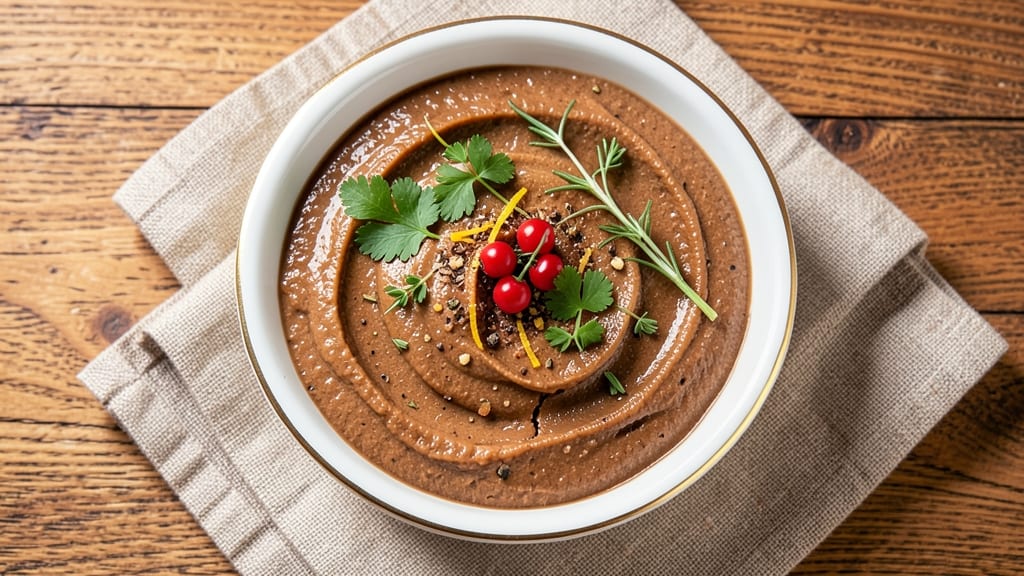
This baked chicken liver pâté recipe delivers a luxurious, velvety spread that transforms simple appetizers into a showstopping centerpiece. The secret lies in slow-cooking the livers until tender, then blending them with rich butter and aromatic herbs until impossibly smooth.
I’ve perfected this technique over years of hosting dinner parties—it’s the kind of dish that makes guests pause and ask, “What is this magic?”
The process begins with carefully cleaning and poaching the livers to remove any bitterness, then simmering them in a fragrant broth with shallots and thyme until fork-tender.
After blending with cold butter and a touch of cream, the mixture is baked in a terrine mold, creating a firm yet creamy texture that slices beautifully. The earthy herbs—thyme, parsley, and a hint of tarragon—elevate the natural richness of the liver, making it irresistibly savory.
What you’ll end up with is a silky, golden-brown pâté that’s perfect for serving with crusty baguette slices, cornichons, or a drizzle of high-quality mustard. The aroma alone will draw everyone to the table, and the first bite delivers a perfect balance of umami and herbal brightness.
This isn’t just an appetizer—it’s a statement. For those new to pâté, don’t let the technique intimidate you. The key steps—gentle cooking, proper blending, and precise baking—are straightforward once you know the secrets. Let’s get started on creating a dish that feels both rustic and refined.
Ingredients for baked chicken liver pate
Fourteen ingredients transform humble chicken livers into a luxurious pâté that steals the show.
| Ingredient | Amount | Notes |
|---|---|---|
| Chicken Livers 🍗 | 1 ½ lb | Fresh, trimmed of connective tissue |
| Unsalted Butter 🧈 | 1 cup | Cold, cubed for blending |
| Heavy Cream 🥛 | ½ cup | Full-fat for richness |
| Fresh Thyme Leaves 🌿 | ¼ cup | Stems removed, finely chopped |
| Fresh Parsley Leaves 🌿 | ¼ cup | Flat-leaf preferred, chopped |
| Tarragon Leaves 🌿 | 1 tbsp | Fresh, finely chopped |
| Shallots 🧅 | 4 whole | Peeled, finely minced |
| Diamond Crystal Kosher Salt 🧂 | 1 ½ tsp | Adjust to taste |
| Freshly Ground Black Pepper 🌶️ | ½ tsp | Coarsely cracked |
| Dry White Wine 🍷 | ½ cup | Sauvignon Blanc preferred |
| Vegetable Stock 💧 | ½ cup | Homemade or quality brand |
| Extra-Virgin Olive Oil 🫒 | 1 tbsp | For terrine coating |
| Egg Whites 🥚 | 2 whole | For binding terrine |
| Fresh Cornichons 🥒 | ¼ cup | For garnish, optional |
The livers are the star—freshness is non-negotiable. Grab them from the butcher counter at Whole Foods or a trusted local market, where they're cleaned and ready to use. Look for vibrant, deep-red livers with no yellowing or off-odors. Trim any connective tissue carefully—it's the secret to that silky texture. For the herbs, fresh is a must, but if you're in a pinch, dried thyme at one-third the amount works in a bind. The shallots? Organic is ideal—they're sweeter and more aromatic, making all the difference in that fragrant broth. Store livers in the fridge for up to 2 days if you can't use them immediately.
No white wine? Chicken stock with a splash of lemon juice mimics the acidity beautifully. Fresh herbs wilt fast, so store them wrapped in damp paper towels in the fridge. The butter must be cold when blending—take it out of the fridge 20 minutes before use so it's soft but not melted. For the terrine mold, if you don't have one, a loaf pan lined with plastic wrap works perfectly. The egg whites are crucial for binding—whisk them until frothy but not stiff. And that olive oil? Use something fruity and peppery—California extra-virgin is my go-to.
This pâté keeps like a dream. Once baked, store it in an airtight container in the fridge for up to 5 days, or freeze for 3 months for those last-minute dinner parties. The terrine actually tastes better the next day as flavors meld. For serving, slice it thin—1/4-inch thick is perfect with crusty baguette. Leftovers? Roll them up in plastic wrap and slice like a loaf. The cornichons add a bright pop of color and acidity, but skip them if you prefer a simpler presentation.
Why You'll Love This Recipe
- No-Fuss Prep: The livers take 15 minutes to sear and cool—no fancy techniques, just a hot pan and a quick rinse. Honestly, the hardest part is finding fresh thyme, and even that’s worth it.
- Rich, Earthy Depth: That butter and cream blend turns the livers into something silky-smooth, with the parsley brightening it up like a whisper of spring. It’s not just pate—it’s comforting pate.
- Weeknight or Fancy: Spread it on crusty bread for a lazy dinner, or pipe it into phyllo cups for a showstopper appetizer. Between us, I’ve served it both ways at the same meal and no one noticed the difference.
- Budget Luxury: Chicken livers are cheaper than steak, but this tastes like you spent hours. Leftovers? Just reheat with a splash of cream—no one will guess it’s from yesterday. My secret weapon for stretched meals.
Step-by-step instructions for baked chicken liver pâté
This pâté delivers velvety texture and deep herbal complexity—every step matters for perfect results.
Prepare the Chicken Livers
Start by trimming all connective tissue and membranes from the 1.5 lb chicken livers using a sharp knife. Rinse them thoroughly under cold water and pat completely dry with paper towels—moisture is the enemy of silky texture. Place the cleaned livers in a bowl and cover with cold water. Let them soak for 10 minutes, then drain and rinse again to remove any blood.
In a separate bowl, whisk together the 2 whole egg whites until frothy. Add the drained livers to the egg whites and toss gently to coat evenly. This step prevents the pâté from becoming too dense. Let the mixture rest for 5 minutes while you prepare the aromatics.
Build the Herb and Shallot Base
Finely mince the 4 whole shallots (about ¼ cup) and set aside. In a cold skillet, melt ½ cup of the unsalted butter over low heat—never let it brown. Add the shallots and cook for 3-4 minutes until translucent but not colored. Remove from heat and stir in the 0.25 cup fresh thyme leaves, 0.25 cup fresh parsley leaves, and 1 tbsp tarragon leaves. Let the mixture cool completely before proceeding.
This herb-shallot blend forms the flavor foundation. If you rush the cooling step, the butter will continue rendering and alter the pâté's texture. The herbs should be fully integrated but still vibrant in color when ready.
Blend the Pâté Mixture
Transfer the coated livers to a food processor along with the cooled herb-butter mixture. Add the remaining ½ cup unsalted butter, 0.5 cup heavy cream, 0.5 cup dry white wine, 0.5 cup vegetable stock, 1.5 tsp Diamond Crystal kosher salt, and 0.5 tsp freshly ground black pepper. Pulse until the mixture is completely smooth—about 1-2 minutes—scraping down the sides as needed.
Taste the mixture at this stage. It should be rich and herby, with a balance of saltiness and acidity from the wine. If needed, adjust seasoning now—it's easier to fix before baking. The texture should be thick but still pourable, like a luxurious mousse.
Assemble and Bake the Terrine
Preheat your oven to 350°F. Lightly brush a 4-cup loaf pan with 1 tbsp extra-virgin olive oil to prevent sticking. Pour the pâté mixture into the prepared pan, spreading it evenly. Cover tightly with aluminum foil and bake for 45-50 minutes until the center reaches 160°F on an instant-read thermometer.
Don't overbake—this pâté needs to remain silky, not firm. If the top browns too quickly, tent it with additional foil. The edges should be set but the center should still have slight give when gently pressed. Let it cool completely before unmolding.
Serve with Garnish
Once cooled, invert the pâté onto a serving platter. Peel away the loaf pan and smooth any uneven edges with a spatula. Garnish with 0.25 cup fresh cornichons arranged decoratively around the edges for a pop of color and tangy contrast.
Slice into ¼-inch thick portions and serve chilled with crusty bread or crackers. The texture should be velvety with a slight quiver when cut, and each bite should deliver layers of herbal brightness balanced by the richness of the butter and cream. Store leftovers covered in the refrigerator for up to 3 days.
Pro Tips For Making Baked Chicken Liver Pate
- Sear Livers First: I learned this the hard way—skipping the sear means a bland, pasty texture instead of rich, caramelized flavor. Hit a screaming-hot pan with just a splash of oil, then cook the livers 2 minutes per side until deeply browned. They’ll release their blood and fat, which you’ll need for the pâte.
- Blanch Livers in Cold Water: This isn’t just about cleaning—it’s about control. Drop your livers into ice water for 10 minutes before cooking to stop any residual blood from bleeding into the butter. Drain well, pat dry, and you’ll avoid that metallic aftertaste that ruins everything.
- Simmer Cream Slowly: After blending, don’t rush the cream reduction. Simmer the mixture at a gentle bubble for 8–10 minutes—yes, even if it looks done sooner. This evaporates excess liquid, thickens the pâte naturally, and prevents a watery consistency when it chills.
- Chill Before Serving: I used to serve this straight out of the oven, and it was always too soft. Let the pâte sit at room temp for 15 minutes first, then refrigerate for at least 2 hours. The fat firms up, the flavors meld, and slicing becomes a breeze—no greasy mess on your knife.
Common mistakes when making your baked chicken liver pate
Skipping the Soak
Never skip soaking the livers in cold water for 10 minutes—this removes blood and bitterness that can ruin the delicate flavor. I once made pâté without soaking, and the final result had an unpleasant metallic aftertaste that no amount of herbs could mask.
Use ice water for even better results, as it keeps the livers chilled and prevents them from cooking prematurely. 💧
Overcooking the Shallots
When sautéing the shallots in butter, keep the heat low and steady—they should never brown. I learned this the hard way when I accidentally let them caramelize, which introduced a harsh, bitter note that overpowered the herbal balance.
Remove them from heat immediately after they turn translucent, then stir in the herbs while still warm to release their aromas. Let the mixture cool completely before blending to avoid breaking down the butter prematurely.
Underblending the Mixture
Pulsing the pâté in a food processor until completely smooth is non-negotiable for that signature velvety texture. I once rushed this step and ended up with a grainy pâté that lacked professional appeal. Work in short bursts, scraping down the sides between pulses, until no visible flecks remain.
The mixture should be so smooth it coats the back of a spoon like a luxurious mousse. If it's still chunky, blend for another 30 seconds—your patience will pay off in the final texture. ✨
Overbaking the Terrine
The pâté should have a firm yet silky texture when done—overbaking turns it rubbery and dry. I once left mine in the oven for an extra 15 minutes past the recommended time, and the result was a dense, unappetizing block.
Use an instant-read thermometer to check the center temperature at 160°F, and tent with foil if the top browns too quickly. The edges should be set while the center remains slightly yielding when pressed gently.
Using Warm Butter
Cold butter is crucial for achieving the perfect texture when blending the pâté. I made the mistake of using butter straight from the fridge one time, and the final mixture was grainy and separated.
Take the butter out 20 minutes before blending so it's soft but not melted—this ensures it incorporates smoothly without breaking down. The butter should hold its shape when pressed but yield slightly under gentle pressure, like a firm cloud. 🧈
Skipping the Egg Whites
The egg whites aren't just for binding—they also prevent the pâté from becoming too dense. I once omitted them to save time, and the final texture was heavy and compact rather than light and spreadable.
Whisk the egg whites until just frothy (not stiff peaks) and toss the livers in them before blending. This step is especially important if you're using particularly fatty livers, as it helps balance the richness.
The result is a pâté with a perfect, airy consistency that melts in your mouth. 🥚
Nutrition facts
Frequently asked questions
Can I substitute duck livers for chicken livers in this recipe?
Yes, but you'll need to adjust the cooking time. Duck livers are larger and richer, so reduce the quantity to 1 lb and increase the baking time by 10-15 minutes to prevent overcooking. The flavor will be more intense, so reduce the thyme to 1 tbsp and add ½ tsp ground nutmeg to complement the richness.
How do I know when the pâté is fully cooked?
Use an instant-read thermometer to check the center—it should reach 160°F. The edges will be set while the center remains slightly yielding when pressed gently. If the top browns too quickly, tent with foil to prevent overcooking. The pâté should hold its shape when chilled but still have a velvety texture when sliced.
Can I make this pâté ahead of time?
This pâté actually tastes better the next day as flavors meld. Bake it 24 hours ahead, then refrigerate in an airtight container. For serving, bring it to room temperature for 30 minutes before slicing. The texture remains silky, and the aroma will be even more enticing when you're ready to serve.
What if I don't have a terrine mold?
No problem! Use a 4-cup loaf pan lined with plastic wrap for easy removal. Brush the pan lightly with olive oil to prevent sticking. After baking, invert the pâté onto a platter and peel away the wrap. For a rustic look, shape the pâté into a log by rolling it in plastic wrap before chilling. The texture will still be perfect!
How do I serve this pâté at room temperature?
Let the pâté sit at room temperature for 30-45 minutes before serving to soften slightly. Slice into ¼-inch thick portions and arrange on a platter with crusty bread, cornichons, and pickled onions. For extra flair, drizzle with a high-quality mustard or arrange fresh herbs decoratively. The contrast of cool pâté with warm bread makes it irresistible!