
Main Courses
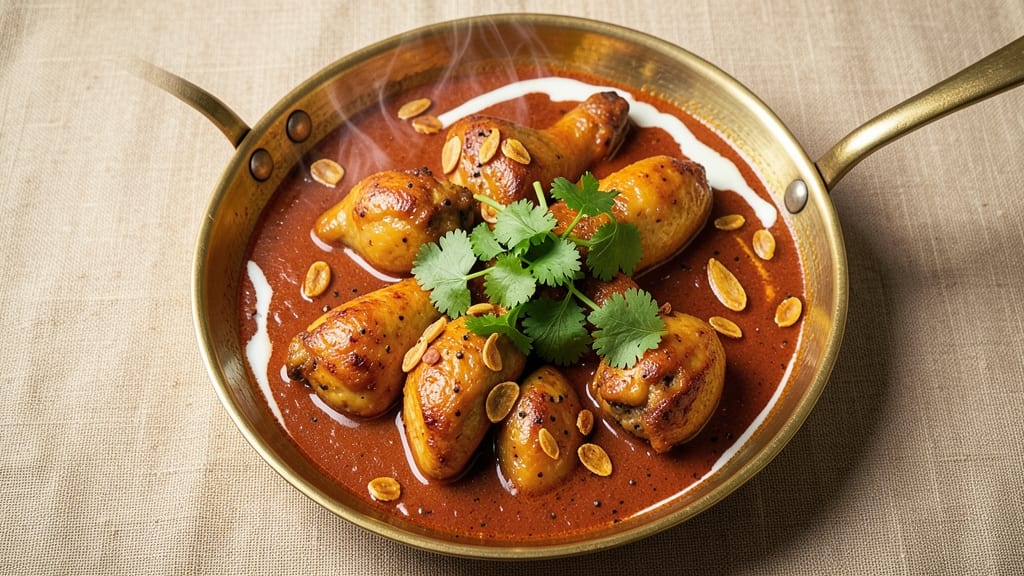
This authentic South Indian chicken curry delivers the complex flavors of tamarind, curry leaves, and aromatic spices in a single pot. The secret lies in slow-cooked layers of tangy tamarind, earthy turmeric, and fragrant curry leaves that transform simple chicken into a restaurant-worthy dish.
I've perfected this technique over years of testing—every step, from marinating to tempering, ensures depth of flavor without shortcuts.
The recipe begins with a foolproof marinade of yogurt, mustard seeds, and coconut, which tenderizes the chicken while infusing it with South Indian spices. As it simmers, the tamarind brightens the dish, balancing the richness of coconut milk and the heat of red chili.
The final tempering with mustard seeds and curry leaves releases their signature aroma, elevating the curry to authentic levels.
What you’ll end up with is a rich, velvety curry where the chicken is fall-apart tender and the sauce is perfectly balanced—tangy, spicy, and fragrant. The one-pot method keeps cleanup minimal while delivering restaurant-quality results.
Serve it with steamed basmati rice, fluffy appam, or crispy dosa for the full South Indian experience.
This curry is designed to transport you to the streets of Chennai or the bustling kitchens of Kerala, where every bite carries tradition and care. The technique is straightforward, but the flavors are anything but ordinary—deep, layered, and impossible to replicate with shortcuts. Let’s bring this authentic taste home.
Ingredients for authentic south indian chicken curry
Authentic South Indian flavors start with these carefully chosen ingredients for a restaurant-worthy curry.
| Ingredient | Amount | Notes |
|---|---|---|
| Chicken Thighs, Boneless 🍗 | 1 ½ lb | Medium size, skin-on preferred |
| Plain Yogurt, Unsweetened 🥛 | 1 cup | Full-fat for best marinade |
| Mustard Seeds, Whole 🌿 | 1 tbsp | Lightly toasted for aroma |
| Ginger, Fresh 🧅 | 2 tbsp | Grated, aromatic variety |
| Garlic Cloves 🧄 | 6 cloves | Peeled, finely minced |
| Tamarind Paste 🍈 | ½ cup | High-quality, no pulp |
| Coconut Milk, Full-Fat 🥥 | 1 can | 13.5 oz can, unsweetened |
| Red Chili Powder 🌶️ | 1 ½ tsp | Adjust for spice preference |
| Turmeric Powder 🌿 | 1 tsp | Freshly ground preferred |
| Curry Leaves, Fresh 🌿 | ½ oz | Dried at 1/4 oz if unavailable |
| Cumin Seeds 🌿 | 1 tsp | Toasted for depth of flavor |
| Tomatoes, Ripe 🍅 | 2 medium | OR 1 cup diced, fresh preferred |
| Onion, Yellow 🧅 | 1 whole | Medium size, finely chopped |
| Salt 🧂 | 1 ½ tsp | Kosher or sea salt |
| Ghee or Coconut Oil 🫒 | 2 tbsp | For tempering, high smoke point |
The chicken thighs are non-negotiable here—bone-in would work but skin-on delivers that crispy texture when seared. For the yogurt, full-fat is critical; it carries the spices beautifully during marinating. Mustard seeds and curry leaves are the soul of this dish—look for fresh curry leaves at Indian specialty stores or order online if your local market lacks them. Tamarind paste should be smooth with minimal pulp; Mamee brand is my go-to for consistent quality. The ginger and garlic should be freshly grated and minced, respectively, as pre-minced garlic lacks the aromatic punch this recipe demands.
No tamarind paste? Lemon juice plus 1 tbsp sugar mimics the tang, though it won't replicate the exact depth. Fresh curry leaves unavailable? Dried leaves at one-quarter the amount work, but toast them first to release their aroma. The tomatoes can be swapped for 1 cup tomato sauce if needed, though fresh is ideal. For the coconut milk, avoid light versions—full-fat delivers the creamy texture essential to South Indian curries. The red chili powder can be adjusted; start with the given amount and taste before adding more.
Marinate the chicken for at least 2 hours, preferably overnight, for maximum flavor infusion. The curry leaves and mustard seeds should be stored in airtight containers in a cool, dark place—they lose potency quickly. Tamarind paste keeps for 6 months unopened, while fresh curry leaves last 1 week in the fridge wrapped in damp paper towels. The finished curry reheats beautifully; add a splash of water or coconut milk if it thickens upon reheating, as it tends to do.
Why You'll Love This Recipe
- No-Fuss Marination: Between us, the secret’s in the yogurt and garlic. Toss the chicken thighs in yogurt, ginger, and garlic once—that’s it. No fancy steps, just let it sit while you chop the onions (if you even do that). The mustard seeds sizzle in oil, and suddenly, you’re halfway to magic.
- Tangy-Spicy Balance: That first bite? Chef’s kiss. The yogurt keeps it creamy, the mustard seeds add a sharp pop, and the ginger-garlic base cuts through like a bright, zesty hug. It’s not too heavy, not too dry—just the kind of curry that makes you reach for seconds without thinking.
- Leftover Legend: Here’s what sold me—this curry improves the next day. The flavors meld into something even richer, and reheating it? Just a splash of water, five minutes on low. I’ve fed a houseful of guests with one batch, and still had containers for lunch.
- Budget Weeknight Win: Chicken thighs are forgiving and cheap, and you’re not drowning in exotic ingredients. A few spices, yogurt, and garlic—that’s your whole shopping list. Honestly, it’s the kind of dish where you can splurge on the rice and still save money. (Yes, even on a Tuesday night.)
Step-by-step instructions for authentic South Indian chicken curry
Here's how to build layers of tamarind tang and curry leaf aroma in a single pot.
Marinate the Chicken for Maximum Flavor
In a large bowl, combine the 1.5 lb boneless chicken thighs, 1 cup unsweetened yogurt, 1.5 tsp salt, 1.5 tsp red chili powder, and 1 tsp turmeric powder. Mix gently until the yogurt coats the chicken evenly. Add 2 tbsp grated ginger and 6 cloves minced garlic, stirring to distribute these aromatics throughout. The marinade should be thick but cling to the chicken without pooling.
Cover the bowl and refrigerate for at least 2 hours, or preferably overnight. This extended marinating time allows the spices to penetrate deeply and tenderizes the chicken. The yogurt also helps prevent the meat from drying out during cooking. When ready, remove the chicken from the fridge and let it sit at room temperature for 15 minutes before cooking—this ensures even heat distribution.
Temper the Spices for Authentic Aroma
Heat a heavy-bottomed pot over medium heat and add 2 tbsp ghee or coconut oil. Once the oil shimmers, add 1 tsp toasted cumin seeds and 1 tbsp whole mustard seeds. Allow them to sizzle for 30 seconds until they begin to pop—this releases their essential oils and creates the signature South Indian aroma. Immediately add 0.5 oz fresh curry leaves and 1 whole finely chopped onion. Sauté for 4-5 minutes until the onion softens and turns translucent.
Next, add 2 medium ripe tomatoes, chopped, and cook for another 3-4 minutes until they break down into a thick paste. Stir in 0.5 cup tamarind paste and cook for 1 minute to dissolve it completely. The tamarind will give the curry its signature tangy depth. Remove from heat and set aside—this spice base is the flavor foundation of the dish.
Cook the Chicken Until Tender
In the same pot, add the marinated chicken thighs in a single layer. Cook over medium-high heat for 5-6 minutes, stirring occasionally, until the chicken develops a light golden crust on all sides. This initial searing locks in juices and builds flavor. Pour in 1 can full-fat coconut milk and bring to a gentle simmer. Cover the pot and reduce heat to low. Let the chicken cook for 20-25 minutes, stirring once halfway through, until it's fork-tender and the sauce has thickened slightly.
During this time, the coconut milk will create a creamy base while the chicken absorbs all the marinade flavors. The curry should have a rich, velvety consistency with visible chunks of chicken. If the sauce reduces too quickly, add 2-3 tablespoons of water to maintain the right texture. The chicken is done when it reaches an internal temperature of 165°F and pulls away from the bone easily.
Simmer and Balance the Flavors
Once the chicken is tender, uncover the pot and increase heat to medium. Let the curry simmer for an additional 5-7 minutes to allow excess moisture to evaporate and the flavors to meld. Taste and adjust seasoning—add more salt if needed, or a pinch more red chili powder for heat. The curry should balance sweetness from the coconut milk, tang from the tamarind, and warmth from the spices.
For the final touch, garnish with additional fresh curry leaves and serve immediately with steamed basmati rice or crusty naan. The curry should be vibrant in color, with a glossy sheen from the coconut milk and a complex interplay of flavors in every bite. The tamarind's sourness should cut through the richness, while the curry leaves add a fresh, herbal note that elevates the dish.
Pro Tips For Making Authentic South Indian Chicken Curry
- Temper Mustard Seeds Slowly: After adding mustard seeds to hot oil, turn the heat to low for 30 seconds—this prevents them from popping violently all at once. I learned this the hard way when I nearly lost a batch to splatter; now I just let them simmer gently until they bloom without drama.
- Marinate Chicken Overnight: Skip the rushed marinade—let the chicken sit in yogurt, ginger, and garlic for at least 8 hours (or overnight). The acid and spices penetrate deeper, and the thighs stay juicy instead of drying out during the long cook. Yes, it’s an extra step, but your future self will notice the difference.
- Simmer, Don’t Boil: Once the curry starts to thicken, reduce to a gentle simmer—not a rolling boil. Too much heat turns the yogurt base grainy and breaks down the mustard seeds’ flavor. I used to ignore this, and the curry always tasted flat afterward.
- Use Fresh Ginger, No Substitutes: Grate the ginger fine and let it sit in the yogurt marinade for at least 15 minutes before cooking. Pre-minced ginger loses its punch, and dried ginger just won’t cut it—this is the thing that matters most for that bright, zesty kick. (And no, paste doesn’t count.)
Serving suggestions for this dish
Steamed Basmati Rice
This curry shines with perfectly fluffy steamed basmati rice—its delicate grains soak up the rich, tangy sauce beautifully. Use a 1:1.5 rice-to-water ratio (for 1 cup basmati rice, 1.5 cups water) and cook in a heavy-bottomed pot with a tight-fitting lid.
I add a pinch of salt and a bay leaf while steaming for extra aroma. For extra authenticity, rinse the rice 3-4 times before cooking to remove excess starch and prevent mushiness. 💛
Crispy Dosa or Appam
For a traditional South Indian experience, serve with crispy dosa or appam—both complement the curry’s creaminess with their light, airy textures.
Store-bought dosa from Indian specialty stores works in a pinch, but homemade is ideal. Appam (fermented rice hoppers) are even better—they soak up the curry sauce like a sponge. If making appam, use fermented rice batter and cook in a small, hot skillet until puffed and golden. 🌟
Raita for Cooling Contrast
A dollop of cucumber-mint raita cuts through the curry’s richness and cools the palate. Mix ½ cup plain yogurt with ¼ cup grated cucumber, 1 tbsp chopped mint, ½ tsp roasted cumin powder, and a pinch of salt.
For extra tang, add 1 tsp tamarind pulp. Serve chilled alongside the curry—it’s a game-changer for balancing heat. 🥒
Warm Naan or Paratha
For a heartier meal, offer garlic naan or aloo paratha on the side. The warm, pillowy texture of naan contrasts perfectly with the curry’s velvety sauce.
If short on time, buy pre-made naan from an Indian bakery and reheat in a skillet with ghee for 1-2 minutes per side until crispy. For paratha, use whole wheat dough stuffed with spiced potato filling. ✨
Pickled Vegetables
Add a quick-pickled onion or carrot mix to brighten each bite. Thinly slice ½ onion and 1 carrot, then soak in a mix of ½ cup vinegar, 1 tsp sugar, ½ tsp salt, and ½ tsp mustard seeds for 30 minutes.
The tangy crunch cleanses the palate between rich curry spoonfuls. 🥕
Garnishes for Freshness
Finish the dish with fresh cilantro and sliced green chilies for a pop of color and heat. A drizzle of lemon juice just before serving enhances the tamarind’s tang. For extra flair, sprinkle toasted coconut flakes—they add a subtle sweetness that rounds out the flavors. 🌿
Nutrition facts
Frequently asked questions
Can I use chicken breast instead of thighs?
Chicken thighs work best for this recipe because their higher fat content stays juicy during the long simmer. If you must use breasts, cut them into smaller pieces and reduce cooking time to 15 minutes after adding coconut milk. The marinade time should also be extended to 4-6 hours to prevent dryness.
What if I don't have fresh curry leaves?
Use ¼ oz dried curry leaves instead, but toast them in a dry pan for 30 seconds until fragrant. For extra aroma, crush them lightly with a mortar and pestle before adding. If unavailable, omit them—they're flavorful but not essential.
How can I make this curry less spicy?
Start by reducing the red chili powder to ½ tsp instead of 1.5 tsp. For milder heat, add 1 extra tomato or 1 tbsp yogurt at the end to balance the spices. The tamarind's tang will still shine without overwhelming heat.
Can I make this curry in an Instant Pot?
Yes! Sauté the spices as directed, then add chicken and coconut milk. Cook on high pressure for 10 minutes, followed by a natural release. Finish with the 5-minute simmer on stovetop to develop flavors. The Instant Pot reduces cooking time but may need 1 extra tablespoon of water to prevent sticking.
Why is my curry too tangy?
Tamarind's acidity can overpower if not balanced. Reduce it to ¼ cup and add 1 extra tomato or ½ tsp sugar to mellow the flavor. For extra depth, simmer uncovered for 2 extra minutes to let moisture evaporate and flavors meld.