
Main Courses
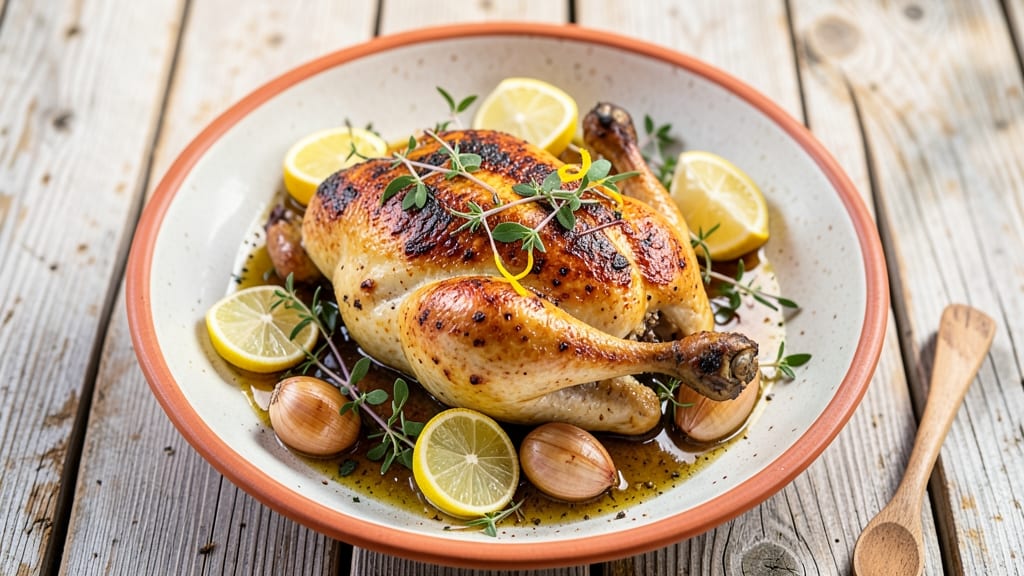
This authentic Greek roasted chicken recipe transports you straight to a sun-drenched Greek taverna with every golden, crispy bite. The secret lies in a fragrant marinade of lemon, oregano, and garlic that infuses the meat while roasting creates that signature crispy skin and juicy interior.
I’ve perfected this technique over years of testing—no shortcuts, just the real deal.
The process begins with a simple but critical step: brining the chicken overnight to ensure maximum juiciness. Then, the marinade—bright lemon, earthy oregano, and aromatic garlic—works its magic while the chicken rests.
Roasting at high heat first sears the skin to perfection, then a slower finish ensures the meat stays tender and flavorful throughout.
What you’ll end up with is a whole chicken that’s crispy on the outside, juicy on the inside, and bursting with the bright, herby flavors of Greece. The aroma alone will have everyone gathering around the table, and the taste?
Pure, unadulterated authenticity. Serve with lemon wedges, roasted potatoes, or a classic Greek salad for the full experience.
This isn’t just a recipe—it’s a celebration of Greek culinary tradition, simplified for your home kitchen. Let’s get started on creating something truly special.
Ingredients for authentic greek roasted chicken
A whole chicken, bright lemon, and fragrant herbs—this is how real Greek taverna magic begins.
| Ingredient | Amount | Notes |
|---|---|---|
| Whole Chicken (3-4 lbs) 🍗 | 3 ½ lb | Fresh, preferably organic |
| Fresh Lemon 🍋 | 1 whole | Juiced and zested |
| Fresh Oregano 🌿 | ½ cup | Loosely packed, stems removed |
| Garlic Cloves 🧄 | 6 cloves | Minced, aromatic variety |
| Extra-Virgin Olive Oil 🫒 | ½ cup | High-quality, fruity |
| Kosher Salt 🧂 | 2 tbsp | Diamond Crystal preferred |
| Ground Black Pepper 🌶️ | 1 tsp | Freshly ground |
| Water 💧 | 4 cups | For brining |
| Honey 🍯 | 2 tbsp | For glaze, optional |
| Fresh Rosemary 🌿 | ¼ cup | Chopped, for garnish |
| Lemon Wedges 🍋 | 4 whole | For serving |
| All-Purpose Flour 🌾 | 1 tbsp | For dusting |
The chicken is the star, so pick a 3-4 lb bird—big enough for juicy meat but not so large it dries out. Local butchers or Costco often have excellent organic options. Look for vibrant color and firm skin—no yellowing or sliminess. Fresh oregano is non-negotiable here; Mediterranean markets carry the best, but even grocery store fresh works if the leaves are bright green. For the garlic, elephant garlic adds a milder sweetness, but regular cloves are perfect. The olive oil should be extra-virgin—Kalamata or Greek brands elevate the flavor profile.
No fresh oregano? Dried works at one-third the amount, but it won’t have that same vibrant punch. Running low on honey? Maple syrup or agave can substitute, though the flavor won’t be identical. The brining water? Tap water is fine, but if you’re fancy, use filtered. For the lemon, Meyer lemons add a floral note, but regular lemons work perfectly. The rosemary is just for garnish—skip it if you’re out, but trust me, the aroma alone makes it worth having. And if you’re worried about the chicken being too dry, pat it dry thoroughly before roasting—this is key for crispy skin.
This chicken reheats beautifully—just 350°F for 20 minutes covered with foil. The brined version keeps for 3 days in the fridge, but the flavor peaks after 1 day. For longer storage, freeze uncooked for 3 months. I always make extra lemon wedges—freeze them in ice cube trays for quick garnishes later. The marinade leftovers? Save them for drizzling over roasted veggies or soups—waste not, want not.
Why You'll Love This Recipe
- Five-Ingredient Magic: I swear by this combo—just chicken, lemon, oregano, garlic, and olive oil. That’s it. No confusing spice blends or hidden ingredients; the real deal, simplified.
- Crispy-Golden Promise: The olive oil and lemon work together to give you that perfect golden crust while keeping the meat juicy inside. Honestly, the first time I saw it come out of the oven, I nearly dropped the tray.
- Sunday Supper Star: This dish is my go-to for gatherings—whether it’s a lazy weekend brunch or a dinner with friends. Between us, it’s the one thing that always gets seconds, no matter who’s at the table.
- Leftovers That Don’t Suffer: Roast a whole chicken, and you’ve got meals for days. Shred it for souvlaki, slice it for wraps, or just reheat it—it stays moist and flavorful. (Yes, even on a Tuesday night.)
Step-by-step instructions for authentic Greek roasted chicken
This method delivers perfectly crisp skin and impossibly juicy meat every time.
Prepare the Brine for Maximum Flavor
In a large bowl, combine the 4 cups water, 2 tablespoons kosher salt, and 2 tablespoons honey. Stir until the salt and honey dissolve completely. This creates a flavorful brine that tenderizes the chicken while infusing it with subtle sweetness.
Place the 3.5 lb whole chicken in a large zip-top bag or container that can hold the brine. Pour the brine mixture over the chicken, ensuring it's fully submerged. Seal the bag and refrigerate for at least 4 hours or up to overnight. This step guarantees juicy meat by preventing moisture loss during roasting while building authentic Greek flavor.
Make the Lemon-Oregano Marinade
While the chicken brines, prepare the marinade by combining the 0.5 cup extra-virgin olive oil, 0.5 cup fresh oregano, 6 minced garlic cloves, zest and juice from the 1 whole fresh lemon, 1 teaspoon ground black pepper, and 1 tablespoon all-purpose flour in a mixing bowl. The flour helps create a golden crust when roasted.
Use your hands to gently massage the marinade into the chicken skin, being careful not to tear it. Place the chicken on a plate, skin-side up, and let it marinate uncovered in the refrigerator for at least 2 hours. This allows the flavors to penetrate deeply while the skin dries slightly, which is crucial for crispy results.
Prep and Roast for Perfect Crispiness
Preheat your oven to 425°F. Remove the chicken from the marinade and pat it dry with paper towels—this is critical for crispy skin. Place the chicken breast-side up on a rack set in a rimmed baking sheet. The rack allows air to circulate underneath, preventing soggy skin.
Roast for 45 minutes, then reduce the heat to 375°F and continue roasting for another 45-60 minutes, or until the internal temperature reaches 165°F when measured in the thickest part of the thigh. The skin should be deep golden brown and crispy, while the meat remains juicy.
Rest and Garnish for Restaurant-Quality Presentation
Transfer the chicken to a cutting board and tent loosely with foil. Let it rest for 15-20 minutes before carving. This resting period allows the juices to redistribute, ensuring every slice is moist and flavorful. The temperature will rise slightly during this time—this is normal and desirable.
While the chicken rests, prepare the garnish by combining the 0.25 cup chopped fresh rosemary with a drizzle of olive oil. Once rested, sprinkle the rosemary mixture over the chicken and serve with the 4 lemon wedges on the side. The bright citrus cuts through the richness, completing this authentic Greek masterpiece.
Pro Tips For Making Authentic Greek Roasted Chicken
- CRANK THE HEAT FIRST: I used to start Greek roasted chicken at 350°F, but after burning the skin on two batches, I finally learned: blast the oven to 425°F for the first 20 minutes. This gets the skin crispy fast before the chicken cooks through—just like the taverna versions I’ve had in Greece.
- SALT THE CHICKEN INSIDE OUT: Skip the dry brine if you’re short on time, but at least do this: stuff the cavity with lemon halves, 3-4 smashed garlic cloves, and a handful of fresh oregano before slathering the outside with olive oil and salt. The cavity flavors infuse while the skin crisps—my grandmother swore by this, and she was right.
- STOP POKING THE SKIN: I know you want to check if it’s done, but every time you pierce that golden crust, you’re letting steam escape and ruining the texture. After the initial 20 minutes at high heat, just peek through the oven window—if the skin’s deep golden, it’s ready. Trust the process.
- USE THE LEMON JUICE LAST: Save half the lemon’s juice for after roasting. Brush the chicken with it in the last 5 minutes—this keeps the skin shiny and adds a bright finish. (Yes, even if you’re impatient like me.) The acid also cuts through the richness of the olive oil beautifully.
Dietary considerations for this authentic greek roasted chicken
Gluten-Free Adaptation
The good news is this recipe is naturally gluten-free—no modifications needed! The marinade and brining solution contain no wheat or gluten-containing ingredients. Just ensure your all-purpose flour (used for dusting) is certified gluten-free if you're avoiding cross-contamination.
I always keep a Bob's Red Mill 1-to-1 gluten-free flour blend on hand for these situations. 🌾
Dairy-Free Considerations
This chicken recipe is already dairy-free, making it perfect for lactose-intolerant diners or those following dairy-free diets. The authentic Greek preparation relies solely on herbs, citrus, and olive oil.
For extra richness, you could add 2 tablespoons tahini to the marinade—it adds a nutty depth that complements the lemon and oregano beautifully.
Vegetarian Substitutes
While this is a chicken recipe, you can create a similar flavor profile for vegetarian meals using portobello mushrooms or cauliflower steaks. Marinate them in the same lemon-oregano mixture and roast at 400°F for 20-25 minutes until tender.
The key is to slice the mushrooms or cauliflower 1-inch thick for even cooking. 🌱
Lower-Carb Options
To make this recipe lower in carbohydrates, skip the honey in the brine and use 2 tablespoons erythritol or monk fruit sweetener instead. The sweetness will still enhance the marinade without adding carbs.
For sides, serve with roasted zucchini or cauliflower rice instead of potatoes. This keeps the meal under 10 net carbs per serving while maintaining authentic Greek flavors.
Allergen-Friendly Swaps
If anyone has citrus allergies, you can reduce the lemon to ¼ cup juice and zest while adding 1 tablespoon apple cider vinegar to maintain acidity. For nut allergies, avoid tahini and stick to olive oil as the base.
Always double-check ingredient labels—even extra-virgin olive oil can sometimes be processed in facilities with nuts. 💡
Keto Adaptations
This chicken is already keto-friendly as written, with no added sugars or grains. For extra fat content (important for ketosis), add 1 tablespoon melted ghee or coconut oil to the marinade.
Serve with roasted Brussels sprouts tossed in olive oil and feta cheese crumbles for a satisfying, low-carb Greek-inspired meal that stays under 5g net carbs per serving.
Nutrition facts
Frequently asked questions
Why is brining essential for this Greek roasted chicken?
The 4-hour brine with salt and honey keeps the chicken incredibly juicy by preventing moisture loss during roasting. It also infuses subtle sweetness that balances the bright lemon and oregano flavors—this is a key technique in Greek taverna cooking to create that signature tender yet flavorful texture.
Can I use bone-in chicken thighs instead of a whole chicken?
For 6-8 bone-in thighs, reduce the brine time to 2 hours and roast at 400°F for 30-35 minutes until the internal temp hits 165°F. The skin will crisp beautifully, and the thighs stay juicier than breasts. Just pat them very dry before roasting for that perfect crunch.
What's the best way to reheat leftover Greek roasted chicken?
For crispy skin, reheat at 350°F for 15-20 minutes covered with foil. To revive crispiness, broil for 2-3 minutes on high at the end. Never microwave—it makes the skin rubbery. The juices redistribute during reheating, so you'll get that same tender bite every time.
How do I know when the chicken is fully cooked?
Use a meat thermometer to check the thickest part of the thigh—it should read 165°F. The skin will be deep golden brown and crispy, while the juices run clear. If you don't have a thermometer, cut into the thigh joint and check for no pink color. The legs should move easily when rotated at the joint.
What's the secret to crispy skin every time?
Three things: 1) Pat the chicken bone-dry before roasting, 2) Roast on a rack (not directly on the pan) for airflow, and 3) Start at high heat (425°F) for 45 minutes before lowering. The flour in the marinade also helps create that golden crust. Avoid covering with foil too early—let it crisp first!