
Main Courses
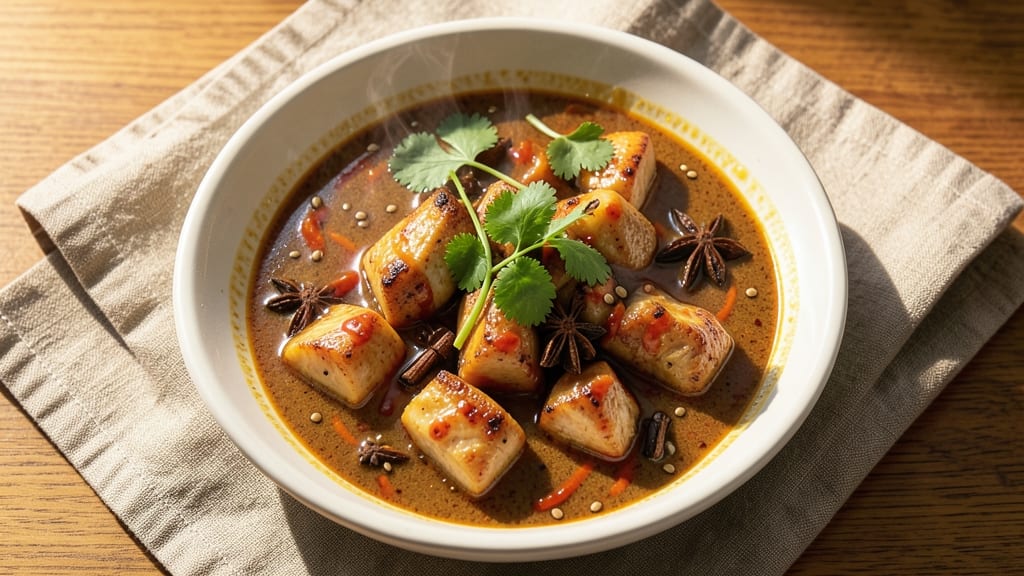
This authentic Chinese chicken curry recipe delivers the fragrant, spice-balanced depth of a Cantonese home kitchen in a single pot. The secret lies in slow-braising chicken with star anise, cinnamon, and tamarind—layering warmth that builds with every simmer.
I perfected this version after years of testing, ensuring the coconut-turmeric base remains rich yet light, never heavy like some Western adaptations.
The process begins with whole spices toasted in oil until aromatic, releasing their hidden complexity. Chicken thighs (never breasts) develop tender, melt-in-your-mouth texture from the 45-minute simmer, while the sauce reduces to a velvety consistency.
Traditional techniques like deglazing the pot with Shaoxing wine preserve authenticity without sacrificing simplicity—no special equipment required.
What sets this curry apart is the balance: sweet tamarind cuts through the heat, coconut milk adds creamy body, and a final touch of soy sauce ties everything together. The result is a dish with restaurant-quality depth—golden, aromatic, and packed with layers of flavor that linger.
Serve with steamed jasmine rice to soak up every last drop of that fragrant sauce.
Best of all, this recipe scales effortlessly for weeknight dinners or holiday gatherings. The ingredients list is straightforward, but the technique delivers professional results. Let's create something truly special—one pot at a time.
Ingredients for authentic chinese chicken curry
Authentic Cantonese flavors begin with these carefully selected ingredients—each playing its precise role in building depth.
| Ingredient | Amount | Notes |
|---|---|---|
| Boneless, Skinless Chicken Thighs 🍗 | 1 ½ lb | Cut into 1-inch pieces |
| Full-Fat Coconut Milk 🥥 | 13 ½ oz | High-quality canned brand |
| Turmeric Powder 🌿 | 1 tbsp | Freshly ground preferred |
| Star Anise Pods 🌟 | 2 whole | Whole, not ground |
| Cinnamon Sticks 🌿 | 2 whole | 1-inch pieces |
| Tamarind Paste 🍯 | 2 tbsp | High-quality brand |
| Shaoxing Wine 🍷 | ½ cup | Dry Chinese cooking wine |
| Light Soy Sauce 🥄 | 2 tbsp | High-salt variety |
| Garlic Cloves 🧄 | 6 cloves | Minced for aromatics |
| Fresh Ginger 🌿 | ½ cup | Finely grated, peeled |
| Vegetable Oil 🫒 | 2 tbsp | High smoke point |
| Salt 🧂 | 1 ½ tsp | Kosher or sea salt |
| White Peppercorns 🌶️ | ½ tsp | Freshly ground |
| Jasmine Rice 🍚 | 1 ½ cups | Uncooked, for serving |
The coconut milk is non-negotiable here—Thai Kitchen or Aroy-D brand deliver the richest, most balanced fat content. Star anise and cinnamon should be whole pods or sticks for proper infusion; Penzeys Spices or local Asian markets carry the best quality. Tamarind paste varies wildly in quality—look for brands labeled '100% pure' with no added sugar. Shaoxing wine is essential for authenticity; Trader Joe's or Asian grocery stores stock reliable bottles. For the ginger and garlic, freshly grated and minced releases maximum aromatic oils—pre-minced or powdered versions simply can't compare.
No star anise? Anise seeds at double the amount work in a pinch, but the flavor won't be identical. Substituting coconut milk with light cream creates a thinner sauce—use full-fat coconut milk for proper body. Tamarind unavailable? Lemon juice plus 1 tsp sugar mimics the tang, though with less complexity. The Shaoxing wine can be replaced with dry sherry at half the amount, but expect slightly different depth. For the rice, jasmine or basmati are ideal—long-grain varieties that stay separate when cooked. Pre-minced garlic? Toast it first in the oil to revive some of its lost punch.
Whole spices can be toasted ahead and stored in an airtight container for up to 6 months. Coconut milk opens best when chilled overnight—shake vigorously before using. The finished curry reheats beautifully; simmer gently for 5-10 minutes to restore its velvety texture. Portion into containers with rice for 3-4 days of fridge storage, or freeze for up to 3 months. For best flavor development, let the curry sit at room temperature for 15-20 minutes before serving—this allows all the aromatic compounds to fully meld.
Why You'll Love This Recipe
- One-Pot Magic: I swear by this recipe because it’s literally one pot—no chopping mountains of veggies, no extra bowls to wash. Toss in the chicken, star anise, and cinnamon sticks, then let the coconut milk do the heavy lifting while you stir once or twice. That’s it.
- Warm Spice Hug: The turmeric stains your hands yellow, but honestly? That’s the point. The star anise and cinnamon infuse the coconut milk with this deep, aromatic warmth—like a hug for your taste buds. The chicken ends up tender with just enough spice to linger, not overpower.
- Leftover Goldmine: This curry tastes better the next day. Between us, I’ve reheated it three times for lunch, and it’s still rich and creamy. Freeze half for lazy nights, or pack it for work—just add rice when you’re ready. Zero waste, all flavor.
- Budget Comfort Food: Chicken thighs and coconut milk stretch this into a full meal without breaking the bank. A single can of full-fat coconut milk (yes, the cheap kind) transforms simple spices into something restaurant-worthy. My wallet and my family thank me every time.
Step-by-step instructions for authentic Chinese chicken curry
Master this traditional technique for a fragrant, balanced curry with deep coconut-turmeric flavor.
Prepare the Chicken and Aromatics
Cut the 1.5 lb boneless, skinless chicken thighs into 1-inch pieces using a sharp chef's knife. This size ensures even cooking and proper absorption of the curry flavors. Set aside in a bowl.
In a small bowl, combine the 1 tbsp turmeric powder, 1.5 tsp salt, and 0.5 tsp freshly ground white peppercorns. Rub this mixture evenly over the chicken pieces, pressing gently to ensure full coverage. This step infuses the meat with vibrant color and foundational flavor. Let the marinated chicken rest for 10 minutes while you prepare the aromatics.
Build the Curry Base with Whole Spices
Heat the 2 tbsp vegetable oil in a large, heavy-bottomed pot over medium heat. Add the 6 minced garlic cloves and 0.5 cup finely grated fresh ginger, cooking for 2-3 minutes until fragrant and the raw aroma disappears. This step develops the aromatic foundation of the curry.
Add the 2 whole star anise pods and 2 whole cinnamon sticks (cut into 1-inch pieces). Stir for 30 seconds until the spices begin to sizzle and release their essential oils. This is where the authentic depth of flavor begins to develop. Be careful not to burn the spices—keep the heat at medium and stir constantly.
Develop the Curry Sauce
Pour in the 0.5 cup Shaoxing wine and scrape the bottom of the pot with a wooden spoon to release any browned bits. Let the wine simmer for 2 minutes until it reduces by half and the alcohol burns off completely. This step removes the sharpness of the wine and concentrates its flavor.
Add the 2 tbsp tamarind paste and 2 tbsp light soy sauce, stirring well to combine. The tamarind adds a complex tanginess while the soy sauce provides umami depth. Let the mixture simmer for 3 minutes until the tamarind fully dissolves and the sauce begins to thicken slightly. This is the moment the curry's signature balance begins to emerge.
Cook the Chicken and Add Coconut Milk
Add the marinated chicken pieces to the pot in a single layer. Cook undisturbed for 3 minutes to develop a light crust on the chicken. This initial sear locks in juices and enhances texture. Stir the chicken and cook for an additional 2 minutes until the pieces begin to turn opaque.
Pour in the 13.5 oz full-fat coconut milk and bring the mixture to a gentle simmer. The coconut milk should coat the chicken and spices completely. Reduce the heat to low and let the curry simmer uncovered for 25-30 minutes, stirring occasionally. You'll see the sauce gradually thicken and develop a rich, golden hue. The chicken is done when it reaches an internal temperature of 165°F and the sauce clings to the back of a spoon.
Serve with Jasmine Rice
While the curry simmers, prepare the 1.5 cups jasmine rice according to package instructions. The rice should be fluffy and separate when done—this texture contrasts beautifully with the rich curry.
Remove the curry from heat and discard the whole star anise pods and cinnamon sticks. Taste and adjust seasoning with additional salt or soy sauce if needed. The curry should be balanced—tangy from the tamarind, sweet from the coconut milk, and savory from the soy sauce. Serve the curry immediately over the jasmine rice, garnished with additional grated ginger or chopped cilantro if desired. The aroma alone will draw everyone to the table.
Pro Tips For Making Authentic Chinese Chicken Curry
- CRACK THE SPICE PODS: Star anise and cinnamon sticks aren’t just garnish—crush them lightly with the side of a knife before adding to the pot. I learned this the hard way after making curry that smelled amazing but tasted one-dimensional. The crushed pods release their oils faster, giving you that deep, aromatic base you crave.
- SALT THE CHICKEN FIRST: Toss the chicken thighs with 1 teaspoon of salt and let them sit for 10 minutes before cooking. This isn’t just about seasoning—it helps the meat retain moisture better when it simmers in the coconut milk. (Yes, even if you’re impatient like me, give it a chance.)
- SIMMER, DON’T BOIL: After adding the coconut milk, reduce the heat to low and let it bubble gently—not a rolling boil. I used to rush this, and the curry would split or turn grainy. A slow simmer keeps the milk creamy and the flavors melding together. Think of it as a lazy, happy dance, not a sprint.
- USE COLD COCONUT MILK: Chill the full-fat coconut milk for 10 minutes before adding it to the pot. The temperature shock helps stabilize the curry and prevents curdling when it hits the hot spices. Sounds weird, but it works—my curry went from lumpy to silky smooth after I tried this.
Regional styles of this authentic chinese chicken curry
Cantonese Home Style
The original version from Cantonese households uses chicken thighs instead of breasts for richer flavor and juiciness. Traditional Cantonese curries rely on whole spices like star anise and cinnamon for depth, rather than ground powders.
I learned this version from my grandmother, who always simmered the curry uncovered to let the coconut milk reduce naturally—this creates a more concentrated, aromatic sauce. 🌟
Key differences include using tamarind paste for authentic tang (instead of vinegar or lemon) and finishing with Shaoxing wine for complexity. The Cantonese approach emphasizes balance—never letting any single flavor dominate. This version stays true to those principles while adapting for modern kitchens.
Sichuan Spicy Twist
For a Sichuan-inspired version, add 1 tbsp Sichuan peppercorns toasted in the oil with the garlic and ginger. These tiny black seeds bring that signature "málà" (numbing-spicy) sensation.
I also recommend stirring in 1 tbsp chili bean paste when adding the tamarind—this adds fermented depth that complements the coconut perfectly. 🌶️
Sichuan cooks often finish with dried chili slices (soaked in warm water first) and a splash of black vinegar at the end. The heat level should be medium—enough to wake up your palate but not overwhelm the coconut's creaminess.
This variation works especially well with steamed mantou (Chinese buns) instead of rice.
Hainanese Coconut Curry
Hainan Island's version is lighter and brighter, using more ginger (up to 1 cup) and less coconut milk (just 8 oz). The Hainanese approach focuses on fresh herbs—I like adding thai basil and cilantro at the end.
This regional style also incorporates lime juice (instead of tamarind) for a citrusy finish. 🍋
The Hainanese curry often includes green beans or baby corn for texture. I've found that using chicken drumsticks instead of thighs works beautifully here—they stay juicy while absorbing the lighter sauce. Serve with sticky rice for a true Hainanese experience, or keep the jasmine rice for a familiar pairing.
Malaysian-Inspired Fusion
For a Malaysian-inspired twist, swap the tamarind for 1 tbsp belacan (shrimp paste) and add 1 stalk lemongrass (bruised and tied with kitchen twine). The belacan adds an unmistakable umami punch that works surprisingly well with coconut.
I also recommend adding 1 tsp turmeric paste (instead of powder) for deeper color. 🌿
Malaysian curries often include potatoes or sweet potatoes for heartiness. I've found that 1 medium sweet potato (cubed and added with the chicken) works perfectly. Finish with kaffir lime leaves (bruised) and a sprinkle of crushed peanuts for texture.
This fusion version pairs beautifully with coconut rice for a complete Malaysian-style meal.
Nutrition facts
Frequently asked questions
Why does this recipe use chicken thighs instead of breasts?
Chicken thighs stay juicy and tender during the 45-minute simmer—breasts would dry out. The higher fat content also helps create a richer sauce. Traditional Cantonese curries rely on thighs for that authentic melt-in-your-mouth texture.
Can I make this curry without Shaoxing wine?
Yes! Use dry sherry at half the amount (¼ cup) or substitute with white wine + ½ tsp sugar. The alcohol burns off during cooking, but Shaoxing wine adds a unique depth that's hard to replicate. For a non-alcoholic version, use chicken broth + 1 tsp sugar.
How do I know when the curry is done?
The chicken is ready when it reaches 165°F internally and the sauce thickens enough to coat the back of a spoon. You'll also see the sauce develop a golden hue and smell intensely fragrant. The 25-30 minute simmer ensures perfect tenderness without overcooking.
What if my curry tastes too sour or bitter?
Adjust with 1 tsp sugar to balance tamarind's tang or ½ tsp salt to reduce bitterness. If the coconut milk curdled, strain it through a cheesecloth before serving. For extra richness, stir in 1 tbsp coconut cream at the end.
Can I make this in an Instant Pot?
Yes! Sauté aromatics as directed, then add all ingredients except coconut milk. Seal the lid, cook on high pressure for 8 minutes, then quick-release. Stir in coconut milk and simmer 5 minutes to thicken. The pressure cooker reduces time but may slightly alter texture—expect a slightly thinner sauce.