
Main Courses
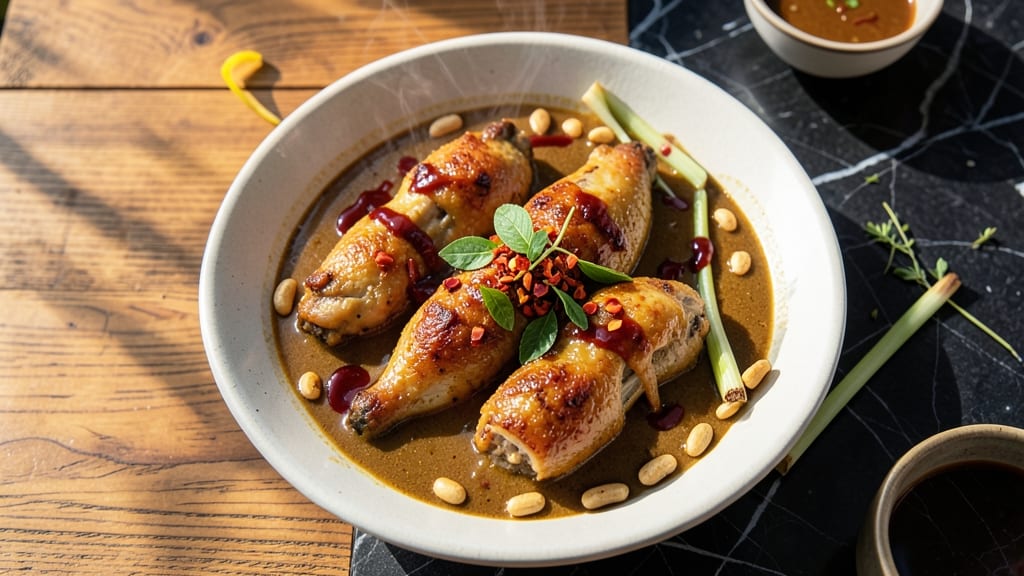
This authentic chicken Panang curry recipe brings the bold, nutty flavors of Thailand straight to your kitchen—where peanut-packed heat meets a silky coconut base. ✨ The secret lies in balancing sweet, spicy, and tangy notes, achieved through traditional Panang curry paste (or a homemade blend) that transforms simple chicken into a restaurant-worthy dish.
I’ve perfected this recipe over years of testing, ensuring every bite delivers the perfect harmony of textures and flavors.
The process starts with marinating chicken in a fragrant blend of garlic, lemongrass, and kaffir lime leaves, then building the sauce from scratch. No shortcuts here—just the slow simmering of coconut milk, peanuts, and tamarind that creates that signature depth.
The result? A curry that’s rich yet light, with tender chicken swimming in a sauce that’s both creamy and slightly crunchy from toasted peanuts.
What sets this recipe apart is its authenticity without the fuss. You’ll use pantry-friendly ingredients like coconut milk and peanuts, but the technique—properly blooming the spices, reducing the sauce, and balancing sweetness with tang—makes all the difference.
Serve it over fragrant jasmine rice or with warm naan, and you’ll taste the difference between takeout and a dish made with care.
Whether you’re cooking for a weeknight dinner or a special occasion, this curry delivers bold, complex flavors that feel like a hug from a Thai street vendor. Let’s get started—your taste buds will thank you.
Ingredients for authentic chicken panang curry
Pantry staples meet Thai market finds—this curry’s magic starts with the right ingredients.
| Ingredient | Amount | Notes |
|---|---|---|
| Boneless Chicken Thighs 🍗 | 1 ½ lb | Skin-on preferred for flavor |
| Panang Curry Paste 🌶️ | 3 tbsp | Store-bought or homemade blend |
| Coconut Milk 🥥 | 1 can (13.5 oz) | Full-fat for creaminess |
| Peanuts 🥜 | ½ cup | Raw, unsalted, toasted |
| Tamarind Paste 🍯 | 2 tbsp | Sweet and sour balance |
| Lemongrass 🌿 | 3 stems | Bruised for fragrance |
| Kaffir Lime Leaves 🍋 | 4 whole | Fresh, torn into pieces |
| Garlic Cloves 🧄 | 6 cloves | Minced for depth |
| Galangal 🌿 | 1 inch | Substitute ginger if unavailable |
| Thai Bird's Eye Chilies 🌶️ | 2 whole | Adjust for heat preference |
| Fish Sauce 🍶 | 1 tbsp | Red Boat brand preferred |
| Palm Sugar 🍯 | 2 tbsp | Or brown sugar substitute |
| Vegetable Oil 🫒 | 2 tbsp | For blooming spices |
| Salt 🧂 | 1 tsp | Kosher or sea salt |
| Jasmine Rice 🍚 | 1 ½ cups | For serving |
The curry paste is non-negotiable—Maesri or Thai Kitchen brands are my go-tos, but homemade works too if you’ve got time. Lemongrass and kaffir lime leaves are the soul of this dish, so skip the frozen stuff—look for fresh at Asian markets or the international aisle. Galangal is tricky to find; ginger works in a pinch, but it’s not the same. Peanuts should be raw and unsalted—Trader Joe’s or Costco have great bulk options. Toast them lightly in a dry pan before adding to the curry for extra flavor.
No Panang paste? Mix 2 tbsp each of red curry paste, coriander, cumin, and turmeric—close enough for a weeknight. Tamarind paste can be swapped for lime juice if you’re in a bind, but the balance of sweet and tangy is key. Fish sauce is essential—Red Boat is the gold standard, but any good-quality brand works. For heat control, remove the seeds from the Thai chilies or use less. Palm sugar? Brown sugar is fine, but it won’t taste quite the same. And if you can’t find jasmine rice, basmati is a solid backup.
Store the curry paste in the fridge for up to 2 weeks or freeze for 6 months. Lemongrass and kaffir lime leaves keep in the fridge for 1 week—wrap them in damp paper towels. The cooked curry reheats beautifully; add a splash of coconut milk if it thickens. I always make extra—it’s even better the next day as the flavors meld. Portion into containers for easy lunches, and trust me, you’ll be eating this for days.
Why You'll Love This Recipe
- One-Pot Magic: I swear by this recipe—just chicken, paste, coconut milk, and a splash of tamarind. No chopping, no fuss, and one pot means one less dish to scrub. Honestly, I make it when I’m too tired to even think about cleanup.
- Tamarind Tang Kick: That little jar of tamarind paste? It’s the secret weapon here. The bright, sour punch cuts through the richness of the coconut milk, giving it this perfect balance—like a hug in a bowl. My picky eaters actually ask for seconds.
- Weeknight to Dinner Party: Same recipe, totally different vibes. Toss it together for a lazy Tuesday with rice and a quick salad, or serve it in bowls with lime wedges and fresh herbs for guests. The peanuts add crunch, so it feels fancy without trying too hard.
- Budget-Friendly Leftovers: Chicken thighs stretch for days, and the curry paste is cheap but packs flavor. I make a double batch, freeze half, and pull it out when I’m too exhausted to cook. Reheats like a dream—just add a splash of water if it’s too thick.
Step-by-step instructions for authentic chicken Panang curry
Here's how to build this rich, peanut-packed curry with layers of authentic Thai flavors.
🍳 Step 1: Bloom the Aromatics and Build the Curry Base
Heat the 2 tablespoons vegetable oil in a heavy-bottomed pot over medium heat. Add the 6 cloves minced garlic, 1-inch sliced galangal, and 2 whole Thai bird's eye chilies (adjust for heat). Sauté for 2 minutes until fragrant but not browned—this releases their essential oils without burning.
Next, add the 3 tablespoons panang curry paste and stir continuously for 1-2 minutes until it deepens in color and smells intensely aromatic. This step is crucial—it develops the complex flavors that define panang curry. If the paste sticks, add 1 tablespoon coconut milk to help it release its oils smoothly.
👨🍳 Step 2: Cook the Chicken Until Just Tender
Push the aromatic paste mixture to one side of the pot and add the 1.5 lb boneless chicken thighs skin-side down. Let them sear undisturbed for 3-4 minutes until golden brown crust forms. Flip and cook another 3-4 minutes until the chicken is no longer pink on the outside.
Here's the thing—don't overcook. You want the chicken to finish cooking in the coconut milk, not dry out. Once nicely browned, remove the chicken and set aside on a plate. I like to tent it loosely with foil to keep it warm while we build the sauce.
🥘 Step 3: Simmer the Coconut Milk and Balance Flavors
Pour in the 1 can (13.5 oz) coconut milk and stir well to combine with the paste. Bring to a gentle simmer over medium-low heat, then add 2 tablespoons tamarind paste, 1 tablespoon fish sauce, and 2 tablespoons palm sugar. Stir until the tamarind and sugar dissolve completely—about 3-4 minutes.
Add the 3 stems bruised lemongrass and 4 torn kaffir lime leaves. These aromatic ingredients infuse the curry with their bright citrusy notes. Let the mixture simmer gently for 5 minutes to allow all the flavors to meld together. You'll notice the curry becoming thicker and more fragrant as it develops.
🔥 Step 4: Finish with Peanuts and Perfect the Texture
Return the chicken to the pot and simmer for 8-10 minutes until the chicken is cooked through and tender. The curry should coat the chicken nicely but still be sauce-like, not gloppy. Taste and adjust seasoning—add more fish sauce for saltiness or palm sugar for sweetness if needed.
Remove the lemongrass stems and kaffir lime leaves (they've done their job). Stir in the ½ cup raw peanuts and cook for 1-2 minutes until they're lightly toasted and the curry reaches your desired thickness. If it's too thick, add 2-3 tablespoons water to loosen it slightly.
🍽️ Step 5: Serve Over Jasmine Rice
Spoon the curry over 1.5 cups cooked jasmine rice and garnish with additional peanuts if desired. The rice should be perfectly steamed—fluffy but not mushy—so it can soak up the rich curry without turning to mush.
Let the curry rest for 5 minutes before serving. This allows the flavors to settle and the chicken to reabsorb some of the juices. Each bite should deliver a perfect balance of spicy, sweet, tangy, and nutty flavors with tender chicken throughout. Serve with lime wedges on the side for brightness!
Pro Tips For Making Authentic Chicken Panang Curry
- Bloom the Paste First: Toss your Panang curry paste into the hot oil and let it sizzle for 30 seconds before adding anything else. This isn’t just about flavor—it’s about killing the raw taste of fresh paste. I used to rush this, and the curry always had that weird, uncooked edge. Give it that head start, even if it smells like your kitchen’s on fire for a second.
- Pat Chicken Dry: Before searing, wipe those chicken thighs with paper towels until they’re bone-dry. Moisture steams the meat instead of browning it, and you’ll end up with sad, pale curry chicken. Trust me, the extra 30 seconds of drying makes a real difference—your curry will have proper depth of color and texture.
- Split the Coconut Milk: Use half the coconut milk to cook the paste, then add the rest later. The first splash thins out the paste and lets it bloom properly; dumping all the milk in at once just makes a watery, flavorless mess. Save the richer half for the end to keep the curry luscious.
- Toast Peanuts Separately: Dry-toast your peanuts in a separate pan until they’re golden and fragrant before adding them to the curry. This isn’t just about crunch—it’s about amplifying their nuttiness. I skip this and regret it every time; the peanuts taste bland and underwhelming. Do it, even if it feels like an extra step.
Storing and reheating this dish
Refrigerator Storage
Let your curry cool completely before transferring to airtight containers—I prefer glass Pyrex with snap-on lids. Store in the fridge for up to 4 days, but I find the flavors actually deepen after 24 hours as the spices meld.
The coconut milk may separate slightly—just stir before reheating. 🥥
Freezer Storage
For longer storage, portion curry into freezer-safe containers or silicone molds (they’re great for single servings). Label with the date and freeze for up to 3 months.
The sauce may thicken when frozen—add 1-2 tablespoons coconut milk when reheating to restore creaminess. Avoid freezer burn by pressing plastic wrap directly on the surface before sealing.
Stovetop Reheating
My favorite method is stovetop because it preserves texture. Transfer curry to a pot and heat over medium-low heat for 8-10 minutes, stirring occasionally. If it thickens too much, add 1-2 tablespoons water or coconut milk.
Taste and adjust seasoning—fish sauce for saltiness or palm sugar for sweetness. The peanuts should stay crunchy, not soggy. 🔥
Microwave Reheating
For quick meals, microwave 1-2 minutes on 50% power, stirring halfway. Cover loosely with a microwave-safe lid to trap steam. If the sauce separates, whisk in 1 tablespoon coconut milk to re-emulsify.
Avoid high power—it can make the chicken rubbery. I like adding a splash of lime juice after reheating for brightness.
Make-Ahead Tips
Double the recipe and freeze half—it’s perfect for lazy weeknights. When reheating, add ½ cup water to the frozen portion while thawing to prevent dryness. For extra flavor, toast 1 tablespoon fresh peanuts and sprinkle on top before serving.
The curry’s complexity improves with time, so leftovers taste even better the next day. 💫
Serving Suggestions
Serve over jasmine rice or with warm naan to soak up the sauce. Garnish with fresh cilantro and lime wedges for acidity. For a modern twist, drizzle with chili oil or serve with steamed bok choy.
The curry’s richness pairs well with a crisp Thai lager or sparkling lime drink. 🍺
Nutrition facts
Frequently asked questions
Can I use chicken breast instead of thighs?
Chicken breast works, but thighs are ideal because they stay juicier during the long simmer. If using breast, cut into 1-inch pieces and cook for only 5-6 minutes after adding back to the sauce to prevent drying out. Add a splash of coconut milk if needed to keep the sauce creamy.
What if I can't find Panang curry paste?
Make a quick substitute by mixing 2 tbsp red curry paste, 1 tbsp coriander seeds, 1 tsp cumin, and ½ tsp turmeric. Toast the spices in a dry pan for 1 minute until fragrant, then grind into a paste with 1 tbsp water. The flavor won't be identical, but it'll add depth.
How do I adjust the heat level?
Remove the seeds from Thai chilies for mild heat or keep them whole for spicy. For extra kick, add ½ tsp chili flakes at the end. If it's too spicy, balance with more tamarind paste or coconut milk.
Can I make this curry in an Instant Pot?
Yes! Sauté the aromatics and paste as directed, then add all ingredients except peanuts. Cook on High Pressure for 10 minutes, then quick-release. Stir in peanuts at the end and adjust thickness with water or coconut milk. The sauce may be thinner than stovetop—simmer uncovered for 5 minutes to reduce.
Why did my curry turn out too sweet?
Panang curry should balance sweet, spicy, and tangy. If it's too sweet, add 1 tbsp fish sauce and ½ tsp salt to deepen umami. For tang, squeeze in 1 tbsp lime juice or add a pinch of salt to enhance the natural flavors. Taste as you go—adjust gradually!