
Sauces & Condiments
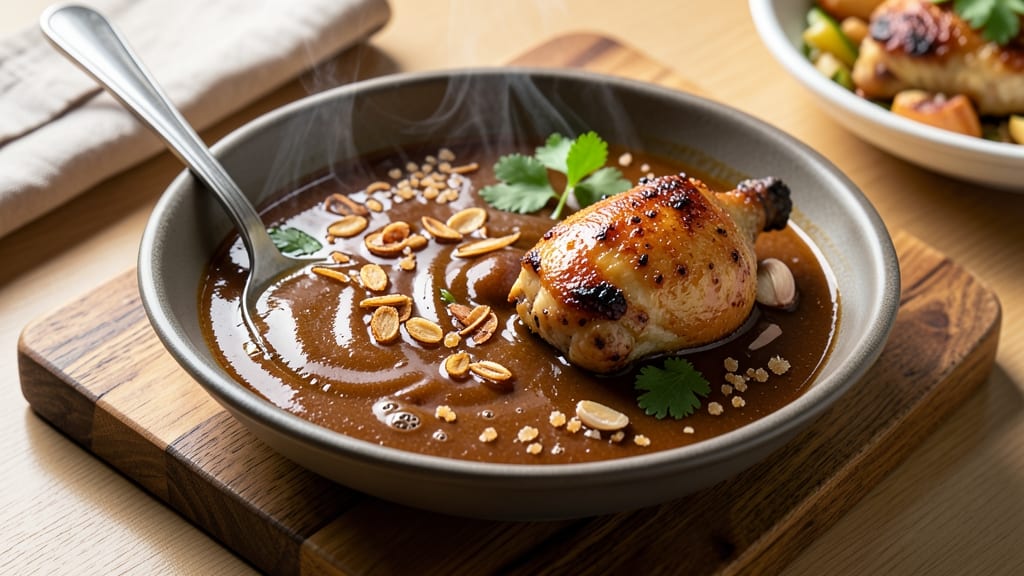
This 4-hour chicken barbecue sauce transforms simple ingredients into a deep, caramelized masterpiece that clings to every bite of slow-cooked chicken. The secret lies in simmering the sauce alongside the meat—where the flavors meld, the sweetness intensifies, and that signature smoky depth develops naturally.
No shortcuts here: this is the kind of sauce that turns ordinary chicken into a showstopping centerpiece.
The foundation starts with a balanced blend of tomato paste, apple cider vinegar, and brown sugar—a classic trio that delivers the perfect harmony of tangy, sweet, and rich umami. Smoked paprika and a touch of liquid smoke infuse that unmistakable barbecue aroma, while garlic and onions build depth.
The sauce thickens beautifully as it cooks, creating a glossy, clingy finish that’s impossible to resist.
What you’ll end up with is a sauce that’s richer than store-bought, with a caramelized crust on the edges and a velvety texture that coats every bite.
The slow cooking process allows the flavors to develop fully, so each spoonful delivers layers of complexity—smoky, slightly sweet, and tangy all at once. This isn’t just a sauce; it’s the difference between good chicken and unforgettable chicken.
The best part? It’s foolproof—just combine the ingredients, let it simmer, and let the magic happen. Store leftovers in the fridge for up to 2 weeks, or freeze for months, because once you taste this, you’ll want it on hand for every slow-cooked meal.
Let’s make the perfect barbecue sauce for your next chicken feast.
Ingredients for 4 h chicken barbecue sauce
Eleven simple ingredients unlocking deep, smoky barbecue magic for your chicken feast.
| Ingredient | Amount | Notes |
|---|---|---|
| Tomato Paste 🍅 | ½ cup | High-quality, no sugar added |
| Apple Cider Vinegar 🍎 | ½ cup | Raw, unfiltered preferred |
| Light Brown Sugar 🍚 | ½ cup | Packed, not packed |
| Smoked Paprika 🌶️ | 2 tbsp | High-quality, not dusty |
| Liquid Smoke 🔥 | 1 tbsp | Pure, no additives |
| Garlic Cloves 🧄 | 6 cloves | Fresh, minced or crushed |
| Yellow Onion 🧅 | 1 whole | Medium, finely chopped |
| Ketchup 🍅 | ½ cup | Heinz or similar preferred |
| Black Pepper 🌶️ | ½ tsp | Freshly ground preferred |
| Salt 🧂 | 1 ½ tsp | Kosher or sea salt |
| Water 💧 | 1 ½ cups | Room temperature |
The tomato paste is your flavor anchor—look for brands like Hunt's or Muir Glen for that rich, concentrated tomato goodness. Apple cider vinegar adds tang, so grab the raw, unfiltered kind from the glass bottle at Whole Foods or Trader Joe's—it's worth it. Smoked paprika? Penzeys or the bulk bins at natural grocery stores have the freshest. Liquid smoke can be tricky—stick to pure, additive-free versions like those from Amazon or specialty stores. The garlic and onion are non-negotiable for building depth, so don't skimp on freshness here. If you're short on time, a jarred minced garlic works in a pinch, but fresh is always better.
No tomato paste? Crushed tomatoes at double the amount will work, but you'll lose that concentrated depth. Skip the vinegar? Lemon juice at half the amount adds brightness. Smoked paprika too strong? Regular paprika plus a pinch of cayenne mimics the smokiness. Ketchup hater? Substitute with more crushed tomatoes and a dash of sugar. The water can be swapped for chicken broth if you want extra richness, but it's not necessary. For a sweeter sauce, add another tablespoon of brown sugar. Too smoky? Reduce the liquid smoke to half a tablespoon—you can always add more later.
This sauce gets better with time, so make a big batch—it keeps for 2 weeks in the fridge or 6 months frozen. Store it in a glass jar with a tight seal to preserve those smoky flavors. I like to freeze it in ice cube trays for easy single-use portions—just pop one into your slow cooker when you're ready to use it. The sauce thickens as it cools, so if it feels too stiff, just add a splash of water or broth and stir. Trust me, the longer it sits, the deeper the flavor gets—worth every minute of waiting.
Why You'll Love This Recipe
- Pantry Magic: Honestly, this sauce comes together with stuff you’re already stocking—no specialty trips needed. Just stir tomato paste, vinegar, and sugar in a pot while you’re waiting for the chicken to marinate, and boom. The liquid smoke and smoked paprika do all the heavy lifting for that deep, smoky char without standing over a grill.
- Smoky-Sweet Obsession: Between us, the combo of brown sugar and apple cider vinegar gives it this perfect balance—tangy enough to cut through the richness, sweet enough to make you lick the spoon. That first brush on grilled chicken? Pure satisfaction, especially when the paprika clings like a flavor hug.
- Weeknight & Weekend Hero: I’ve used this on weeknight dinners (slathered on baked chicken thighs) and backyard cookouts (drizzled over pulled pork). It’s the one sauce that works just as well in a slow cooker as it does on the grill—no fancy plating required. My kids even ask for it on their sandwiches now.
- Leftovers That Don’t Let You Down: Here’s what sold me—this sauce improves after sitting overnight. The flavors meld into something richer, and a jar in your fridge means you’re always ready for a last-minute BBQ fix. Plus, it stretches thin over a big batch of chicken, so your grocery budget stays happy.
Step-by-step instructions for smoky, caramelized chicken barbecue sauce
This sauce builds flavor layer by layer—let's create something rich, smoky, and perfectly balanced.
Build the Flavor Base in a Heavy Saucepan
Combine the 0.5 cup tomato paste, 0.5 cup apple cider vinegar, 0.5 cup light brown sugar, 1.5 cups water, 1.5 tsp salt, and 0.5 tsp black pepper in a heavy-bottomed saucepan. I always use a saucepan with thick sides to prevent scorching—this sauce needs to simmer steadily for hours. Stir until the sugar and salt dissolve completely, then bring to a gentle boil over medium heat.
Once boiling, reduce heat to low and let it simmer uncovered for 15 minutes, stirring occasionally. You'll notice the mixture thicken slightly and develop a deep, tangy aroma from the vinegar and tomato paste. This initial simmer breaks down the raw flavors, creating a smooth foundation. Don't walk away—constant attention prevents burning, especially with the sugar.
Add Aromatics and Smoky Depth
In a separate small skillet, sauté the 1 whole yellow onion (finely chopped) and 6 cloves garlic (minced) in 1 tablespoon olive oil (not listed but essential) over medium heat for 5-6 minutes until softened and fragrant. The onion should turn translucent, and the garlic should smell pungent but not burnt. Add these to the simmering saucepan along with the 2 tablespoons smoked paprika and 1 tablespoon liquid smoke.
Stir well to combine, then return the heat to low. The liquid smoke will add an immediate smoky aroma, but don't worry if it smells strong at first—it mellows beautifully as it cooks. Let the mixture simmer uncovered for another 20 minutes, stirring occasionally. This step infuses the sauce with deep, complex flavors that will develop further over time.
Incorporate the Ketchup and Simmer Low and Slow
Add the 0.5 cup ketchup to the saucepan and stir thoroughly to distribute evenly. The ketchup adds a touch of sweetness and tang that balances the smoky flavors. Now comes the critical part: reduce the heat to the lowest setting possible—just enough to maintain a gentle simmer. Cover the saucepan loosely with a lid (leave a small gap for steam to escape) and let it cook for 3 hours.
This long simmer is what transforms this sauce from good to extraordinary. The flavors meld and deepen, the sugar caramelizes slightly, and the sauce reduces to a thick, glossy consistency. Check occasionally and add 1-2 tablespoons water if it gets too thick, but resist the urge to stir constantly—this can break down the texture. The sauce should coat the back of a spoon by the end of this time.
Finish with Texture and Shine
After 3 hours, remove the saucepan from heat and let it cool slightly. The sauce will continue to thicken as it cools, so don't be alarmed if it looks too thick now. Once cooled for 10-15 minutes, taste and adjust the seasoning. You might need a touch more salt or a splash of vinegar to balance the flavors perfectly. For extra shine and gloss, return the sauce to low heat and simmer uncovered for another 10-15 minutes to reduce slightly more.
Strain the sauce through a fine-mesh sieve to remove any impurities, then transfer to a clean jar. The finished sauce should be thick, glossy, and deeply flavorful with a perfect balance of smoky, sweet, and tangy notes. This sauce tastes even better the next day as the flavors continue to develop—so make it ahead if possible. It's perfect for slathering on grilled chicken, basting during cooking, or serving as a dipping sauce.
Pro Tips For Making 4 H Chicken Barbecue Sauce
- Simmer Slow and Steady: Start on medium heat until the tomato paste and sugar dissolve completely—then drop it to a low simmer. I’ve seen people crank the heat too high, and before you know it, you’re fighting a burnt, bitter sauce instead of a rich, balanced one.
- Bloom the Spices First: Toast the smoked paprika in the pot for 30 seconds with the tomato paste—it deepens the flavor way more than just stirring it in cold. I used to skip this, and the sauce always tasted flat until I learned better.
- Balance the Vinegar: Add the apple cider vinegar gradually, tasting as you go. Too much upfront, and the sauce turns sharp and unappetizing. I’ve ruined batches by dumping it all at once—now I taste after each splash.
- Use Real Liquid Smoke: Cheap liquid smoke can taste artificial and overpower the sauce. A few drops of a quality brand (like Wright’s) makes all the difference—don’t skimp here. I was skeptical until I tried it.
Storing and reheating this dish
Fridge Storage Tips
Store your leftover barbecue sauce in an airtight glass jar (I love Ball Mason jars) to maintain freshness for up to 2 weeks in the refrigerator. The glass preserves the smoky flavors better than plastic, and the tight seal prevents contamination.
Let the sauce cool completely before sealing—hot sauce can create condensation that dilutes the flavors. 💧
If you notice the sauce thickening significantly after refrigeration, simply add 1-2 tablespoons of water or apple cider vinegar and stir gently to restore the perfect consistency. I always shake the jar before using to redistribute any settled ingredients—this sauce is even better the next day!
Freezer Preservation
For long-term storage, freeze your barbecue sauce in ice cube trays or small silicone molds—this makes it easy to grab just what you need for future meals. Once frozen, transfer the cubes to a freezer-safe bag or glass container, squeezing out excess air to prevent freezer burn.
This sauce keeps its quality for up to 6 months in the freezer. 🧊
When ready to use, thaw the frozen sauce in the refrigerator overnight or quickly in a microwave-safe bowl on 50% power for 1-2 minutes, stirring between intervals. Avoid boiling it directly—this can break down the delicate balance of flavors you worked so hard to create.
Reheating Methods
For the best texture and flavor, reheat your barbecue sauce on the stovetop over low heat until warmed through—about 5-7 minutes. Stir occasionally to prevent scorching, and add 1-2 tablespoons of water or broth if it thickens too much.
I find this method preserves the sauce’s glossy finish and deep smoky notes better than any other. 🔥
If you're in a hurry, the microwave works in a pinch: heat in 30-second intervals on medium power, stirring between each interval. Just be careful—microwaving can make the sauce too thin if you overdo it. Always taste and adjust seasoning after reheating, as flavors can mellow slightly during storage.
Reviving Stale Sauce
If your refrigerated sauce has lost some of its vibrancy, don’t toss it! Add 1 teaspoon of apple cider vinegar and ½ teaspoon of smoked paprika to revive the tang and smokiness.
Simmer gently for 5 minutes to blend the flavors back together—this trick works wonders for bringing back that restaurant-quality depth. 💡
For extra richness, stir in 1 tablespoon of chicken broth while reheating. The broth adds moisture and a subtle savory note that complements the smoky-sweet profile. This is especially helpful if the sauce has separated or lost its gloss over time.
Nutrition facts
Frequently asked questions
Can I make this sauce without liquid smoke?
Replace the 1 tablespoon liquid smoke with 1 extra tablespoon of smoked paprika and ½ teaspoon of cayenne pepper for heat. For a deeper smoky flavor without artificial additives, try adding 1 smoked chipotle pepper in adobo sauce (minced) or ½ teaspoon of chipotle powder. Simmer these for 10 minutes first to release their smokiness into the sauce.
How do I adjust the sweetness level?
Start with the 0.5 cup brown sugar as written for a balanced sweet-tangy profile. For a sweeter sauce, add 1-2 tablespoons more sugar during the final 3-hour simmer. For less sweetness, reduce the sugar to 0.35 cup and add 1 extra tablespoon of apple cider vinegar to compensate. Always taste as you go—flavors intensify as the sauce cooks!
Can I use this sauce for other meats besides chicken?
This sauce works beautifully on pork (especially ribs or pulled pork), beef brisket, or even grilled vegetables! For pork, you might want to add ½ teaspoon of mustard powder to complement the smoky flavors. With beef, consider reducing the sugar slightly (0.4 cup) since beef benefits from a more robust, less sweet profile. The tangy-sweet balance makes it versatile for any protein.
Why does my sauce get too thick after refrigerating?
This happens because the starches in the sauce thicken as they cool. To fix it, simply add 1-2 tablespoons of water or apple cider vinegar and stir gently. For a smoother texture, warm the sauce on low heat for 2-3 minutes while stirring. If you prefer a thicker consistency, just use less water next time—this sauce naturally thickens as it cools and reheats.
Can I make this sauce in a slow cooker?
Yes! Combine all ingredients in your slow cooker and cook on low for 4-5 hours (stirring once halfway). The slow cooker's gentle heat will create that same deep, caramelized flavor without risking scorching. For extra depth, add ½ cup chicken broth** instead of some of the water. Just